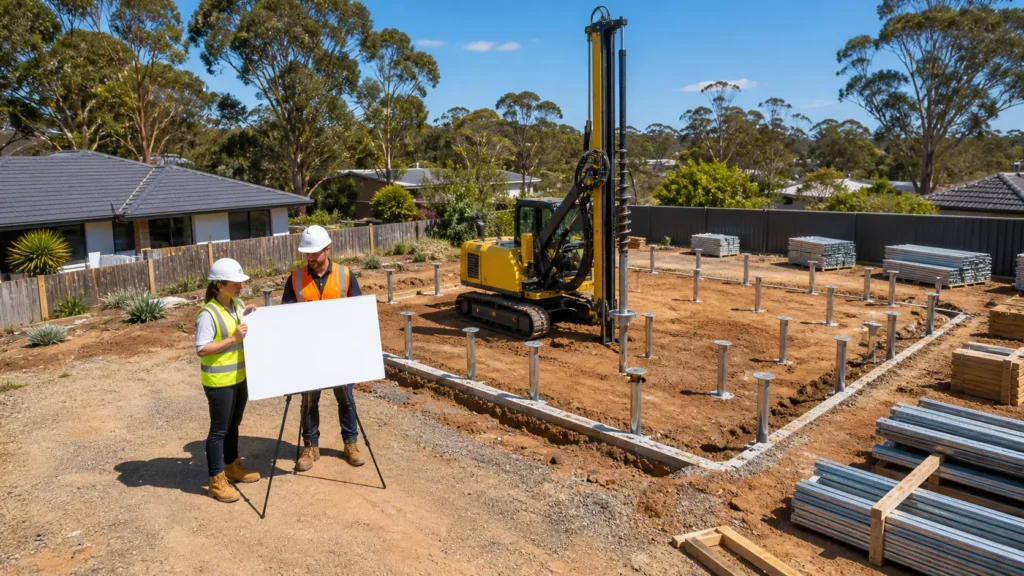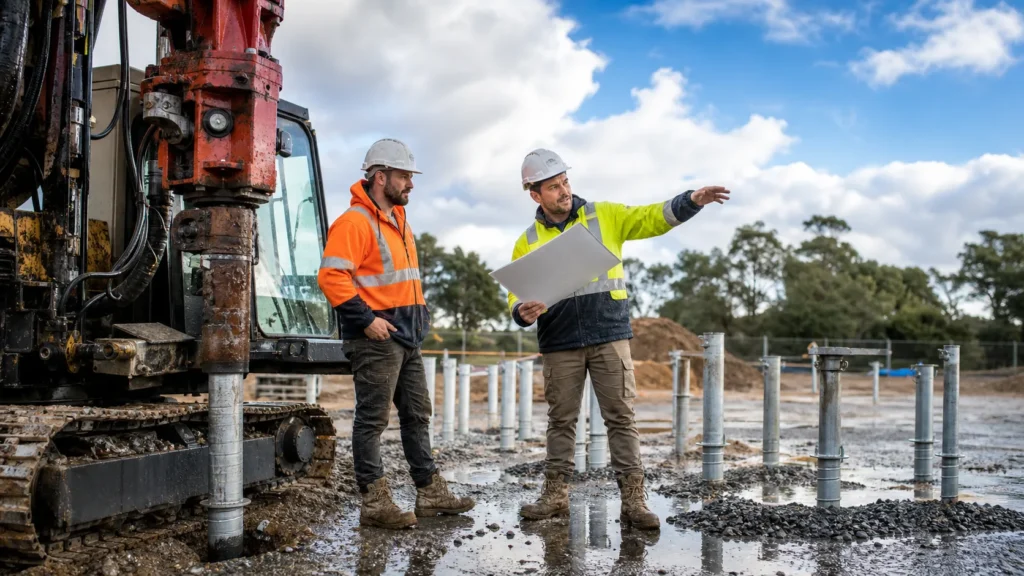
Screw pile foundations deliver rapid installation with no concrete curing delays, enabling immediate structural performance. Screw pile foundations eliminate excavation, reduce weight on slopes and soft ground, and provide reliable capacity in both compression and tension. Builders gain a cleaner, faster, more sustainable foundation solution that avoids traditional concrete limitations.
What Are Screw Pile Foundations?
Screw pile foundations are deep foundation systems built from steel shafts fitted with helical blades. These shafts are mechanically driven into the ground to provide immediate load-bearing support. Screw Piling delivers these systems for residential and light commercial projects across New South Wales.
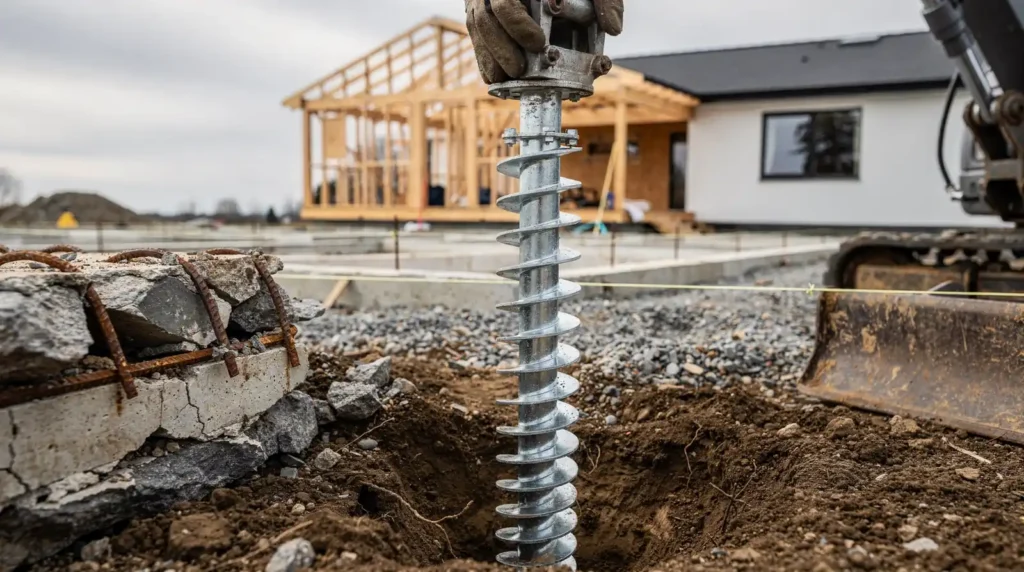
The defining feature is the helical blade configuration. Postech Piles describes screw piles as steel shafts with helical blades that are mechanically driven into the ground. This design allows the pile to screw into soil rather than displace it through hammering or excavation.
How Do Screw Piles Work?
A steel shaft with one or more helical plates is positioned at the designated load point.
Hydraulic machinery rotates the shaft, driving it to the required depth.
The helical plates anchor into stable soil strata, creating bearing capacity.
The pile is load-tested immediately, with no curing period required.
Screw Piling installs each pile to meet site-specific engineering requirements. The installation process minimizes disruption to existing structures and surrounding works.
Are Screw Piles the Same as Helical Piles?
Yes. The terms are interchangeable. Helical piles residential applications use the same steel shaft and blade technology as screw piles. Both provide reliable capacity in compression and tension, according to Screw Piles & Helical Pile Foundations.
What Makes Screw Piling Different?
The company tailors helical foundation systems to each project’s ground conditions. Builders evaluating screw piling vs concrete should note that screw piles eliminate excavation and curing delays. For a detailed comparison of screw piling against traditional footings and bored piers, builders can review the Screw Piles in NSW guide.
Screw piling installation proceeds rapidly because no concrete pour or curing phase interrupts the schedule. The pile achieves structural performance the moment installation completes.
Why Choose Screw Piles Over Concrete?
Screw pile foundations eliminate the excavation, curing delays, and slope-weight problems inherent in concrete. Screw piling installation delivers immediate load-bearing capacity without the multi-day wait that stalls project timelines. Every day a concrete pour sits curing represents lost productivity and extended site overhead. Helical piles residential applications bypass that bottleneck entirely.
How Do Screw Piles Perform on Difficult Terrain?
Screw piles handle sloping and soft ground where concrete foundations struggle. Traditional footings require level, stable excavation zones. A sloped site forces costly cut-and-fill work before any concrete goes in. Screw piles install directly into the grade without reshaping the landscape. The helical foundation systems transfer weight to deeper, competent soil layers immediately.
What Makes Screw Pile Installation Faster Than Concrete?
Speed separates screw piling vs concrete from the first day on site. Each screw pile takes approximately 10 to 15 minutes to install using standard excavator-mounted drive units. No specialized piling rigs are necessary. The job proceeds with handheld equipment or a compact excavator and drive head. Concrete demands formwork, steel reinforcement, precise pouring conditions, and a 7-day minimum cure before loading. That timeline collapses with screw piles. Builders move directly from installation to framing without weather-dependent curing windows.
Screw pile advantages extend beyond speed to site cleanliness and sustainability. The installation produces no spoil, no vibration, and no noise that disturbs neighboring properties. Concrete pours generate waste slurry, require spoil removal, and leave a carbon footprint more than double that of screw pile foundations. For projects ranging from new residential builds to granny flats, modular homes, and extensions, the cleaner approach matters. A detailed comparison of these two methods for secondary dwelling foundations appears in the screw piles vs concrete granny flat analysis.
Can Screw Piles Support the Same Range of Projects as Concrete?
Screw Piling’s foundation services cover new residential construction, granny flats, modular homes, extensions, and light commercial structures. The company installs each pile to site-specific engineering requirements. Concrete remains viable for certain large-scale commercial applications. For residential and light commercial builders, screw piles offer a faster, cleaner, and more adaptable foundation system that eliminates the delays and site disruption concrete invariably introduces.
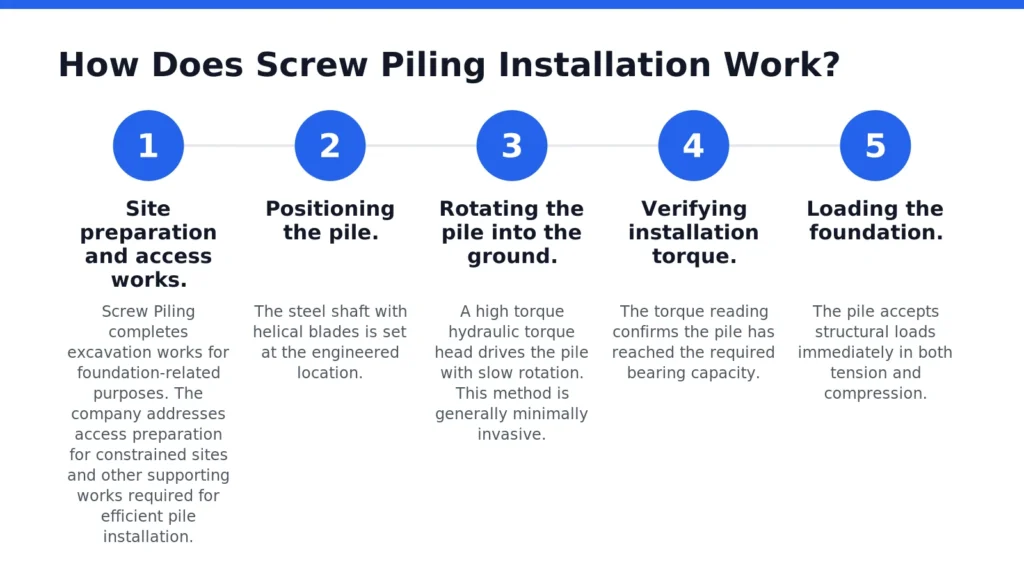
How Does Screw Piling Installation Work?
Screw pile installation rotates a steel shaft into the ground using a torque head. The process is minimally invasive and produces no soil cuttings. Builders gain immediate load-bearing capacity without excavation delays or concrete curing time.
The installation sequence follows a clear order. Each step builds on the previous one to deliver a foundation ready for immediate loading.
Site preparation and access works. Screw Piling completes excavation works for foundation-related purposes. The company addresses access preparation for constrained sites and other supporting works required for efficient pile installation.
Positioning the pile. The steel shaft with helical blades is set at the engineered location.
Rotating the pile into the ground. A high torque hydraulic torque head drives the pile with slow rotation. This method is generally minimally invasive.
Verifying installation torque. The torque reading confirms the pile has reached the required bearing capacity.
Loading the foundation. The pile accepts structural loads immediately in both tension and compression.
What Equipment Is Used for Screw Piling Installation?
A torque motor rotates the pile into the ground. For historic structures and sensitive sites, a high torque hydraulic torque head provides the slow rotation needed. The equipment applies controlled rotational force rather than impact or vibration.
Does Screw Piling Installation Create Waste?
No soil cuttings require disposal from screw pile installation. Soil from any excavation to expose an existing foundation may be carefully stockpiled and reused as backfill at completion. This waste-free process reduces trucking and disposal costs.
For projects on congested or live sites, managing screw piling on live sites requires careful sequencing. The low-vibration installation method suits occupied buildings and tight access conditions.
What Are the Key Screw Pile Advantages?
Screw pile foundations deliver reliable load capacity in both compression and tension. Builders gain immediate structural performance without excavation, curing delays, or the weight penalties common on slopes and soft ground.
Screw pile advantages extend across speed, site adaptability, and environmental impact. The installation process produces no vibration, noise, or spoils. Sand and excavated material stay in place, eliminating dump trucks, extra crew members, and heavy equipment from the site.
Why Do Builders Choose Screw Piles for Difficult Sites?
Screw piles suit sloping and soft ground where traditional concrete footings struggle. Helical piles residential projects benefit from foundations that avoid excessive excavation on tricky blocks. For sloping site builds, screw piling provides faster installation and accurate set-out without destabilizing the terrain.
How Do Screw Piles Compare on Environmental Impact?
Screw piling vs concrete reveals a stark difference in carbon output. Screw piles carry less than half the CO₂ footprint of concrete foundations. The steel shafts remain fully recyclable and removable at end-of-life, supporting helical foundation systems that align with sustainable construction goals.
Screw piling installation follows a clear sequence:
Assess ground conditions and confirm load requirements for the structure.
Position each steel shaft at the specified set-out point.
Drive the helical blade mechanically into the soil to the required depth.
Verify torque readings against engineering specifications.
Attach brackets or caps for immediate loading.
These solutions also serve light commercial and structural foundations. The company tailors each installation to site-specific engineering requirements, minimizing disruption to existing structures and surrounding works.
What Mistakes Should You Avoid?
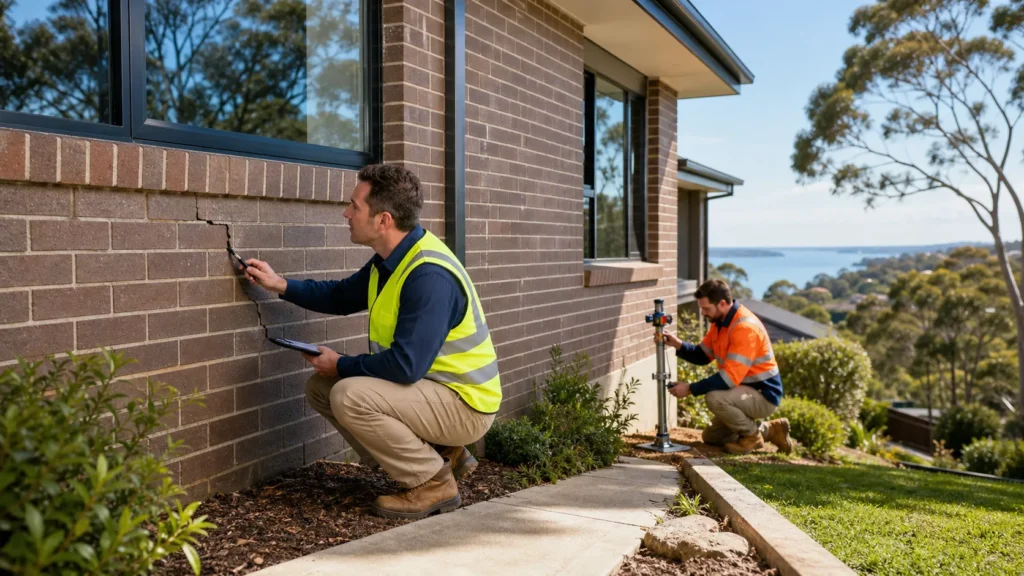
Foundation failures rarely announce themselves before construction begins. They emerge months or years later as cracks, settlement, and costly remediation. Avoiding common screw pile mistakes protects structural integrity from day one. Builders and project managers who skip early feasibility discussions risk delays that compound across the entire project timeline.
Why Do Some Screw Pile Installations Fail?
Installation failures trace back to inadequate site assessment. Screw pile foundations demand precise soil evaluation before any equipment arrives on site. A foundation system designed without understanding subsurface conditions cannot deliver reliable performance. The load capacity depends entirely on soil interaction with the helical blades.
How Can Builders Prevent Costly Rework?
Prevention starts with a structured approach to planning and execution. Follow these steps to eliminate the most frequent errors:
Conduct a geotechnical investigation before design. Soil type, density, and bearing capacity determine pile specifications. Skipping this step leads to undersized or misplaced piles.
Verify installation torque during placement. Torque correlates directly with load capacity. Crews must monitor and record torque values for every pile.
Confirm pile alignment and depth against engineering plans. Deviations compromise load distribution. A spotter verifies each pile’s position while the operator drives it.
Schedule early feasibility discussions with the foundation provider. Early feasibility discussions reduce project delays and enhance overall performance. These conversations align site conditions with the right helical foundation systems.
What Happens When Curing Time Is Ignored?
Traditional concrete foundations introduce mandatory waiting periods. Screw piling vs concrete comparisons highlight a critical advantage: screw piles provide immediate structural performance in tension and compression. There is no curing delay. Builders who treat screw piles like concrete footings waste the speed benefit. Screw piling installation completes in minutes per pile, whether using handheld tools or excavator-mounted drives. Typically, only two crew members handle the entire process, an operator and a spotter. This efficiency disappears when scheduling fails to account for the instant load-bearing capability.
Helical piles residential projects benefit most from this immediacy. Modular home deliveries and tight construction schedules cannot absorb unnecessary downtime. The foundation is ready the moment the last pile reaches specified torque.
Conclusion
Screw pile foundations deliver immediate load capacity without excavation, curing delays, or vibration, making them the practical choice for sloping sites, tight access, and sustainable builds. Builders who prioritize early soil assessment and torque verification eliminate costly rework and keep projects on schedule.