Early Signs Your Sydney Home Needs Foundation Repair
Foundation problems in Sydney rarely start with something dramatic. They usually begin with small cracks, a sticky door or a floor that feels a bit off. These little changes can be early signs that your home is moving on its foundations. Left alone, that movement can turn into bigger structural issues that are harder and more disruptive to fix.
Across Sydney and NSW, our homes work hard. Reactive clays that swell and shrink, sloping sites, coastal conditions and older housing stock all put constant stress on footings and slabs. In this article, we run through early warning signs to watch for, what they often mean, when it is time to worry and how options like screw piles can fit into a foundation repair plan.
Do Not Ignore These Early Warning Signs
Sydney and NSW have plenty of reactive clay suburbs where the soil changes volume as it wets and dries. Areas with deep clays, cut and fill sites or steep blocks, common in parts of Western Sydney and the North Shore, can be especially prone to movement.
Catching that movement early is key. Acting sooner can:
- Reduce the risk of major structural cracking
- Limit disruption to families or tenants
- Help you plan repairs around other works or renovations
What starts as a hairline crack can grow into doors that no longer close, broken tiles and uneven slabs. Once that happens, repairs often need more engineering and more invasive work. Watching for early signs gives you options while the problem is still smaller.
Cracks That Tell a Bigger Story
Not every crack means you need foundation repair, but some crack patterns grab attention straight away.
Wall cracks that matter often include:
- Diagonal cracks above doors and windows
- Step cracking that follows mortar joints in brickwork
- Cracks that reopen after you have patched and painted
These cracks can show that one part of the building is moving differently to another, which points to footing or slab movement.
Inside, keep an eye on:
- Gaps between skirting boards and the floor
- Cornice cracks at wall and ceiling junctions
- Floor tiles popping or grout lines widening
- Cracks that appear or grow after long dry periods or big rain events
To assess severity, look at:
- Size: very fine hairline cracks are common, wider cracks are more worrying
- Pattern: repeated diagonal or stepped cracks tell more than one random mark
- Change over time: if a crack keeps growing or reopening, it is worth attention
Builders, engineers and piling contractors start to take things seriously when cracks are wide enough to fit a coin, move over a short period or appear in key structural areas like corners, openings and slab edges.
Floors, Doors and Windows Out of Level
Floors often give early hints that foundations are not performing as they should. You might notice:
- A slope where furniture does not sit level
- A “bouncy” feel in some parts of a timber floor
- Soft spots or slight dips that were not there before
These can be signs of localised settlement or footing issues rather than just old flooring. With slab-on-ground homes, an uneven feeling as you walk can point to movement under part of the slab.
Sticking doors and windows are another classic sign. When frames rack out of square because the structure has shifted, you may see:
- Latches that suddenly misalign
- Doors scraping on the floor or frame
- Windows that used to slide easily, now catching or jamming
It is common to blame this on humidity or an “old house,” but repeated issues in the same areas often link back to subtle foundation movement.
Simple on-site checks include:
- Using a bubble level or laser level to see how far floors are out
- Placing a marble on the floor to see if it rolls in a particular direction
- Taking photos of gaps at doors and windows and checking them again a few months later
Recording these changes helps you and any professional you bring in decide if the movement is active and if foundation repair is needed.
Outside Clues Around Your Site and Soil
The ground and structures around your home can tell you a lot about what is happening under the slab.
Site and soil red flags include:
- Known reactive clay suburbs and old filled sites
- Houses on cut and fill platforms on slopes
- Homes close to retaining walls or deeper excavations
External movement signs to watch for:
- Brick expansion joints opening wider than expected
- Verandahs, decks or stairs pulling away from the main building
- Cracking in garden paths or driveways close to the house line
Weather and drainage have a big impact. Problems often show up:
- After long dry periods followed by heavy rain
- Near downpipes, leaking stormwater or blocked drains
- Close to large trees whose roots change moisture levels under the footings
Poor surface drainage, water ponding against the house or sudden changes to garden levels can all increase movement risk. On many Sydney sites, simple things like redirecting downpipes or fixing a leaking soaker can make a big difference to how stable the soil stays.
When to Call in the Pros and How Screw Piles Help
Some movement is normal, but “watch and wait” becomes risky when you see:
- Cracks that grow over weeks or months
- Multiple signs lining up, such as cracks plus sticking doors plus sloping floors
- Impacts on structural elements like corners, beam lines or load-bearing walls
For rental properties or multi-dwelling sites, delay can also affect tenants, neighbouring units and future building work.
A proper investigation usually involves:
- A site inspection to look at cracks, levels and drainage
- Input from a structural engineer to assess the building and design repairs
- Soil testing where needed to understand how the ground is behaving
From there, the engineer and contractor may weigh up options like underpinning, slab jacking or screw piling, depending on access, soil and structure.
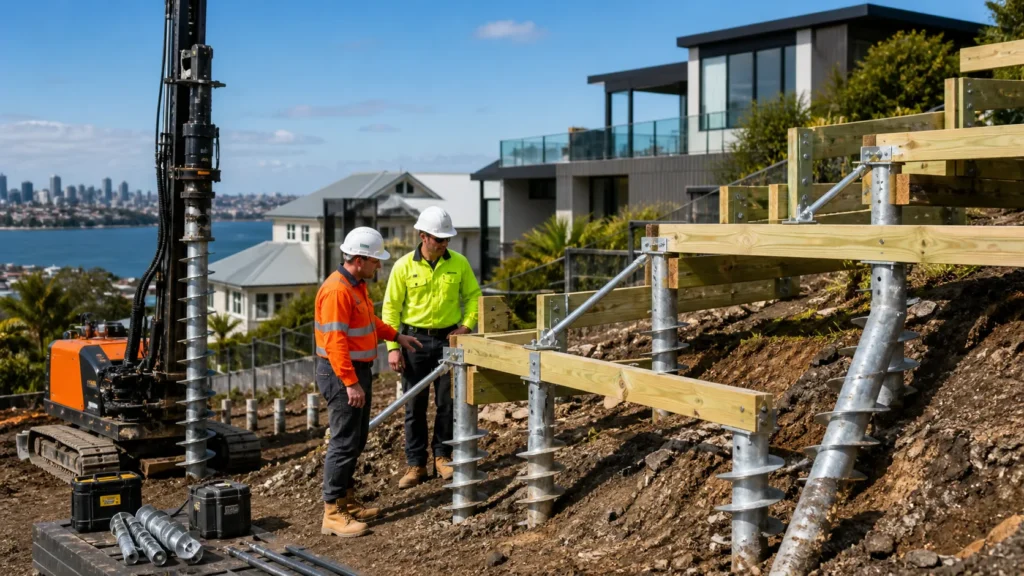
Screw piles often suit Sydney repairs because they:
- Install quickly with minimal excavation and spoil
- Create little vibration, handy for older or sensitive structures
- Work well in tight access areas and under existing buildings
- Can be connected back to existing footings to stabilise or help re-level
On typical infill sites or tight side setbacks, screw piles can be installed with compact machinery, keeping disruption and mess down compared with more traditional underpinning.
Next Steps If You Are Seeing These Signs
If you are noticing some of the signs covered here, a simple checklist can help you get organised:
- Photograph all visible cracks and label them with dates
- Mark crack ends lightly with pencil so you can see if they grow
- Check gutters, downpipes and drainage for obvious problems
- Collect any original plans or past engineering reports
It is also smart to think about timing. Engineers and specialist contractors often book out ahead of busy seasons, so planning assessments early lets you slot foundation work in around other trades or renovation stages.
If you are unsure whether what you are seeing is cosmetic or structural, start by speaking with a structural engineer or an experienced foundation contractor who works regularly in Sydney and NSW soils. Early action protects the value of the property, reduces the chance of surprise costs mid-renovation and gives everyone involved more confidence in the long-term performance of the home or project.
Get Started With Your Project Today
If you have noticed cracks, movement or subsidence around your home, our team at Screw Piling is ready to help you stabilise your structure before the damage worsens. We provide tailored solutions for foundation repair in Sydney, using proven techniques to support your property for the long term. Reach out to our specialists today so we can assess your site, explain your options clearly and give you confidence in your building’s future.