Get Your Site Ready for Fast, Clean Screw Pile Work
Good screw pile installation starts long before the rig turns up at the kerb. On tight Sydney and NSW sites, access planning matters just as much as soil testing if you want the job finished quickly and without headaches. When the path in from the street is sorted, screw piles can go in fast, clean and with far less disruption to everyone around the site.
When access is not checked properly, things can go sideways very quickly. Machines cannot reach the pier locations, trucks block traffic, neighbours complain, and suddenly there are delays, redesigns and extra costs. In some cases, piles need to be re-engineered to suit different equipment because the original plan ignored basic access limits.
Across NSW, the same access issues pop up again and again. This practical access risk checklist is something builders, designers and homeowners can run through before booking a screw piling crew. It is about simple measurements, clear permissions and having a backup plan, not guesswork on the day.
Measure up the Access Route From Street to Pile Locations
Start at the street and work your way in. The whole path, not just the gate opening, matters for screw pile installation.
From the street front, check:
- Width of the road and any parking restrictions
- Space for trucks to stop safely without blocking traffic
- Room for a piling rig or skid steer to unload and set up
On many inner-west or older suburban streets, parking on both sides can leave only a narrow lane for plant and deliveries. If there is nowhere legal to stand a truck, the crew will be stuck before they even start.
Next, measure every pinch point:
- Gate openings and side passages
- Driveway width and turning areas
- Carports, pergolas, low eaves and verandahs
- Overhanging stairs, decks or awnings
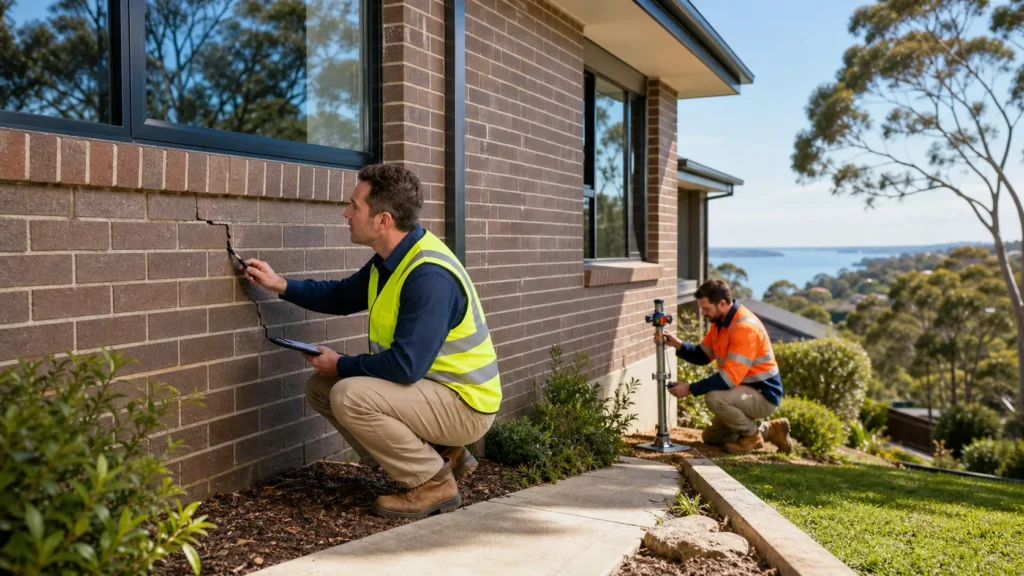
Do not just guess. Grab a tape and note the tightest width and height along the way. Remember that piles are long and rigs need space to swing, not just squeeze through. A tight dog-leg in a side path or a fixed post in the middle of a carport can stop a machine even if the clear width on paper looks fine.
Then plan the machine path on site. Think about:
- How to reach every pier location from the main access point
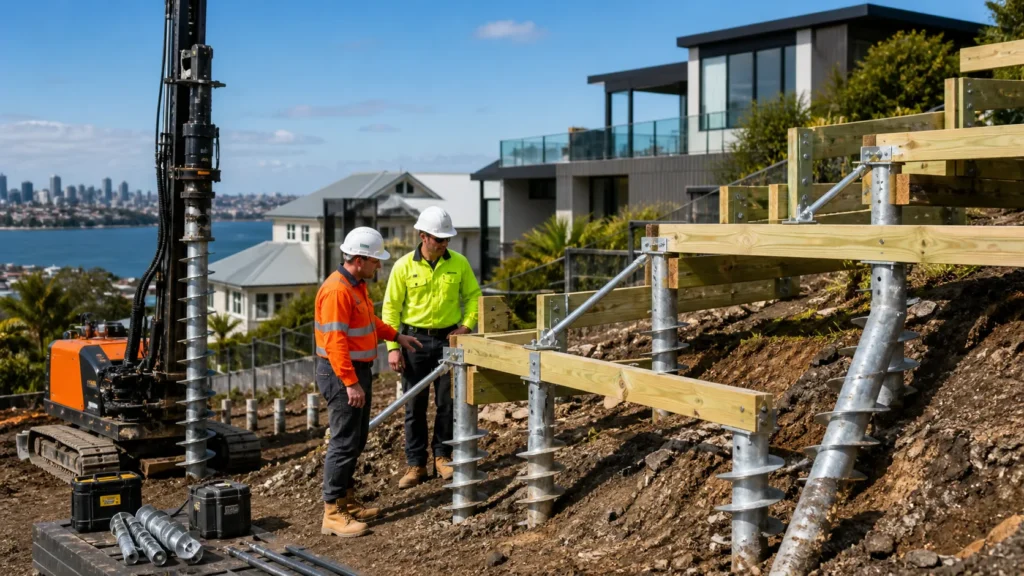
- Sloping blocks where traction or stability could be an issue
- Knock-down rebuilds with rubble or uneven ground
- Rear lane or battle-axe access where turning is limited
A simple marked-up site plan with arrows for plant movement can highlight clashes early, so they can be worked around before the crew is locked in.
Height, Services and Hidden Risks
Horizontal access is only half the story. Mast height and lifting gear mean vertical clearance is just as important.
Walk the route and look up for:
- Overhead power lines and service drops
- NBN cables and pay TV lines
- Tree branches, balconies and scaffolding
If there is any doubt, flag it. Adjusting rig setup or pile handling is far easier in planning than when the machine is already on site.
Next, think about what is under the surface. Before screw pile installation, you want the best possible picture of underground services. Use the national referral service, talk with the builder and review the latest site plans to locate:
- Sewer mains, junctions and house connections
- Stormwater lines, pits and soakaways
- Water, gas and electrical conduits
- Old footings, tanks or unknown structures
In many older NSW suburbs, services have been added, moved or repaired over time, so plans might not tell the full story. Steep sites around escarpments or coastal areas often have retaining walls and services right on the boundary, which can limit pile locations and machine set-ups. Passing this information to the screw piling engineer lets them refine layouts and work methods before anyone drills into something they should not.
Ground, Weather and Site Stability Checks
A rig is only as safe as the ground it sits on. Soft or inconsistent ground can bog machinery or put it out of level, both of which slow the job and increase risk.
Walk the site and look for:
- Soft fill, topsoil or obvious recent backfill
- Wet clay patches or seepage points
- Sandy pockets, especially near coastal areas
- Rubble and demolition waste on knock-down sites
Seasonal conditions matter. In spring, for example, post-winter moisture and showers can leave low spots boggy even when the surface looks dry. Poor drainage or stockpiles in the wrong place can turn the main access track into mud after one wet day.
To keep things moving, think about temporary works such as:
- Bog mats or timber mats on soft patches
- Compacted gravel access tracks for the main route
- Clearly defined working platforms near pile clusters
- Simple spoil management so cuttings do not block paths
These measures can be planned with the piling contractor once the main risks are flagged, saving time when the weather does not cooperate.
Permissions, Neighbours and Council Expectations
Access is not just about space; it is also about permission. Different approvals and conditions can affect how and where a screw piling crew can work.
Before locking anything in, check:
- DA or CDC conditions about working hours and noise
- Limits on vibration or heavy plant near boundaries
- Any requirements for traffic control or use of public land
If you plan to use an adjoining driveway, yard or shared laneway, get written consent. This can include:
- Neighbour agreements for temporary access
- Strata or body corporate approvals in unit blocks or townhouses
- Rules on where plant can stand and how long it can stay
Good neighbour relations make access much smoother. It helps to:
- Give advance notice of delivery and piling dates
- Explain what screw pile installation involves in simple terms
- Agree on protection for fences, gardens and driveways
- Set expectations about noise, truck movements and duration
A bit of clear communication up front often prevents complaints and council attention later.
Contingency Plans When Access Is Not Straightforward
Even with the best planning, some sites are just tight or change halfway through a project. That is where a solid Plan B for screw pile installation can save the program.
Work with the piling team to consider:
- Smaller rigs or different plant if the main machine cannot fit
- Sectional screw piles that can be carried in shorter lengths
- Hand-assist methods for final positioning in tight spots
- Staging from different access points, like a rear lane instead of the front
It also pays to budget time and allowances for “what if” situations such as:
- Obstructions that cannot be moved, like protected trees
- Unknown underground services that force pile relocations
- Softer ground than expected needing more temporary works
- Extra crane or skid steer time to lift gear over or around structures
On NSW sites like narrow terrace infills, steep north shore blocks or coastal renovations on constrained land, these kinds of backup options are often what keep work moving when conditions change mid-job.
Turn Your Access Checklist Into a Ready-To-Build Site
A simple pre-install access risk assessment can make screw pile installation far more predictable. Fewer surprises mean less downtime for crews, safer working conditions and a shorter path to getting your slab or structure out of the ground.
Before you book a piling crew, it helps to have ready:
- Measured widths and heights along the full access path
- Photos or short videos of gates, side paths and tight areas
- Service plans and any known site quirks from the builder
- Notes on DA, CDC or neighbour conditions that affect access
- Any likely Plan B options you already see on the site
Across NSW, clear access information shared early lets a piling contractor match suitable gear and pile methods to the job and agree on sensible backup plans before day one on site. That preparation is often what turns a tricky Sydney or regional block into a straightforward screw pile install.
Get Started With Your Project Today
If you are planning a new build or upgrade and want a reliable foundation solution, we are ready to help you map out the best approach. At Screw Piling, our experienced team can assess your site conditions and recommend the most efficient screw pile installation for your project. We focus on clear communication, precise workmanship and minimal disruption on site to keep your timeline on track. Reach out to our team today to discuss your plans and get a tailored quote.