Build Faster on Live Sydney Sites Without Concrete Hassle
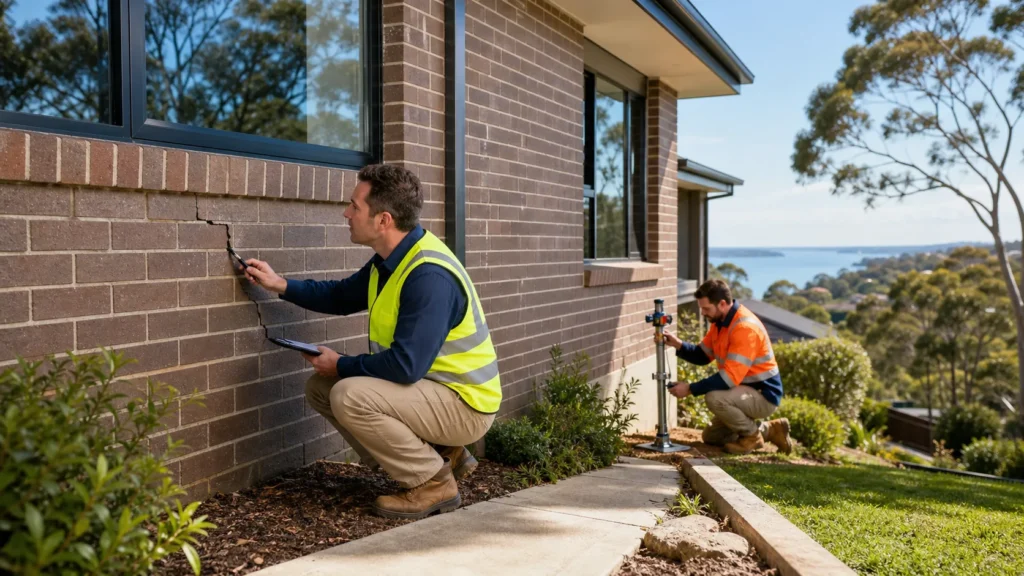
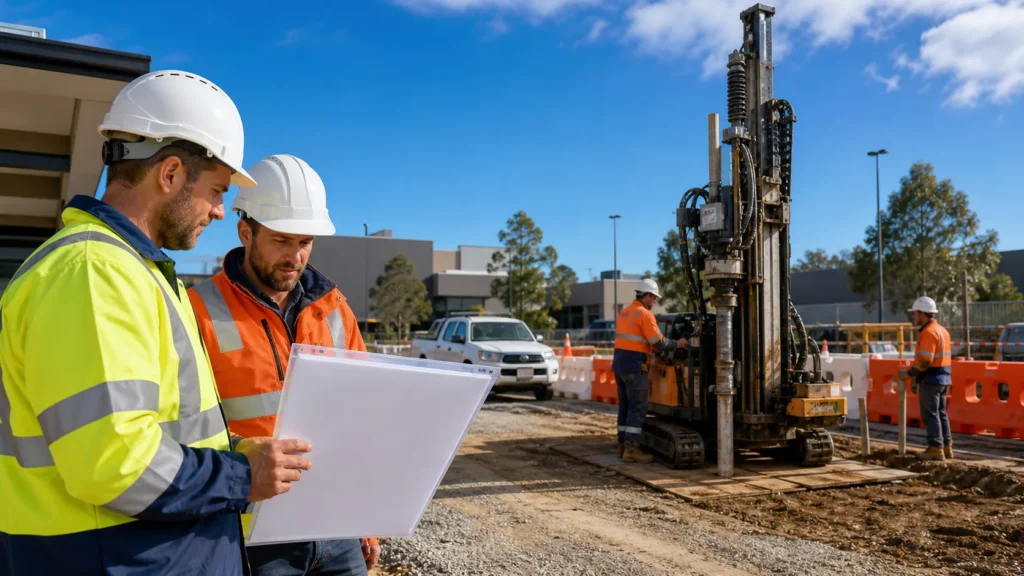
Concrete is solid and familiar, but on a live Sydney site it can slow everything down. Tight streets, cranky neighbours, noise limits, wet clay, and limited access all turn a simple footing pour into days of waiting and working around problems.
That is why more builders, developers and homeowners are asking about concrete alternatives for foundations. On tricky sites, systems like screw piles, bored piers, micropiles and modular footings can keep programs moving without constant delays from curing, rain or access headaches. The key is to compare them by the things that really hurt your schedule: disruption, curing time, wet-weather risk and how quickly you can get sign-off from your engineer and council or certifier.
What Really Slows Down Foundations on Live Jobs
On paper, concrete footings look easy. On a live job, all the hidden delays start to creep in. We see the same four pain points across Sydney:
- Noise and vibration limits near schools, hospitals and strata
- Curing time, where everyone is waiting for strength before loading
- Wet-weather shutdowns, especially on clay and in basements
- Approval and inspection delays holding up pours
In late winter and early spring, Sydney clay sites are often saturated. Reactive clays swell, trenches slump and open pier holes cave in. In tight streets, basement works can fill with water overnight. Every shower means reworking holes, pumping water and rebooking concrete.
The real cost is not just the footing concrete. It comes from:
- Extra prelims while programs stretch out
- Crane or pump standing time while surfaces are fixed
- Traffic control for one more concrete truck in a narrow street
- Other trades sitting off-site because the structure cannot start
Concrete still has its place, but on live sites with neighbours on the fence line and no room to move, it is worth looking hard at other options.
Screw Piles on Tight Sydney Sites
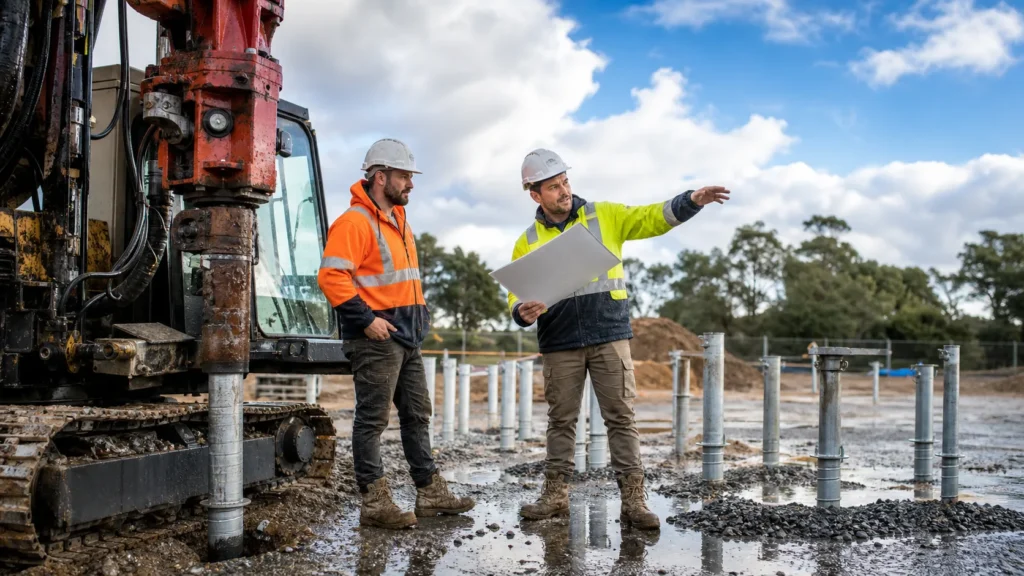
Screw piling suits many Sydney projects because it gives you foundation capacity without big excavations or waiting on a pour.
On disruption, typical screw piling rigs used around NSW are compact machines that can get down side paths or into backyards. Noise levels are usually closer to a small excavator than a rock breaker, and vibration is much lower than heavy driven piles. That is a big help for attached dwellings, heritage structures and live commercial fit-outs where movement needs to stay minimal.
For curing and wet weather, screw piles carry load as soon as they are installed. There is no waiting days for concrete to reach design strength before you stand steel or set frames. Because there is no open hole, rain is less of an issue. Wet ground is still a factor, but you are not trying to keep a shaft open and clean for a concrete pour while the sides slough off.
From a design and sign-off point of view, screw piles are engineered like any other structural element. A structural engineer designs the pile size, depth and layout to suit the soil report and loads. On site, installers typically carry out:
- Torque monitoring to confirm capacity during installation
- Proof load testing on selected piles if specified
- As-built records for pile depths and locations
Councils and private certifiers in Sydney are generally comfortable when they see proper engineering, geotech input where required and installation records. For example, a small terrace extension in the Inner West with tight access and close neighbours is often easier on screw piles than on bored piers. The piles go in from a compact rig, and the builder can start the slab or steel right after installation without waiting on concrete inspections or curing.
Bored Piers and Micropiles on Constrained Urban Sites
Bored piers are a common footing type, but they come with their own site impacts. The process usually involves:
- Drilling or augering each pier
- Managing spoil and trucking it off site
- Using liners in loose sands or when groundwater is high
- Trying to keep the hole dry and clean for the pour
Noise is similar to a medium excavator or drilling rig, and while vibration is not usually high, truck movements and spoil handling can be disruptive in a narrow suburban street. Wet weather is a major problem. Rain can soften the sides, collapse holes or contaminate the base. Every delay means more checking, re-drilling or rebooking the concrete.
Micropiles are used where access is tight or loads are very high, such as underpinning existing structures or deep basements. They involve smaller diameter drilling, then grout injection and reinforcement. They are very handy where big rigs cannot enter, but:
- Drilling noise can be significant in enclosed spaces
- Grout has to cure before full load can be applied
- Pumping and grout lines add to site clutter
Despite the disruption, micropiles are sometimes the only realistic option where ground conditions are complex or loads are beyond what other systems can comfortably handle. On approvals, both bored piers and micropiles are well understood by engineers and councils across Sydney. Common requirements include soil reports, detailed designs, inspection of reinforcing and cages before pour, and in the case of micropiles, grout records and sometimes load tests.
Modular Footing Systems for Light Structures
Modular footing systems cover a range of products, from precast concrete pads to screw-in modular posts and hybrid systems combined with lightweight floor frames. They usually suit light structures such as:
- Decks and verandahs
- Granny flats and studios
- Transportable buildings
- Light-framed dwellings on sloping or reactive sites
The main drawcard is speed and reduced disruption. A small modular footing layout can often be installed in a day with handheld or small plant equipment. There is little or no wet trade work, so winter clay and boggy sites are less of a headache. Compared with a conventional strip footing and slab, you can often avoid:
- Trench excavation and spoil removal
- Waiting for inspections before pouring
- Curing delays before framing
The trade-off is capacity and compatibility. Modular footings have load limits and work best when paired with floor systems designed around them. Engineers and certifiers are usually comfortable with proprietary systems that come with tested capacities and clear design guides, especially on lighter structures. For heavier residential, commercial or multi-storey work, modular systems may not be suitable as the primary foundation, or they might be used only in selected areas like verandahs, stairs or decks.
Choosing the Right Concrete Alternative for Foundations
When you compare concrete alternatives for foundations, it helps to look at the four filters side by side:
- Disruption: Screw piles are low vibration and moderate noise, good for close neighbours. Bored piers and micropiles have more noise, truck movements and spoil. Modular footings often have the lightest impact.
- Curing time: Screw piles and most modular systems can be loaded almost straight away. Bored piers and micropiles need grout or concrete curing before full load.
- Wet-weather risk: Screw piles and modular footings handle wet ground better than open excavations. Bored piers and micropiles are more weather sensitive, especially where holes must stay open.
- Sign-off: All systems rely on good engineering. Screw piles, bored piers and micropiles are widely used and accepted. Modular systems are usually fine for lighter work if they are proven products and used as designed.
As rough rules of thumb:
- Rear extension with tight access and neighbours close: screw piles or modular footings for light structures
- Duplex on reactive clay: screw piles or bored piers, depending on engineer preference and access
- Infill commercial build on a busy road: screw piles to cut down on spoil, truck movements and curing delays
- Live refurbishment over existing services: screw piles or micropiles, chosen around load levels and underground services
Before locking anything in, it helps to have a current soil report, preliminary plans, clear notes on access and staging requirements and any known noise limits. With those in hand, your engineer and piling contractor can run through options and pick the foundation system that keeps your Sydney project moving with less disruption and less time lost to concrete problems.
Get Started With Your Project Today
If you are exploring smarter, faster and cleaner ways to build, we can help you choose the right concrete alternatives for foundations for your site and soil conditions. At Screw Piling, we work closely with you to tailor a solution that supports your design, budget and timeframe. Talk with our team to discuss your project requirements and we will guide you through the next steps with clear, practical advice.