Faster, Cleaner Foundations for Modern Modular Builds
Modular homes are becoming a popular way to build across Sydney and regional NSW. The appeal is simple: you get speed, cost certainty, and consistent quality from factory-built modules. But even the best-designed modular home will only perform as well as the foundations it sits on.
For many projects, the slow part is not the factory; it is the site. Traditional footings and slabs can be held up by wet weather, excavation issues, access problems, and unknown ground conditions. That delay can throw out crane bookings, transport dates and handover plans.
Screw piles offer a different way to think about modular home foundations. They are fast to install, work well in tricky ground and give accurate set-out for dropping in modules. Through spring and into the hot, stormy months, being able to get foundations in quickly and cleanly is a real advantage on NSW jobs.
What Modular Home Foundations Really Need to Deliver
Modular homes and transportable homes load foundations a bit differently to a site-built frame. You have concentrated loads at chassis points, joining lines and perimeter beams. The foundations need to be designed to carry those loads without unwanted movement.
Good modular home foundations should deliver:
- Correct load capacity for each support point
- Minimal movement over time, even in changing moisture conditions
- Long-term durability in contact with local soil and groundwater
- Reliable performance when modules are joined, stacked or extended later
There are also practical things that matter on modular projects. Foundations need:
- Precise set-out and heights so modules sit level on installation day
- Tolerances to suit crane lifting, swing paths and set-down points
- Flexibility for staggered delivery of modules and staged services
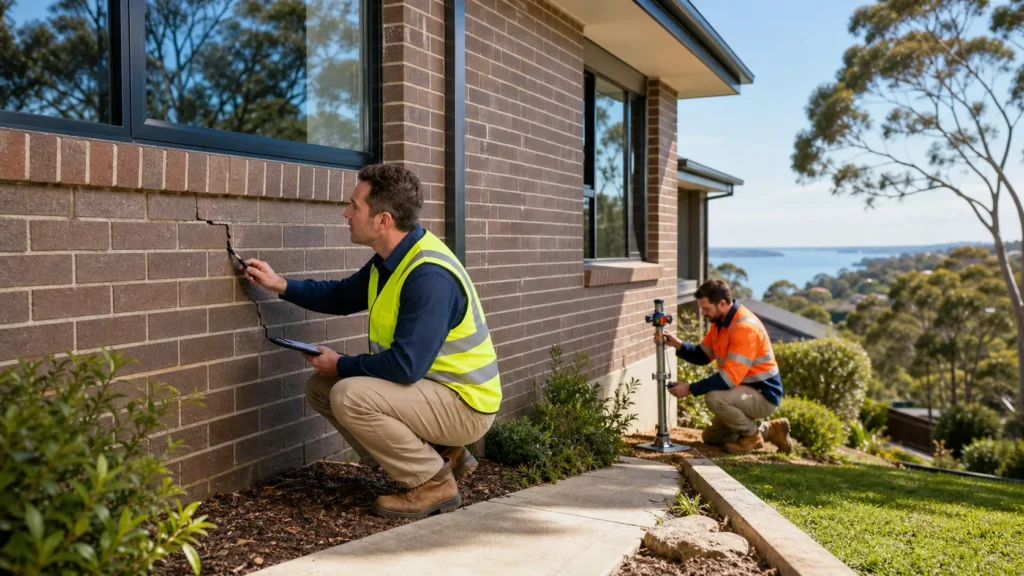
In NSW, the ground is rarely simple. Western Sydney has reactive clays that shrink and swell with moisture. Coastal areas often have sandy or alluvial soils. Many subdivided blocks sit on fill of unknown depth, and regional blocks may be sloping, rocky or in bushfire-prone areas with access limits.
This is why modular home foundations have to be designed differently to suit off-site construction and fast on-site assembly. The system needs to cope with the actual ground on site, but also match the way the modules are built and handled in the factory.
Why Screw Piles Suit NSW Modular Home Sites
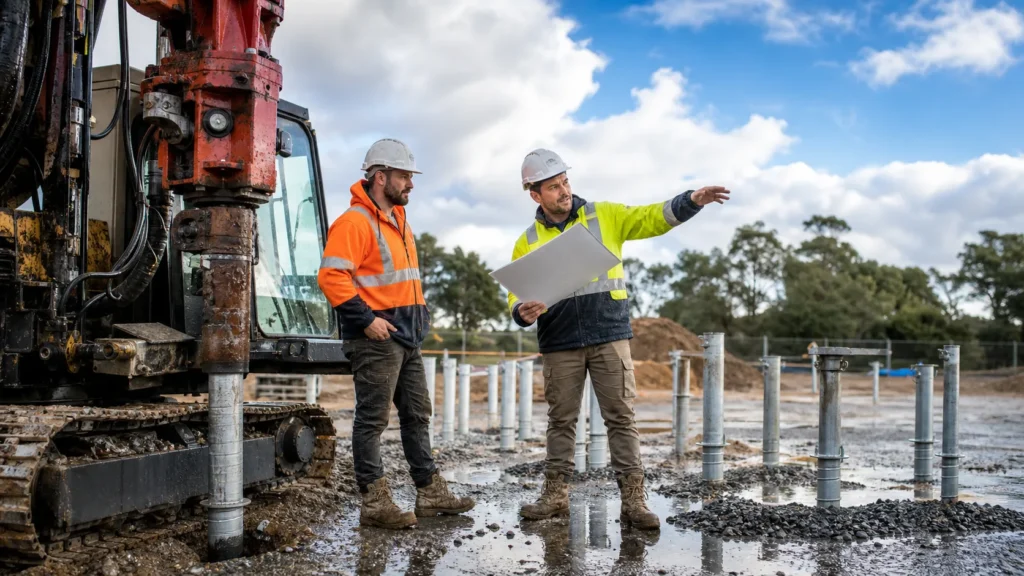
Screw piles are steel piles with helical blades that are screwed into the ground using hydraulic machinery. For modular homes, they can tick a lot of boxes in one hit.
On most residential modular sites, screw piles can be installed in a day or two, sometimes even faster for simple layouts. As soon as the piles are in and cut to height, the site is generally ready for bearers or steel, then modules can follow soon after. There is no waiting for concrete to cure and less worry about rain slowing things down.
Screw piles also mean minimal disturbance. We usually see:
- Little or no bulk excavation
- No spoil heaps sitting around the block
- Minimal concrete required at the top connection only
- Smaller machines that work well on narrow suburban sites
That makes them well suited to knockdown-rebuild, infill lots and tight Sydney streets where getting big excavation gear and concrete trucks in is a headache.
In tough ground, screw piles really start to shine. In many NSW locations they perform well in:
- Soft alluvial and floodplain soils near rivers and creeks
- Deep or variable fill on new estates or older subdivisions
- High water table areas where open excavations can collapse
- Sloping sites where you need varied pile lengths to reach consistent capacity
Across Western Sydney, the Central Coast and the South Coast, we often see a mix of clays, fill and softer layers on the one site. Screw piles can be adjusted in length during installation to reach the required torque, which is used as a real-time check of capacity. Wet spring weather is also less of a problem because we are not leaving open holes that fill with water or collapse.
Comparing Screw Piles with Traditional Footings
For a typical three-bedroom modular home, the differences on site between screw piles and traditional concrete footings or slab-on-ground are obvious.
In time and program terms:
- Screw piles are installed and ready to load almost straight away
- Traditional footings can need excavation, formwork, inspections and curing time
- Rain can stop digging and pour days for concrete systems
For risk and certainty, screw piles give immediate, measurable performance. With bored piers or strip footings, unknown rock levels, soft spots or over-excavation can mean last-minute changes, extra concrete or extra steel. If concrete is poured in poor conditions, there can be questions later about how it will perform.
Access is another big factor. Screw piles work well when:
- There is narrow side access or shared driveways
- The street is busy and concrete truck time on-site needs to be limited
- The block is steep and safe excavation is difficult
In reactive clay areas, like growth corridors in north-west and south-west Sydney, foundations supported on screw piles can help reduce the risk of cracking and differential settlement compared to shallow footings alone. The piles carry loads down to more stable layers, so seasonal surface movement has less impact on the home.
Designing Screw Pile Solutions for Modular Homes
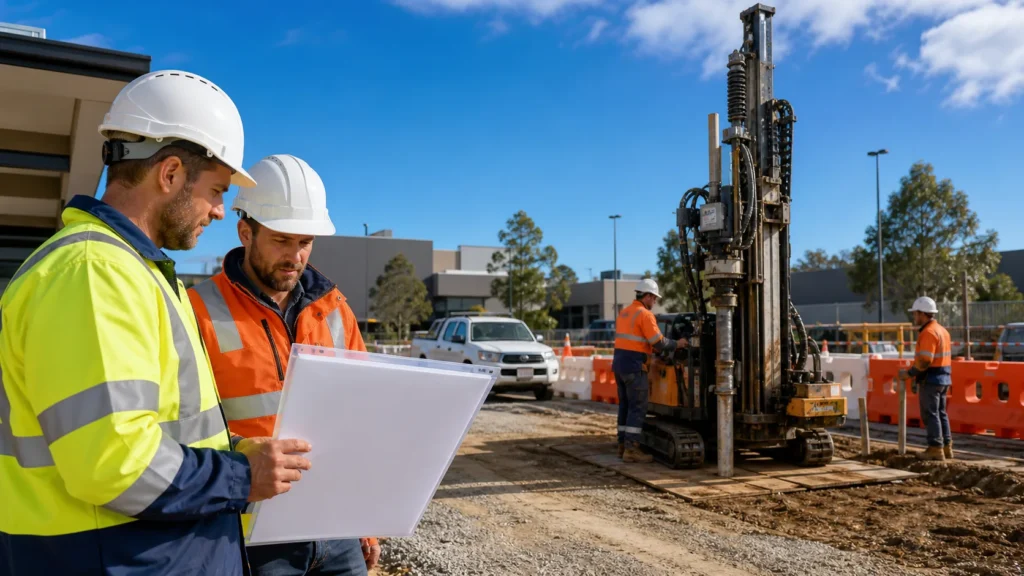
Getting screw piles right starts with engineering. For modular homes, we work with designers, builders and consulting engineers so pile sizes, layout and capacities match:
- Chassis and bearer layouts
- Module joint lines and support points
- Transport and crane loads that may come through some supports
Soil testing and geotechnical reports are important background. On many NSW modular projects the ground can change across the site, so we also rely on on-site torque readings during installation. Those readings confirm that each screw pile is achieving the expected performance, and they can guide adjustments to pile length on the spot.
Coordination with other trades is another key part. We put a lot of focus on:
- Setting out to match factory drawings and module grids
- Cutting pile heads to the right height so bearers or steel align cleanly
- Leaving clear paths and connection points for plumbing, electrical and other services
When modular home foundations are designed with screw piles from the start, installation day is normally smoother. The truck and crane arrive, the piles are ready, and the modules sit down within the planned tolerances. That reduces stress for the builder and everyone else on-site.
Practical Considerations Before You Lock in Your Footings
Before you decide on any foundation system for a modular build in NSW, it helps to think through a few practical points.
For approvals and compliance, local councils and certifiers will generally require:
- Appropriate DA or CDC approvals for the dwelling
- Piling design and documentation in line with relevant Australian Standards, such as AS 2159 for piling
- Engineering certification that ties the pile system to the modular home design
On the budget side, it is important to compare like for like. With screw piles you should consider:
- Pile supply and installation
- Engineering design and certification
- Any soil testing or geotech work
- Allowance for unknown ground conditions
While no system can remove every risk, screw piles can help control cost uncertainty on complex or unknown ground because the installation is monitored in real time and pile lengths can be adapted as needed.
Program and sequencing is also a big one on modular projects. Good planning links:
- Screw pile installation dates
- Factory build milestones
- Transport bookings and crane dates
That way the foundations are ready when the modules are, and you do not have expensive holding costs while you wait for the site to catch up.
For sites with existing structures, like extensions, second dwellings or granny flats, it is worth thinking early about how the new modular section will tie into old footings and services. Screw piles can often work neatly around existing pipes, slabs and trees, reducing the need to disturb what is already performing well.
Plan Stable, Fast Foundations for Your Next Modular Build
For many modular homes across Sydney and NSW, screw piles are worth serious consideration. They come into their own where the ground is reactive or unknown, the block is tight or sloping, the program is compressed or the builder wants less weather risk and more predictable performance.
The main thing is to treat modular home foundations as part of the overall design from day one, not as an afterthought. When the factory, engineer and piling contractor all work to the same plan, the shift from factory floor to finished home is much smoother, from the first pile going in to final handover.
Get Started With Your Project Today
If you are planning a new modular build, we can help you design and install reliable modular home foundations tailored to your site conditions. Our experienced team at Screw Piling works closely with you and your builder to keep your project on time and within budget. Talk with us about your site, soil and design requirements so we can recommend the most efficient piling solution. Reach out today to get practical advice and a clear path forward for your foundation works.