Extensions Fail or Succeed at the Footing Stage
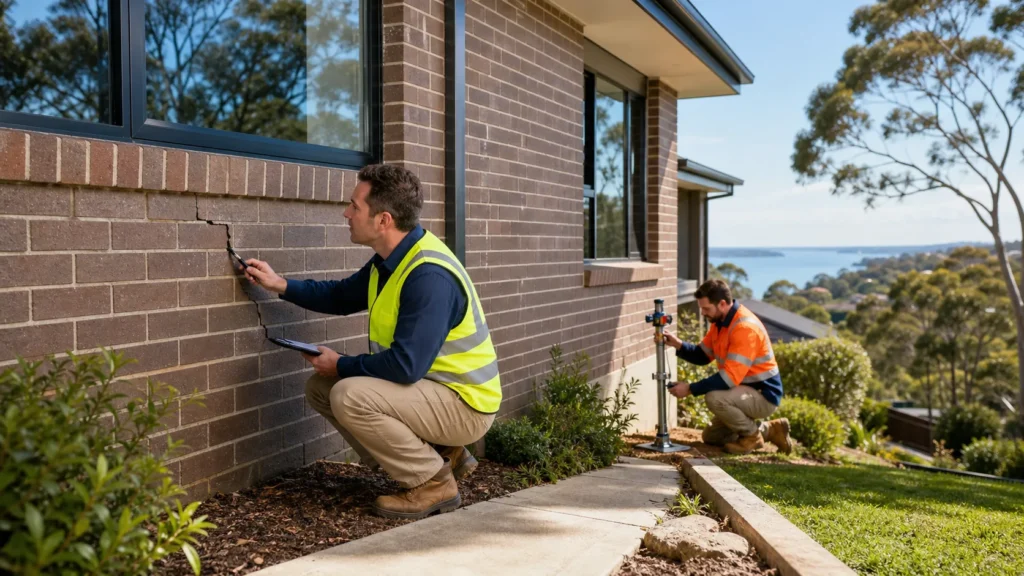
Extensions and renovations look simple compared to new builds—but from a foundation perspective, they are often more complex and higher risk.
Builders commonly face:
- Restricted access around existing structures
- Unknown or undocumented existing footings
- Occupied homes that limit excavation and disruption
- Tight sequencing where delays ripple through trades
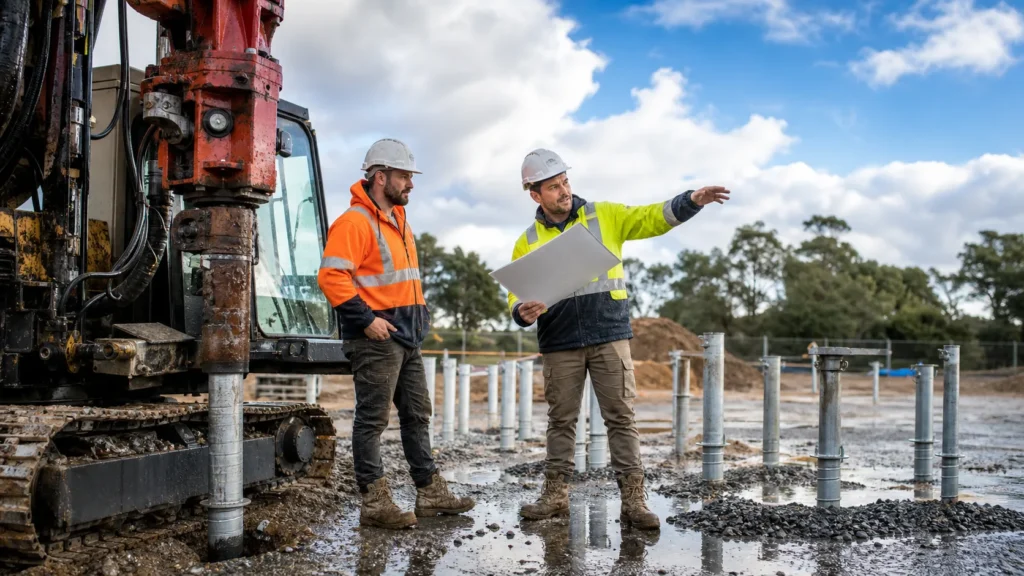
This is why screw piles are frequently specified for extensions and renovations—not because they’re trendy, but because they solve problems traditional footings struggle with.
This guide explains when screw piles are the right choice, when they’re not, and how builders can avoid approval and construction issues.
Why Extensions and Renovations Are Different to New Builds
Unlike greenfield sites, extension projects must work around:
- Existing buildings and footings
- Live services
- Boundary constraints
- Neighbouring structures
Excavation-based footings often introduce:
- Vibration risk to existing structures
- Undermining of adjacent footings
- Increased spoil handling in tight spaces
These constraints fundamentally change footing decisions.
How Screw Piles Suit Extension and Renovation Work
Screw piles are commonly used on extensions because they:
- Require minimal excavation
- Can be installed close to existing footings (subject to engineering)
- Reduce vibration compared to some driven systems
- Generate minimal spoil
This makes them particularly suitable for:
- Rear extensions
- Side additions with narrow access
- Second-storey additions requiring underpinning or new support.
Working Near Existing Footings: What Engineers Assess
When screw piles are proposed near existing structures, engineers consider:
- Load transfer paths between new and existing elements
- Separation distances from existing footings
- Potential for differential settlement
- Temporary support requirements during construction
This assessment—not convenience—determines whether screw piles are appropriate.
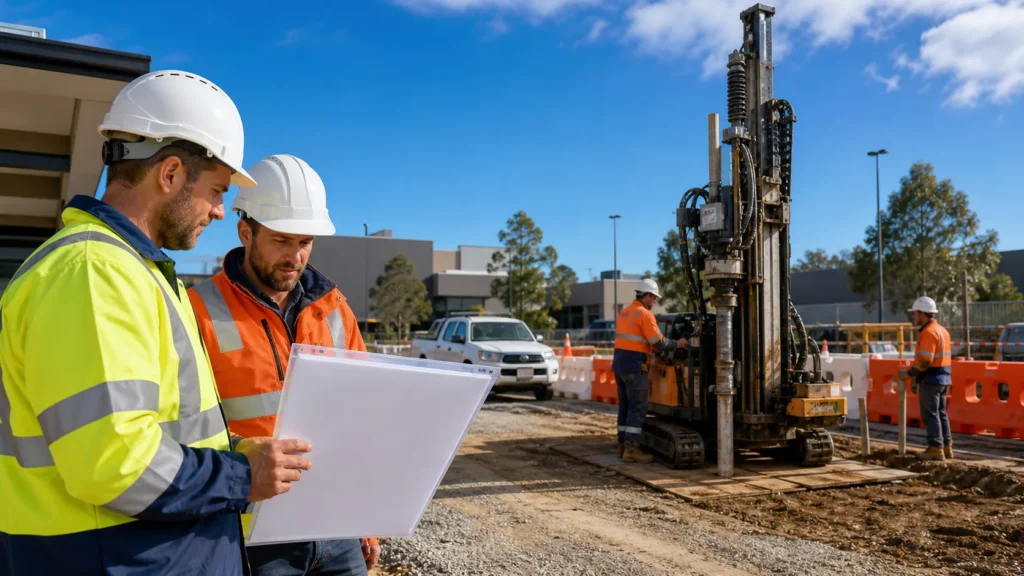
Access Constraints: A Major Driver for Screw Piling
Many renovation sites offer:
- Overhead restrictions (Leaves, services)
- Limited turning or staging space
Smaller screw piling rigs can often access sites where excavation equipment cannot, reducing the need for:
- Temporary demolition
- Hand excavation
- Costly site modifications
Access advantages alone often justify screw piling on renovation projects.
Minimising Disruption to Occupied Homes
For occupied dwellings, builders must manage:
- Noise
- Vibration
- Site cleanliness
- Safety for residents
Screw piles help reduce disruption by:
- Shortening footing installation time
- Limiting spoil stockpile
- Reducing repeated site visits during curing
This is a key reason they are favoured for lived-in renovations.
Engineering, Compliance, and Approvals
From an approval perspective, extensions using screw piles follow the same process as other structural work:
- Geotechnical assessment (where required)
- Structural engineering design
- Approved pile schedule
- Installation and documentation
- Certification
The presence of an existing structure does not reduce compliance requirements—it often increases scrutiny.
When Screw Piles May Not Be the Best Option
Screw piles may be unnecessary or unsuitable when:
- Existing footings are adequate and can be extended
- Ground conditions are uniform and accessible
- Shallow footings are engineered as sufficient
Good builders avoid defaulting to any one system.
Cost Considerations for Renovation Projects
On extensions, screw piles may:
- Increase upfront footing costs
- Reduce overall project risk and delays
- Lower costs associated with access and spoil
Builders should assess total project impact, not footing cost in isolation.
Key Takeaways for Builders (Featured Snippet Ready)
- Extensions introduce unique footing constraints
- Screw piles suit tight access and occupied sites
- Engineering determines suitability near existing footings
- Disruption and risk are often reduced
- Early planning avoids approval and sequencing issues
Frequently Asked Questions
Can screw piles be installed next to existing footings?
Are screw piles common for renovations?
Do renovations still require engineering approval?
Yes. Existing structures increase compliance scrutiny.
Are screw piles faster for extensions?
Often, due to reduced excavation and curing time.