Cut Wet-Weather Risk with Smarter Foundations
Rain, access dramas, and neighbour issues blow more NSW build programs off track than almost anything else. On many Sydney and regional sites, the ground is either too wet, too steep, too soft or too tight to work the way the drawings first planned. That is when footing work drags out, inspections slip and every other trade down the line cops the delay.
Traditional footing methods like bulk excavation, bored piers and strip footings all rely on dry, open space and clean access. When the wet-weather hits, trenches fill with water, sides collapse, formwork floats and concrete bookings get bumped. On tight blocks, getting a big rig in for deep bored piers or carting spoil through a terrace becomes its own headache.
This is why more builders are turning to screw piling in NSW as a way to cut risk from the program. By swapping deep wet concrete work for quick screw pile installs, they are locking in start dates, keeping framing on schedule and keeping clients and neighbours a lot calmer.
Why Screw Piles Suit Real-World NSW Sites
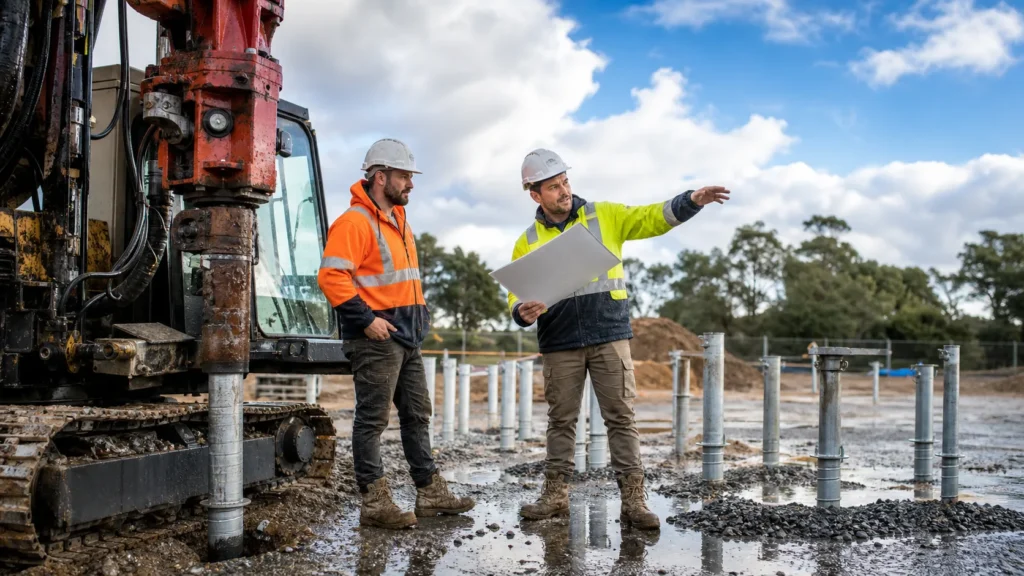
Screw piles are steel piles with helical plates that are rotated into the ground using hydraulic torque. They go in with compact plant, often a small excavator with a drive head, rather than large drilling rigs and big excavation gear.
On real-world NSW sites, that matters because:
- Smaller machinery fits down driveways, laneways and tight side access
- There are no huge spoil heaps from big holes or trenches
- Less mess around the block, so less clean-up and less damage to finished surfaces
- Installation is usually faster, often in a single visit for typical house slabs
Across NSW we see a wide mix of ground conditions. Many Sydney builders deal with:
- Reactive clays in western suburbs and regional towns
- Sandy soils and dune country near the coast
- Fill and mixed material on knock-down rebuilds and infill sites
Screw piles can be engineered to suit each of these, with pile lengths and helix sizes selected to reach the right bearing layer. Torque readings during installation help confirm capacity, so builders and engineers have confidence in the footing performance.
From a compliance point of view, screw piles are designed and certified to recognised Australian Standards. That means:
- Predictable load capacity based on engineering, not guesswork
- Clear documentation for certifiers and inspectors
- Easier quality records, with piling logs and torque reports to show what was installed
For builders, that can mean fewer arguments at inspection time and a clearer paper trail for future checks.
Beating Rain Delays on a Sloping Sydney Knock-Down Rebuild
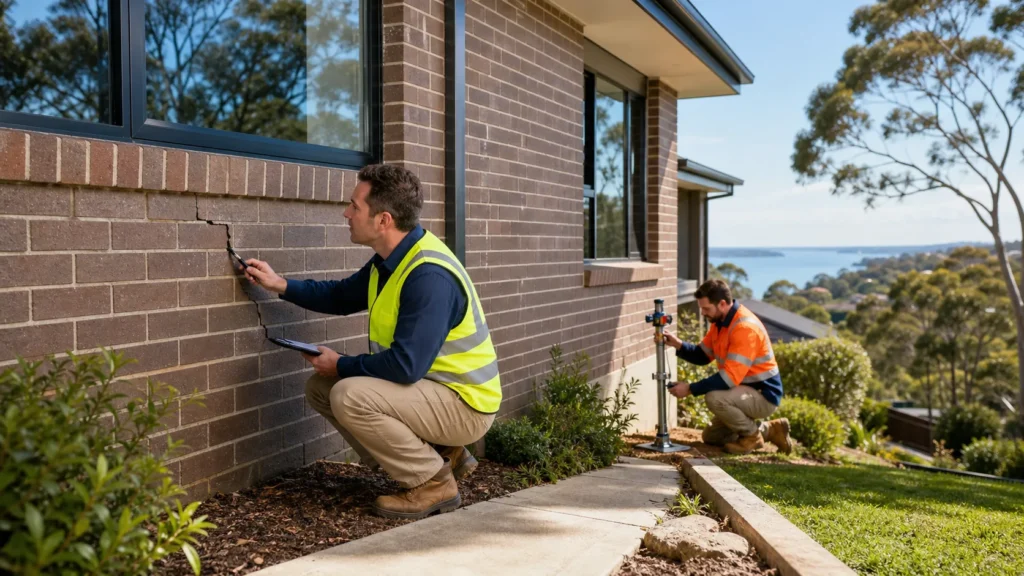
Take a common scenario, a steep block on Sydney’s North Shore or Northern Beaches. The original plan might show deep bored piers stepped down the slope, with bulk excavation, trucks, formwork and a concrete pump. It all looks fine on paper, until the wet weather hits and the program slips.
With traditional piers on a sloping, wet site, problems stack up quickly:
- Excavations slump or collapse after heavy rain
- Water collects in pier holes and trenches
- Access for trucks and pumps chews up the driveway and nature strip
- Concrete dates keep getting pushed while the site dries out
Many builders are now switching to screw piling in NSW on these sorts of blocks. Instead of waiting for dry ground, a small excavator can track in, set up on firm spots and install piles straight through soft, wet soil into better bearing material below. Torque monitoring during install gives instant feedback on capacity without test pits or extra drilling.
The key outcomes on these sloping knock-down rebuilds are usually:
- Less weather dependency, as piles can be installed in damp conditions
- No need to wait days for the site to dry before footing work can restart
- Reduced muddy access damage to roads, neighbours’ driveways and paths
- The builder can keep the framing date with the chippy crew rather than reshuffling everyone
The result is a more predictable start to the superstructure, which takes a lot of pressure off both the builder and the owner.
Keeping Neighbours Happy on a Tight Inner-City Terrace
Inner-city terraces in suburbs close to the CBD often come with zero lot lines, shared walls and very limited access. A rear extension or extra level can mean digging right beside existing structures, sometimes with only a laneway for machinery and material.
On these terraces, traditional footings can cause:
- Noise and vibration near fragile party walls
- Risk of undermining neighbouring properties with open excavations
- Long days of hand digging and barrowing spoil through the house
- Angry neighbours watching their walls and fences closely
Screw piles give a different way to work. Compact machinery can access from a rear lane or narrow side path, and piles are installed with controlled torque and minimal vibration. There is no need to leave large open trenches or pier holes beside existing footings, which helps manage movement risk.
Benefits for the builder can include:
- Quicker install so you spend fewer days upsetting neighbours
- Less vibration, which lowers the chance of cracks or damage claims
- Smaller working footprint, making it easier to keep sites neat and safe
- More confidence building close to boundaries and old brickwork
When the neighbours stay calm and council is not fielding complaints, it often keeps the whole project running more smoothly.
Fast Turnarounds on Multi-Unit and Civil Jobs
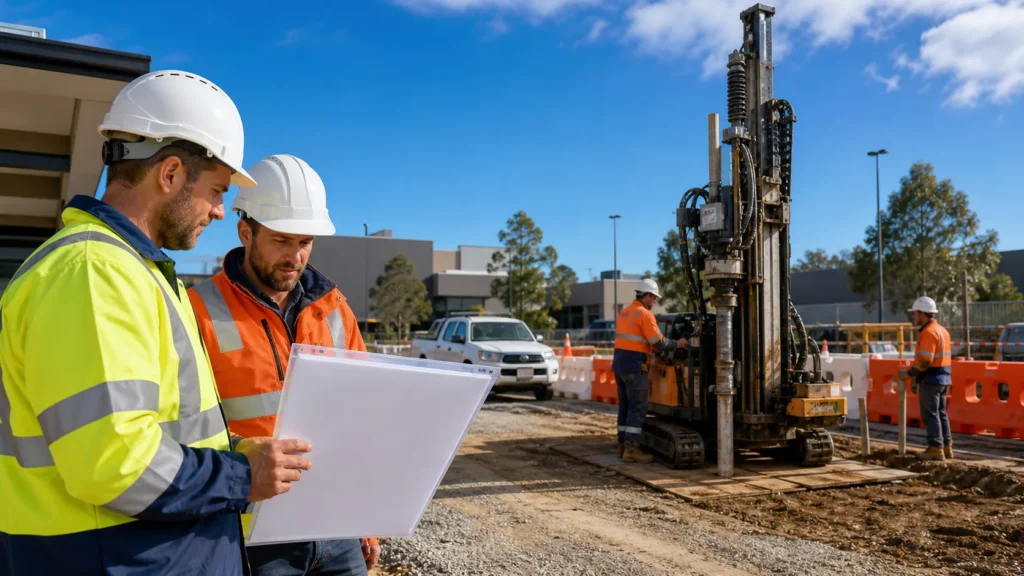
On a small townhouse development in Western Sydney, the biggest program risk is often coordination. Groundworks, services, frames and cladding all need clear handover dates. If footings run late because of weather or access, every other trade gets squeezed.
Switching the footing system to screw piles can shorten the groundworks phase by reducing:
- Time spent on bulk excavation and cart-away
- Truck movements in and out of a tight street
- Delays while waiting for inspection and concrete windows
Because piling is fast and relatively clean, builders can often move to slabs sooner, then hand sites over to framing crews and services with more certainty about dates.
On light civil and infrastructure works across regional NSW, screw piles can also help meet environmental and access rules. For things like boardwalks, noise walls, signage and small bridges, there is often a need to protect vegetation, limit disturbance and keep machinery footprint small. Screw piles suit that style of work because:
- They need less excavation and spoil removal
- Install gear can be tracked in along formed paths or narrow corridors
- Footings can be installed close to existing services and structures with care
Program-wise, that can mean more predictable completion dates when working under tight approvals or possession windows.
When Screw Piling in NSW Makes the Most Sense
Screw piling in NSW tends to shine in a few clear situations. If a project has one or more of these, it is worth considering early:
- Builds scheduled through the wet season or on rain-prone sites
- Reactive or soft soils where traditional footings get deep and messy
- Sloping blocks or sites with complex stepped footings
- Tight access jobs, inner-city terraces and narrow infill lots
- Work close to boundaries, existing slabs or older structures
For builders, architects and engineers, the best time to involve a screw piling contractor is usually during design or value management. With a soil report, architectural plans and structural intent, piles can be engineered into the job rather than bolted on as a last-minute fix.
Common questions tend to be about cost, lead times and engineering sign-off. While every site is different, screw piling is generally competitive once you factor in:
- Reduced excavation and cart-away
- Fewer weather delays on footings
- Shorter time on site for groundworks crews
To price and design properly, a piling company typically needs:
- Geotechnical report or at least known soil information
- Structural drawings and load information
- Site photos, access notes and any staging constraints
When those details are clear, it is easier to compare footing options on real program risk, not just a line on a spreadsheet.
Lock in Your Next Start Date with Screw Piles
For upcoming work, it pays to scan the program and look for risk points. Winter pours, wet sites, steep backyards, cranky neighbours, shared walls or marginal ground all flag potential trouble around footings and start dates. Screw piles are not the right answer for every job, but on the right site they can strip out a lot of uncertainty.
By planning early, sharing soil and design info and allowing for engineered screw piles where they make sense, builders across NSW can get more predictable footing stages, smoother inspections and less stress with neighbours and access. Over time, that adds up to tighter programs, cleaner handovers and happier clients on both small residential jobs and larger commercial or civil projects.
Get Started With Your Project Today
Whether you are planning a residential build or a complex commercial foundation, we can help you find the most efficient footing solution for your site. Explore our screw piling in NSW to see how we tailor designs to local soil conditions and engineering requirements. At Screw Piling, we work closely with builders, engineers and homeowners to keep projects on schedule and within budget. Reach out to our team to discuss your plans and get practical advice on the next steps.