Why the Wrong Footing Choice Costs Builders Time
Have you ever locked in bored piers early—only to watch the footing stage drag on because of wet weather, access issues, or redesigns?
You’re not alone. Across NSW, many projects default to bored piers because they’re familiar. But on certain sites, that default choice quietly introduces program risk, approval friction, and cost blowouts.
This guide explains when screw piles are the better option than bored piers, using real construction logic, NSW conditions, and approval pathways—not sales claims.
What Are Screw Piles and Bored Piers? (Quick, Plain-English Overview)
Before comparing them, it’s important to be clear on how each system actually works on site.
Screw piles (helical piles) are steel shafts with helical plates rotated into the ground. They transfer structural loads to competent bearing strata at depth, with minimal excavation.
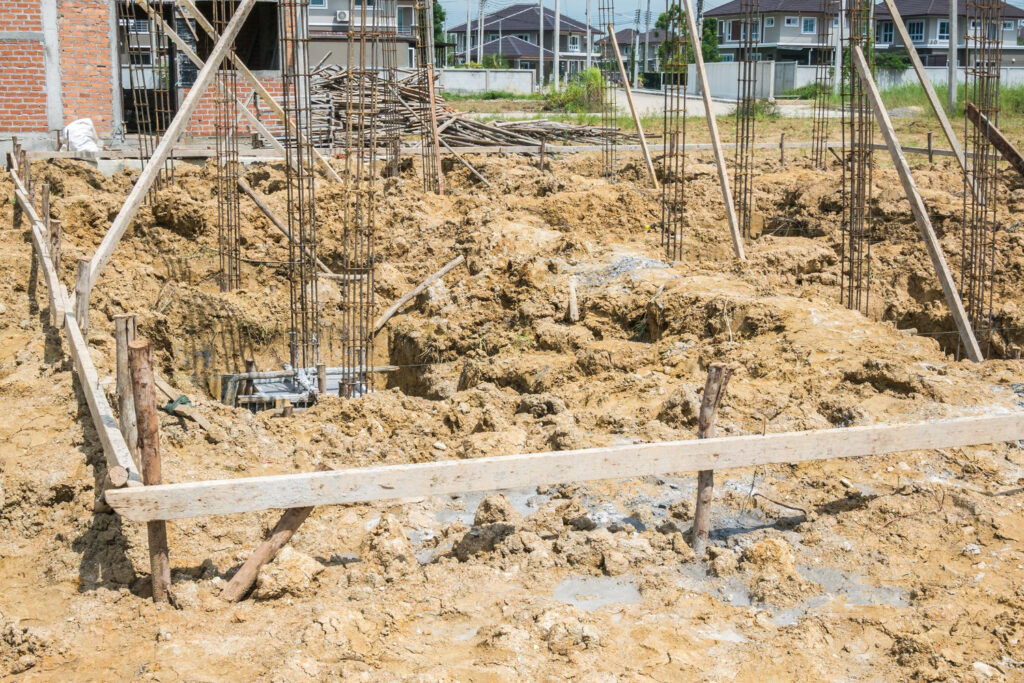
Bored piers are excavated holes that are reinforced and filled with concrete. Load capacity relies on the integrity of the excavation and concrete curing.
Both systems are compliant when engineered correctly. The difference lies in how they behave under real site conditions.
When Are Screw Piles the Better Choice for NSW Builders?
1. When Program Certainty Matters More Than Tradition
If your project is sensitive to delays at the footing stage, screw piles often provide greater certainty.
On many sites, screw piles:
- Are installed in a single day
- Do not rely on concrete curing time
- Allow earlier progression to framing (subject to engineering)
Bored piers, by contrast, introduce:
- Weather dependency
- Cure-time sequencing constraints
- Risk of rework if excavations collapse
For builders running tight programs, time certainty is often the deciding factor
2. When Wet Weather Is Likely to Disrupt Excavation
Wet weather is one of the biggest causes of footing delays across NSW.
Bored piers are vulnerable to:
- Slumping or collapse
- Water ingress
- Dewatering requirements
- Inspection delays
Screw piles do not require open excavations, which means they can often be installed in wet or marginal conditions where bored piers cannot proceed.
This doesn’t eliminate weather risk—but it significantly reduces it.
3. When Site Access Is Restricted
Many NSW projects involve:
- Narrow side access
- Inner-urban blocks
- Knockdown rebuilds
- Live or partially occupied sites
Screw piling rigs are often smaller and more flexible than excavation equipment required for bored piers.
Reduced access requirements can mean:
- Less temporary works
- Fewer site modifications
- Faster mobilisation
On constrained sites, this difference alone can justify the switch.
4. When Minimising Spoil and Site Disruption Is Important
Bored piers generate spoil—sometimes a lot of it.
That spoil must be:
- Managed on site
- Loaded out
- Disposed of appropriately
Screw piles generate minimal spoil, which reduces:
- Truck movements
- Disposal costs
- Site mess
- Neighbour disruption
This is particularly valuable on tight sites, environmentally sensitive areas, or projects under council scrutiny.
5. When Ground Conditions Are Variable or Uncertain
Sites with:
- High fill
- Uncontrolled fill
- Variable clays
- Coastal sands
Often present risk for shallow or excavation-based footings.
Screw piles are designed to bypass weak near-surface material and transfer loads to deeper, more reliable strata.
This makes them a common engineering response when geotechnical reports flag uncertainty.
How Do Engineering and Compliance Compare?
From an approvals perspective, screw piles and bored piers follow a similar pathway.
Typical workflow:
- Geotechnical report
- Structural engineering design
- Pile or pier schedule
- Installation
- QA documentation
- Certification
Screw piles fall under AS 2159 – Piling: Design and Installation, just like other deep foundation systems.
The difference is not compliance—it’s documentation quality and clarity.
Documentation: Where Screw Piles Often Have an Advantage
Well-managed screw piling installations typically provide:
- Installation records (pile locations and depths)
- Material specifications
- Site photos
- Clear as-built information
This documentation supports faster engineer review and certifier sign-off when compared to poorly documented bored pier installs.
Approval delays are rarely about the system—they’re about missing or unclear records.
When Bored Piers May Still Be the Better Option
Screw piles are not a universal solution.
Bored piers may still be appropriate when:
- Ground conditions are uniform and dry
- Access is unrestricted
- Program pressure is low
- Shallow founding is engineered
Good builders choose systems based on site reality, not habit.
Key Takeaways for Builders (Featured Snippet Ready)
- Screw piles are often better than bored piers on wet, tight, or high-risk site
- Program certainty is a major advantage
- Compliance pathways are equivalent when engineered correctly
- Documentation quality directly impacts approvals
- The best footing choice depends on site conditions—not default practice
Frequently Asked Questions
Are screw piles always faster than bored piers?
Often, yes—but site access, engineering, and weather still matter.
Are screw piles more expensive?
Cost depends on depth, quantity, access, and corrosion requirements—not the system alone.
Will certifiers accept screw piles for residential builds?
Yes, when designed and documented in accordance with engineering requirements.
Can screw piles replace bored piers on all sites?
No. Suitability is site-specific and must be engineered.