Wet Weather Is Where Footing Programs Break
Few things disrupt a construction program faster than rain at the footing stage.
Across NSW, builders regularly experience weeks of delay when bored piers or shallow footings can’t proceed due to:
- Collapsing excavations
- Water ingress
- Failed inspections
- Dewatering constraints
This is one of the most common reasons screw piles are considered. But the real question builders ask is:
Can screw piles actually be installed in wet conditions or high water tables?
The short answer is often yes — but only when the right conditions and planning are in place.
What Do “Wet Conditions” Actually Mean on Site?
Wet conditions can include:
- Ongoing rainfall
- Saturated surface soils
- High groundwater levels
- Temporary water accumulation after storms
From an engineering perspective, the concern isn’t rain itself — it’s how water affects soil behaviour, excavation stability, and access.
Why Wet Conditions Cause Problems for Traditional Footings
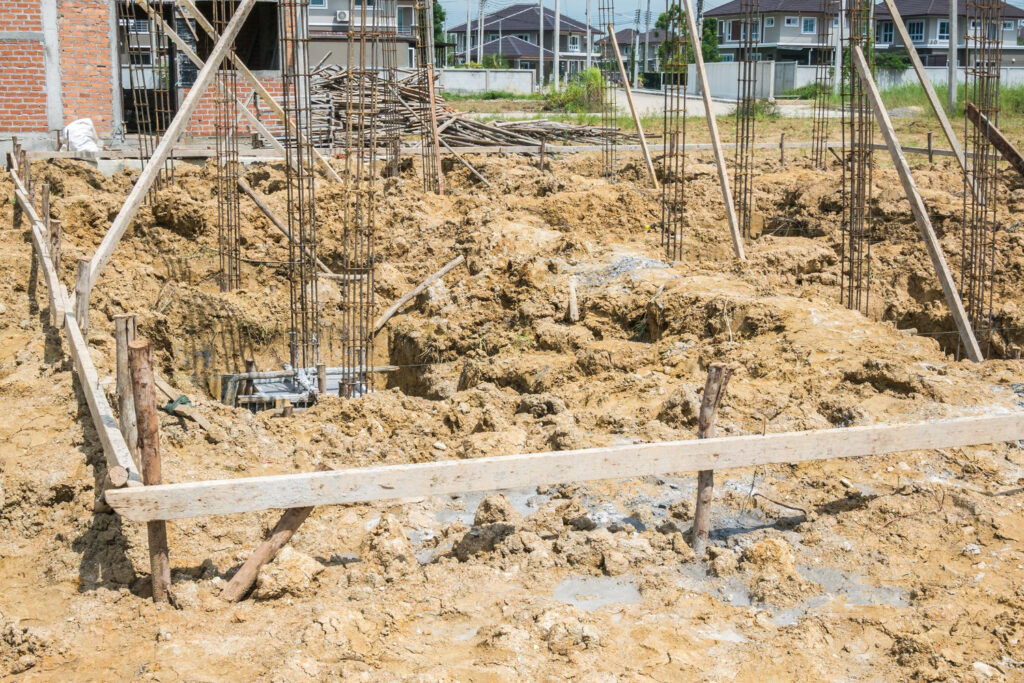
Bored piers and shallow footings rely on open excavations.
In wet ground, this introduces risks such as:
- Sidewall collapse
- Base softening
- Inability to visually inspect founding material
- Delays waiting for ground to dry
These risks often force builders to pause work or redesign footings mid-construction.
How Screw Piles Perform in Wet or Saturated Ground
Screw piles behave differently because they:
- Do not require open excavations
- Are rotated directly into the ground
- Generate minimal spoil
This means they are far less sensitive to groundwater and surface water than bored systems.
On many sites, screw piles can be installed during periods where excavation-based footings cannot proceed at all.
High Water Tables: What Engineers Are Assessing
On sites with known or suspected high water tables, engineers focus on:
- Soil strength, not dryness
- Depth to competent bearing strata
- Long-term performance, not short-term water presence
Water alone does not make a site unsuitable — but it must be accounted for in design.
Practical Limitations Builders Should Understand
Wet conditions do not mean “no constraints”.
Installation may still be limited by:
- Site access and machine stability
- Surface water preventing safe mobilisation
- Extremely soft or flowing soils
Screw piles reduce weather risk — they don’t eliminate the need for safe site conditions.
When Screw Piles Are Commonly Chosen on Wet Sites
Screw piles are often specified when:
- Programs cannot tolerate curing delays
- Groundwater affects excavation stability
- Sites are coastal, low-lying, or flood-prone
- Wet weather windows are unpredictable
In these scenarios, they are frequently the lowest-risk footing option, not just the fastest.
Planning Tips to Avoid Wet-Weather Delays
Experienced builders typically:
- Flag groundwater or drainage issues early
- Coordinate geotechnical and engineering input
- Confirm access requirements before wet seasons
Early planning turns wet weather from a crisis into a managed risk.
Key Takeaways for Builders (Featured Snippet Ready)
- Screw piles can often be installed in wet conditions
- They are less affected by groundwater than bored piers
- Engineering design governs suitability
- Access and safety still matter
- Early planning reduces weather-related delays
Frequently Asked Questions
Can screw piles be installed during rain?
Often yes, provided site access and safety are maintained.
Does groundwater reduce pile capacity?
Design is based on soil strength, not dryness alone.
Are screw piles suitable for flood-prone sites?
They are commonly used, subject to engineering.
Do wet conditions increase cost?
Usually less than delays caused by excavation-based systems.