Faster, Cleaner House Builds on Tricky NSW Sites
Tight access, reactive clays, sloping blocks and neighbours right on the boundary are normal on New South Wales sites. From Sydney infill blocks to regional knockdown rebuilds, getting house foundations in the ground can be the hardest part of the job.
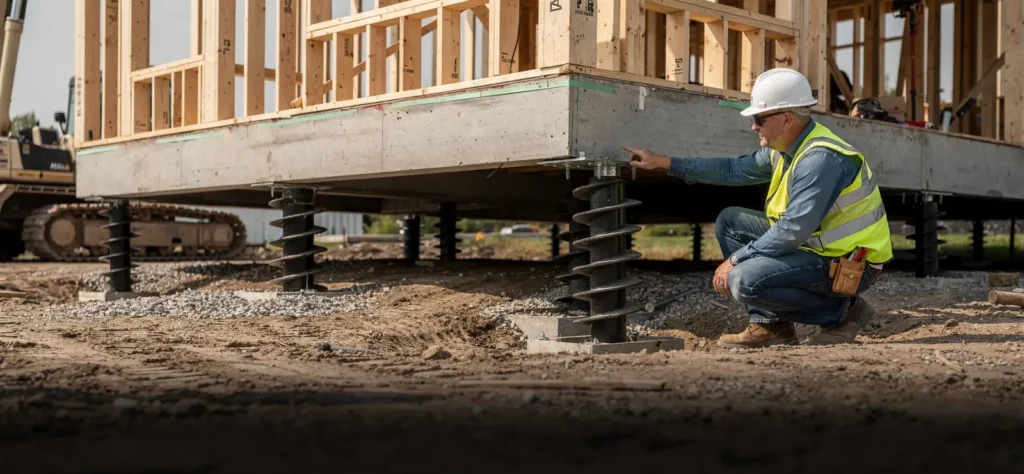
Screw piles for house foundations are one way to make that stage faster and cleaner. They are steel piles with helical plates that are screwed into the ground to a set depth and torque. Instead of big open trenches and pier holes, you get a smaller rig, less spoil and immediate load capacity. They can work on their own or alongside concrete piers and strip footings.
In this article we walk through a simple decision framework built around three things: soil class, water table and access constraints. We also share practical engineer and installer checklists you can use before you pour a slab or start a renovation on a tricky NSW block.
How Soil Class Steers Your Foundation Choice
Soil class is one of the first clues on whether screw piles are worth a look. Under AS 2870, typical classes for house sites include:
- Class A, mostly sand or rock with little movement
- Class S, slightly reactive clay
- Class M, moderately reactive clay
- Class H1 and H2, highly to very highly reactive clay
- Class E, extremely reactive clay
- Class P, problem sites like deep fill, soft soils or uncontrolled fill
In NSW you see:
- Highly reactive clays across Western Sydney and parts of the Hunter
- Sandy soils around coastal suburbs and some river areas
- Class P fill on old knockdown rebuild blocks and infill lots that have been cut and filled over time
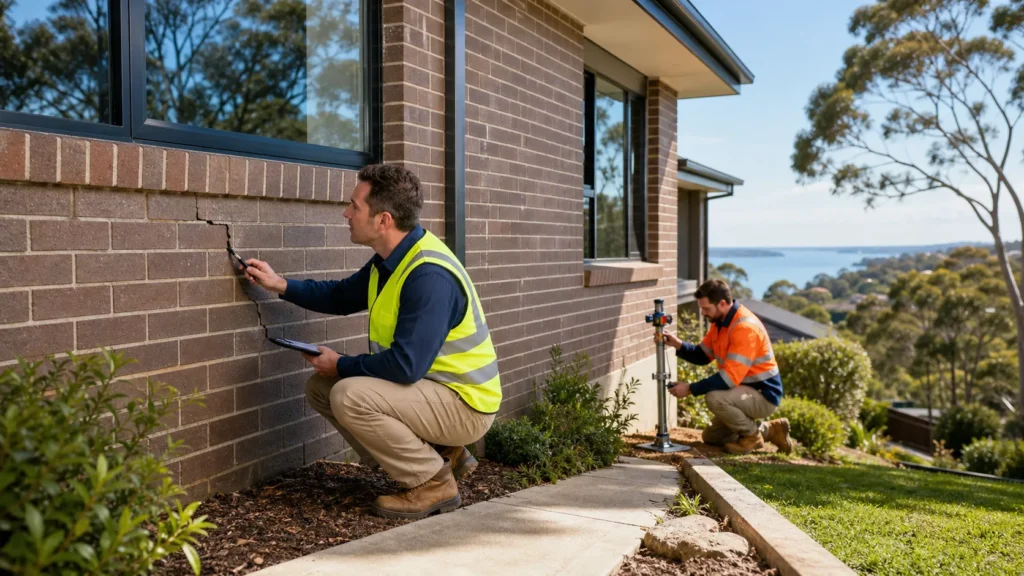
Reactive clays swell and shrink with moisture changes. That movement can cause heave and differential settlement, which is tough on slabs and brickwork. Fill and Class P sites can move in different ways across the block, especially if depths to firm material vary.
Screw piles help by taking the building loads down to deeper, more stable strata. Instead of relying on shallow ground that might swell, shrink or settle, the pile shaft carries the load to a layer with more consistent strength. That can reduce the risk of slab movement and help the engineer design a footing system that is more predictable.
There are still plenty of cases where a conventional bored pier and strip footing design is fine, for example:
- Class A or S sand and clay with good bearing at shallow depth
- Uniform M class sites with consistent test bores and no deep fill
- Simple single storey homes with light loads
On the other hand, an engineer is more likely to lean towards screw piling when:
- The soil report shows H1, H2 or E reactivity
- There is deep or variable fill across the site
- Test bores are inconsistent or show soft pockets at footing depth
- The design would need many deep bored piers with heavy reinforcement
A typical example is a duplex on H2 clay in South West Sydney. Instead of drilling lots of deep bored piers and waiting on dry weather, screw piles can be installed to a set depth and torque, then tied into a slab or bearer and joist system. This often cuts weather delays and reduces the amount of spoil that needs to leave site.
Another common case is a two-storey extension on a Class P site in the Inner West, where old fill depths vary across the block. Screw piles can be driven to consistent founding strata under both the existing and new sections, helping the engineer manage differential movement between the old house and the new work.
Water Table, Drainage and Wet-Weather Build Windows
The water table is the level below ground where soil is fully saturated. On some sites you also get perched water, where water sits above a less permeable layer. When you excavate for traditional footings, that water can run into trenches and pier holes.
Common NSW scenarios include:
- Coastal blocks with naturally high water tables
- Low-lying river flats that stay wet after rain
- Sloping sites where water tracks through subsoils and seeps into excavations
On these sites, conventional footing works can be messy. Open excavations can collapse, fill with water or need constant pumping. Wet edges can make inspections and steel fixing harder and can push the build program out, especially if you are working into a wet summer pattern.
Screw piles often suit wet or high water table conditions because:
- There is minimal open excavation, so less risk of trench collapse
- Holes do not stay open; the pile displaces or cuts into soil as it goes
- Install can continue in conditions that might stop concrete footing work
- Piles have immediate capacity, so follow on trades can move faster
On a Sydney knockdown rebuild with high groundwater, for example, pier holes can keep flooding overnight. Swapping to screw piles allows the crew to install foundations without waiting for the ground to dry, keeping the program on track before shutdown periods.
Good drainage and waterproofing are still important. Screw piles do not replace proper site water management, but they reduce footing risks when conditions are wet or the water table is high.
Working on Tight, Sloping, or Built-Out Sites
Access is the third big piece of the decision. A lot of Sydney and NSW sites are tight or steep:
- Terrace and semi-detached homes with only laneway access
- Rear extensions where you cannot get an excavator or concrete truck in
- Steep blocks in the Blue Mountains, Illawarra escarpment or Northern Beaches
Traditional footings often need larger machinery, bigger excavations and more spoil removal. This can mean:
- Cutting fences or removing sections of driveway
- Heavy trucks in narrow streets
- Noise and vibration from big rigs
- Large spoil stockpiles waiting for disposal
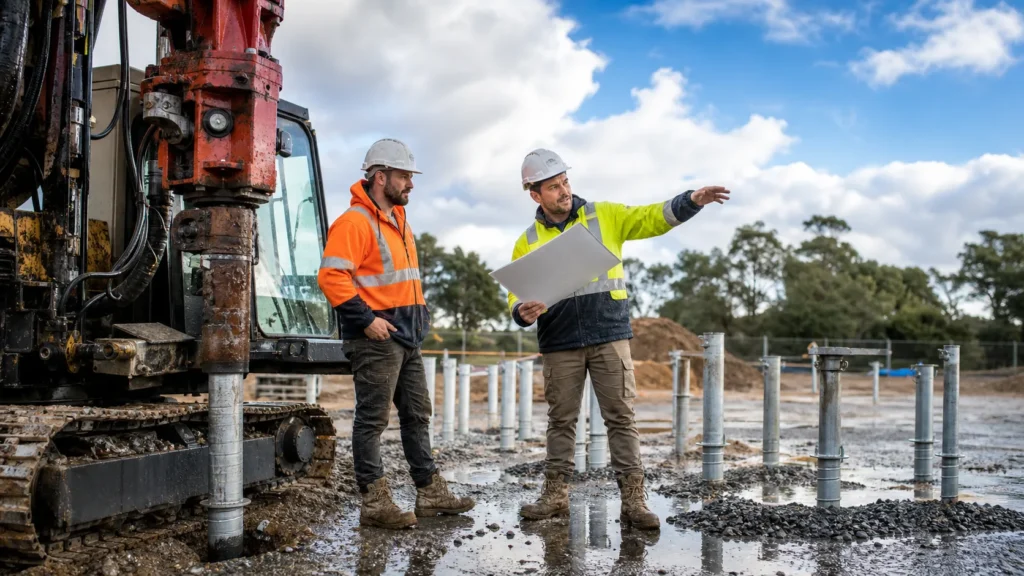
Screw piling rigs can be relatively compact and can work in tighter spaces, including inside existing structures or down narrow side paths. Because the piles are screwed in rather than dug out, there is less spoil to move and less mess to clean up.
Compared with traditional footings, screw piles usually mean:
- Smaller working footprint and easier access around existing services
- Less noise and vibration than large drilling rigs
- Less disruption to neighbours and existing landscaping
Schedule is another benefit. Installation is often faster, there is less time with open trenches, and it is easier to hit inspection and concrete dates when the weather or trade availability is tight. On an Inner West Sydney rear addition, for example, screw piling can allow a crew to work through a narrow side path without taking down fences or damaging a neighbour’s driveway.
Decision Framework and Practical Checklists
To decide if screw piles for house foundations make sense, it helps to run a simple check against soil, water and access.
Step 1, Review the soil report
- Note soil class under AS 2870
- Check depth to rock or firm natural material
- Look for fill, Class P notes or variable conditions
- Note any groundwater or seepage comments
Step 2, Assess water table and drainage risk
- Check seasonal water levels if mentioned
- Ask about local flooding history
- Look for signs of seepage in test pits or old excavations
Step 3, Check access and site constraints
- Measure actual machine access routes and clearances
- Note overhead power, tight setbacks and boundary issues
- Think about working next to existing houses or structures
Step 4, Consider program and variation risk
- How likely are wet weather delays for open excavations?
- What happens if you hit soft spots or deeper than expected footings?
- How much spoil will you need to remove from site?
When you sit down with your structural engineer, it can help to work through a short discussion checklist:
Engineer discussion checklist
- Soil class, fill depth and variability across the site
- Building form and loads, single or double storey, decks, retaining walls
- Required pile capacities and durability in local ground conditions
- How screw piles will tie into the slab or bearer and joist system
- Need for test piles or torque correlation during install
- Any constraints from neighbouring structures or services
Once the design intent is clear, the installer can run a pre-start checklist on site.
Installer pre-start checklist
- Confirm pile set out and final levels against the latest drawings
- Mark and protect underground services and agree access routes for the rig
- Check pile sizes, lengths, extensions and pile caps are on hand
- Plan spoil handling and noise management
- Agree timing with the concrete crew or carpenters for a smooth handover
When the engineer and installer talk early, the design is usually cleaner, and foundation work tends to run with fewer surprises.
Turning Site Challenges Into an Advantage
Screw piles for house foundations are often a strong option in NSW when you have highly reactive clays, deep or unknown fill, a high water table, wet season works, tight or steep access, or a program that cannot afford footing delays. By thinking through soil class, water conditions and access before you lock in footing details, you can choose a foundation system that suits the ground and the build program.
On the right job, that can mean faster installation, less excavation, fewer weather delays and less disruption on tight or built-out sites. For builders, tradies, designers and homeowners, working through the soil report, water risks and access constraints early with your engineer and installer helps ensure the foundation solution matches the real site conditions you are dealing with in Sydney and across NSW.
Get Started With Your Project Today
If you are planning a new build or upgrading existing footings, we can help you choose the right screw piles for house foundations to suit your site conditions. Our experienced team at Screw Piling will work with your engineer and builder to deliver a stable, compliant result with minimal disruption. Talk to us today about your timelines and budget so we can provide a tailored solution for your next project.