Wet-Weather Screw Piling That Actually Stays on Track
Wet ground does not have to blow your piling program apart. With a clear wet-weather plan, screw piles can still go in fast, clean and ready for sign-off, even when showers keep rolling across Sydney and wider NSW. The trick is knowing when to keep going, when to pause, and how to set up the site so torque logs stay reliable for certification.
A screw pile foundation system is a steel shaft with helical plates that is spun into the ground with a hydraulic drive. It is popular on Sydney and NSW projects because it installs quickly, needs minimal excavation, suits tight access sites, and performs well in reactive or variable soils. In this guide, we walk through practical rainfall triggers, how to deal with waterlogged sites, smart dewatering and track mat setups, and clear rules for rescheduling so torque logs and certification stay on track.
Reading the Radar: Rainfall Thresholds That Matter
Spring and storm seasons in NSW often bring stop-start weather. One hour it is light drizzle, the next a heavy burst from a coastal system. For screw piling, that change in intensity matters far more than a dark sky on its own.
A simple way to think about thresholds is:
- Light showers: short, low-intensity rain where the surface gets wet but there is no real ponding.
- Moderate rain: steady showers where trench bases start to soften and access tracks stay greasy for hours.
- Heavy falls or storm cells: intense bursts that create run-off, standing water and boggy zones in a short time.
In light showers, piling can usually continue with a few precautions, like:
- Slowing down rotation to read torque properly.
- Keeping spoil clear so the rig does not sit on slippery cuttings.
- Checking access points often for soft spots.
In moderate rain, it is time to reassess. Once the site starts to show:
- Water pooling around pile locations,
- Machine tracks polishing into mud,
- Crew struggling to stand safely near the rig,
you are at the point where torque readings and machine stability can be affected. At that stage, a short pause while the rain passes and the ground drains can protect your data and your rig.
Heavy falls and storm events are usually a clear stop. Chasing production in those conditions can lead to:
- Torque spikes or drops that do not reflect real soil resistance,
- Rigs sliding or sinking, changing pile angle,
- Access damage that later slows every other trade.
On a typical Sydney infill site with tight access down the side, for example, a knock-down rebuild in the Inner West, having agreed go and no-go rules in advance means the crew can watch the radar, jump in between showers, and still keep logs clean enough for the engineer to sign off without extra testing.
Working with Waterlogged Soils, Not Against Them
Across Sydney and NSW we often see the same wet-ground patterns. Sodden clays in the west after a week of rain, low-lying coastal blocks with poor drainage, or sites with perched water tables sitting on clay layers. All of these can change how a screw pile foundation system behaves during installation.
Soft or saturated soils can:
- Reduce apparent resistance at the start of installation.
- Tempt operators to over-drive piles to chase target torque too early.
- Make it harder to hold plumb and position in sloppy ground or open excavations.
Instead of fighting the conditions, the piling plan can allow for them. Practical tactics include:
- Pre-drilling or pilot holes through hard crusts or fill into softer, wet strata so the pile transitions cleanly.
- Adjusting crowd pressure so the rig is not forcing the pile faster than the soil can react.
- Slowing penetration rates to let torque stabilise, instead of racing down the shaft.
- Installing a small number of test piles after heavy rain to check that assumed design torques still match what the rig is seeing.
On multi-unit jobs like townhouses or duplexes in western Sydney, a bit of planning around recent rainfall and soil behaviour means the set-out, rig selection and installation method all work with the ground, not against it. The pay-off is piles that still reach design torque, pass engineering checks and do not need to be reworked when things dry out.
Smart Site Setups: Dewatering, Track Mats and Access
Wet-weather piling is a lot easier when the temporary works are set up right from the start. Water on its own is not always the problem; it is where that water sits and how the rig moves around it.
Basic dewatering can be as simple as:
- A small sump at the low point of an excavation,
- A pump sized for localised water around footings or pile caps,
- Hoses directed to approved discharge points so water does not flood neighbours or breach council or environmental rules.
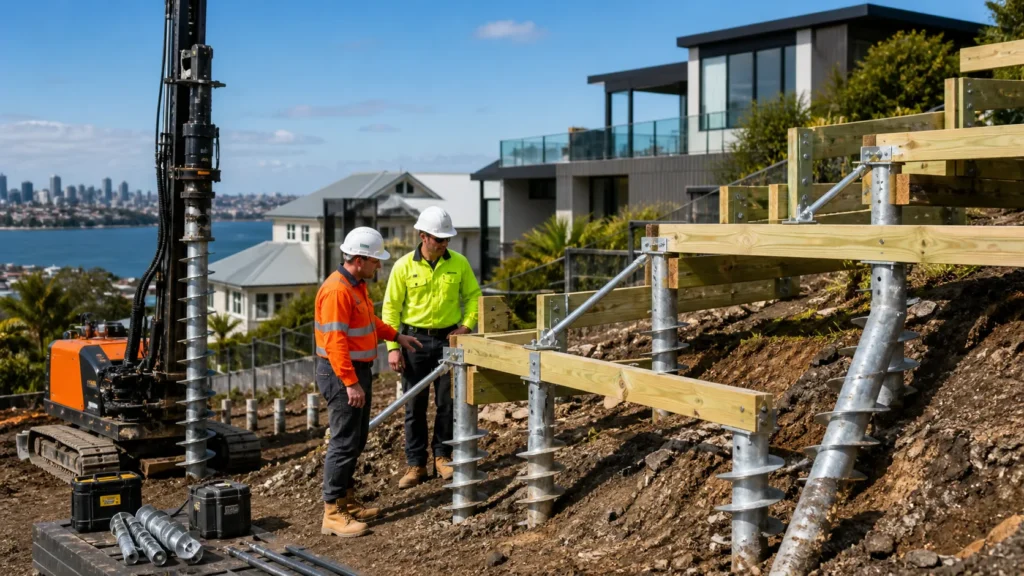
For access, track mats and working platforms do a lot of heavy lifting. Good setups often include:
- Timber or composite mats laid along tight side paths or across lawns.
- Crushed rock pads where the rig turns or sits for longer runs.
- Stabilised access routes for delivery trucks so they are not cutting deep ruts the rig has to cross.
Sequencing also matters on wet sites. Where possible it helps to:
- Get screw piling done before large-scale excavation opens up more wet-surface area.
- Stage stockpiles and material zones away from piling run lines so they do not churn into mud.
- Use smaller rigs for restricted access jobs in backyards or along houses when conditions are greasy.
On a coastal renovation in areas like the Northern Beaches, for example, track mats teamed with a compact rig can let the crew keep piling through a wet week without carving up a driveway or carefully kept garden, which keeps clients and neighbours a lot happier.
Clear Rules for Torque Logs, Certification and Rescheduling
Torque logs are the backbone of screw pile certification. Engineers rely on that data to confirm each pile has achieved the required performance. Wet-weather noise in the readings can mean extra checks, extra costs and delays.
It helps to set simple on-site rules, such as:
- Stop when rain or ground slop means the rig cannot sit stable or the operator cannot feel consistent resistance.
- Record partial runs and pauses clearly, including depth where rain forced a stop or where soil conditions changed.
- Call the engineer when repeated attempts in wet layers do not hit expected torque, instead of pushing on and hoping it will be fine.
Rescheduling is easier when everyone has agreed triggers before the job starts. Good planning often includes:
- Weather allowances built into the program so a lost day is expected, not a shock.
- Clear priorities for dry days, such as higher-load piles under major columns or retaining walls.
- A simple sign-off process when the weather triggers are hit, so no one argues later about why work stopped.
This kind of planning actually protects the overall schedule. It reduces rework, avoids arguments about who pays if piles need to be re-tested, and keeps engineer inspections running on time because the torque logs are clean and easy to certify.
Keeping Your Wet-Weather Piling Program Moving
The key points are simple. Know your rainfall thresholds so you are not guessing on the day. Respect waterlogged soils and adjust your methods instead of fighting them. Set the site up with basic dewatering, track mats and solid access. Above all, protect torque logs so certification stays smooth and the screw pile foundation system does what it is designed to do.
Wet conditions are a fact of life on Sydney and NSW projects, but they do not rule out screw piling as a fast, tidy option. With a clear wet-weather checklist built into the piling scope and early conversations between builders, designers, homeowners and piling specialists, the right approach, gear choice and site setup can be locked in long before the clouds roll over. A bit of planning up front keeps projects moving, even when the radar is lit up.
Get Started With Your Project Today
If you are planning a new build or upgrading an existing structure, we can help you choose the right screw pile foundation system for your site conditions and budget. At Screw Piling, our experienced team will work closely with you to provide clear recommendations, transparent pricing and reliable timelines. Reach out today so we can assess your project requirements and help you get solid results from the ground up.