Renovation Foundations That Do Not Blow Out Your Timeline
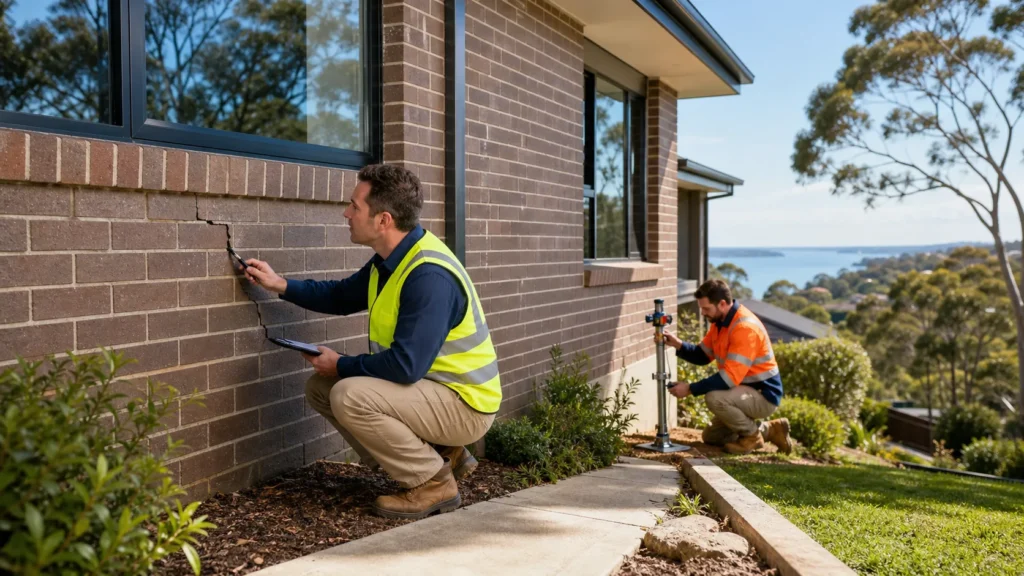
Foundation trouble can turn a neat renovation plan into a headache very quickly. You might start pulling off cladding or lifting floors, then cracks in the brickwork show up, floors are out of level, and doors start sticking. Before you know it, there is an engineer talking about house foundation underpinning and your program feels like it is sliding sideways.
Around Sydney and across NSW, we are seeing more renovations on tight blocks, older homes with tired footings and tricky ground. Access is harder, neighbours are closer and there is less room for big excavation gear or concrete trucks. That is where the choice between traditional underpinning and screw piles really starts to matter.
We work with builders, tradies, developers, architects and homeowners who want foundations that are fast, clean and predictable. In many cases, screw piles give a better result than old-school underpinning, especially on renovation work. Below we explain how underpinning works, why screw piles suit Sydney conditions and when they are likely to be the smarter option.
How Traditional Underpinning Works on Existing Homes
Traditional house foundation underpinning is all about propping up existing footings with new concrete. The usual process looks like this:
- Dig pits under or beside the existing footings in stages
- Shore up the excavation so nothing collapses
- Place steel if needed, then pour concrete under the old footing
- Let it cure, then move along the wall to the next pit
It is a slow, careful method because you cannot drop the building while you work. In Sydney, underpinning is often used on:
- Older double brick homes with shallow strip footings
- Houses on sandstone or mixed ground where parts have moved
- Clay sites that have had years of heave and shrink, causing differential settlement
The big pain point is the amount of digging. You are dealing with:
- Heavy excavation and spoil that has to be carried out or craned out
- Noise, dust and mess around existing structures and neighbours
- Open trenches that can fill with water in wet weather
- Wet concrete that needs time before you can load it up
On tight inner-city sites such as terraces, semis and battle-axe blocks, getting machinery and concrete in can be a real battle. Sometimes everything has to be done by hand through narrow side paths or even through the house.
There are still jobs where underpinning is the right call, especially when the entire existing footing line needs repair and access is not an issue. But it should not be treated as the only answer for every renovation problem.
Why Screw Piles Suit Sydney Renovations so Well
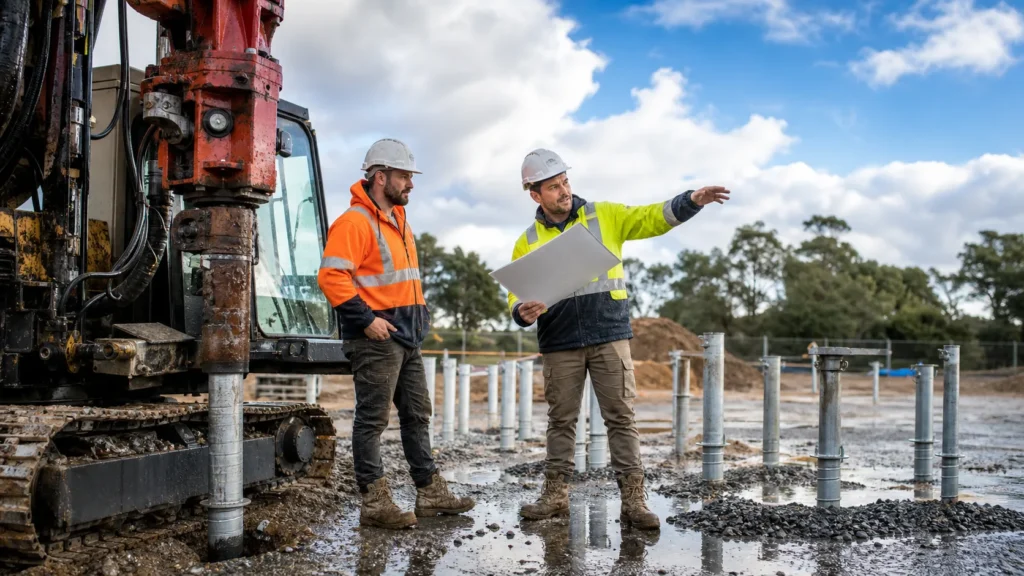
Screw piles are steel piles with helical plates welded near the tip. They are literally screwed into the ground until they reach stable soil, then used to carry the load of the structure. Instead of relying on a pad of concrete spread across the surface soil, they transfer loads down to deeper, more reliable material.
This works very well with the kinds of ground we see around Sydney and NSW. For example:
- Reactive clays in western suburbs that move when they get wet or dry
- Fill in newer estates where the top layers are not consistent
- Sandy sites along the coast where shallow pads can punch through
- Sloping blocks around the harbour or in the hills where surface soil can be variable
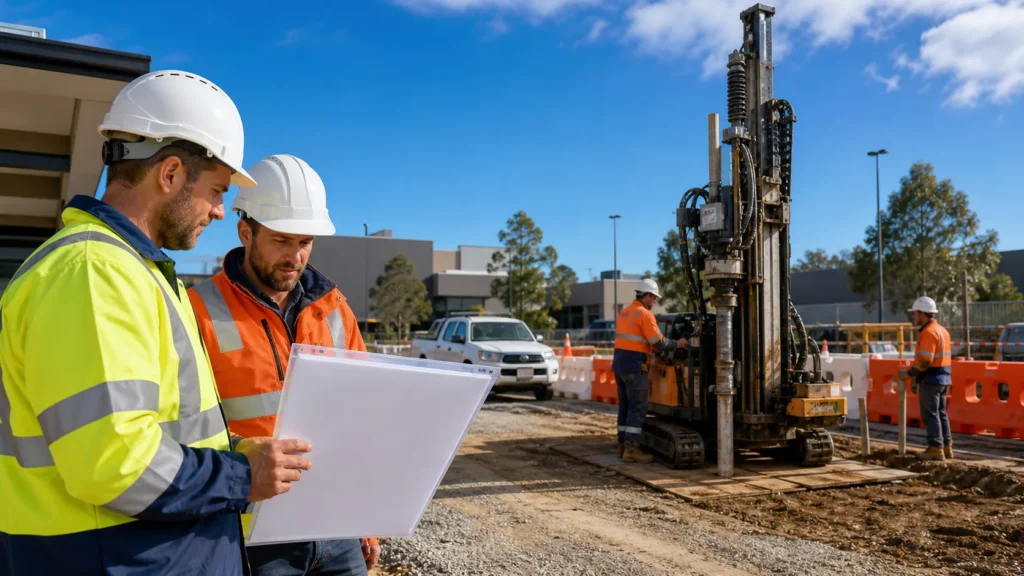
The big gain for renovations is that screw piling avoids large open excavations. We install piles with compact machinery that can fit down side paths, into backyards or under partial demolitions. In some cases piles can be installed through openings in existing floors, so you are not ripping everything up.
Compared with underpinning, screw piles usually go in quickly. For a typical renovation section you are often looking at:
- Piles installed and capped in a day or two
- Immediate load capacity in many designs, with no long cure time
- Less disruption to neighbours and less spoil to get rid of
Design is also flexible. We can adjust pile positions to work around:
- Existing services like sewer lines or stormwater
- Trees you want to keep
- Pools, retaining walls or partial demolitions
That flexibility means you do not always need to rework the whole footing system just because you are adding or fixing one area.
When Screw Piles Beat Underpinning on Renovation Jobs
There are some renovation situations where screw piling almost always starts to look more attractive than traditional underpinning. Common examples include:
- Ground floor extensions off an existing brick home
- Lifting or re-levelling part of a house that has dropped
- Adding an upper level where the existing walls or footings need help
- Converting under-house areas on sloping sites into usable rooms
Access is a big factor. Screw piles tend to work especially well on:
- Inner-west terraces and semis with tiny backyards
- Narrow laneways and shared driveways where trucks are difficult
- Steep sites on the north shore or Blue Mountains where excavation is tricky
Because screw piles can go in quickly between demolition and framing, they fit neatly into a tight program. Other trades like plumbers, chippies and sparkies can keep moving while piles are installed, rather than waiting around for pits to be dug and concrete to cure.
Another advantage is structural certainty. Screw piles are engineered systems. During installation we record torque readings as piles are driven, so the engineer knows each pile is achieving the design capacity. That gives builders, certifiers and owners clear confidence that the foundation is doing what it should.
Weather is also friendlier to screw piling. In late winter and early spring, when Sydney can be wet, open underpinning excavations can turn into muddy swimming pools. Screw piles need much smaller penetrations, so rain tends to slow things less.
Real NSW Project Scenarios You Can Relate To
While every project is different, there are some very familiar scenarios across NSW where screw piling has helped keep renovations on track.
Think about an inner-west terrace with no rear-vehicle access. Traditional underpinning would mean hand-digging pits, carrying spoil through the house and wheeling in concrete or using line-pumps in tight streets. With screw piles, a small machine can come through a narrow side passage or even be craned in, install the piles, then be gone again. The result is less mess in the house and weeks saved on the program.
On reactive clay in western Sydney, a brick veneer place might have a corner that has dropped over time. Instead of digging a chain of large underpinning pits outside, screw piles can sometimes be installed through cut-outs in the slab or through small external excavations. The piles then pick up the load from brackets or new beams, supporting and sometimes allowing gentle re-levelling of the affected area.
Along the coast, sandy sites often give renovators grief. Shallow concrete pads can punch into the sand, especially when adding a new upper level. Screw piles can be driven past the loose sand into firmer material lower down. This gives consistent support without needing huge pads that chew up half the yard.
Across these sorts of jobs, the practical outcomes tend to be:
- Less excavation and less spoil to manage
- Less disruption to neighbours and existing structures
- Faster lock-up because foundation works are not dragging on
- Fewer surprises that turn into variations for the client
A key part of making these projects run smoothly is getting an experienced screw piling team and the engineer talking early. That way, foundation strategy is sorted before framing and services are locked in.
Choosing the Right Solution for Your Reno Foundation
There is no single right answer for every renovation. Both underpinning and screw piles have their place.
In simple terms:
- Underpinning often suits full-footing repairs where large sections of the existing strip footing need to be rebuilt and access is reasonable
- Screw piles tend to be ideal when you need speed, access flexibility and predictable performance in mixed or tricky soils
Some good prompts when you are weighing up options are:
- How tight is the access for machines and concrete?
- What sort of soil are you on, and has there been movement already?
- Is the work a full foundation repair, or a new extension or partial fix?
- How much pressure is there on your construction program?
Bringing an engineer and a screw piling contractor into the conversation before you finalise budgets or demolition sequencing usually leads to better decisions. Early planning can avoid last-minute changes when footing problems show up mid-reno.
For many renovation projects across Sydney and wider NSW, screw piles provide a cleaner, quicker and more reliable foundation solution than traditional house foundation underpinning. By matching the method to the site, you can keep your reno moving and build on ground you can trust.
Get Started With Your Project Today
If you are seeing signs of movement or cracking around your home, we can assess the issue and recommend the right solution before it becomes a bigger problem. At Screw Piling, our experienced team provides reliable house foundation underpinning tailored to Sydney properties and soil conditions. We will walk you through the process, costs and timing so you know exactly what to expect. Reach out today to discuss your project and secure your home’s foundation for the long term.