Faster Footings on Tight Sydney Sites
Access-only builds are tough. Rear-lane terraces, battle-axe blocks, skinny driveways and inner-west infill sites can turn simple foundations into a long, messy job. Big rigs cannot get in, streets are narrow and nobody wants a concrete truck blocking the lane all morning.
Screw piles give you another option. Instead of deep trenches, heavy excavation gear and concrete pumps, you can get solid, engineered foundations in using compact machines and low-disruption methods. That means less time holding up neighbours, less mud, and a better chance of keeping the program moving when the weather is not playing nice.
On difficult-access foundations, speed and simplicity really matter. With screw piles you get:
- Faster installation, often in a day for smaller jobs
- Minimal excavation and spoil
- Less mess and noise on tight suburban streets
- Fewer weather delays when the ground is wet or soggy
Why Access-Only Blocks Are So Challenging
Anyone who has worked around Newtown, Marrickville, Parramatta or the North Shore knows how tricky some of these blocks can be. By the time you factor in shared driveways, rear-lane access and tight side paths, just getting equipment in and out becomes a juggling act.
Common access headaches on these sites include:
- Shared or narrow driveways that cannot take heavy trucks
- Rear-lane entries with tight turning circles
- Limited crane reach and no room for large rigs
- Overhead power lines and low eaves
- Zero-lot or near-zero-lot boundaries
Traditional concrete footings do not love these conditions. You usually need:
- Larger excavators to dig trenches or pier holes
- Trucks to cart out spoil
- Concrete truck and pump access at set times
- Fine weather so trenches do not fill with water
If the trench walls collapse or fill with water, you are stuck waiting for things to dry out or doing extra shoring and pumping. That blows out your program and can turn a straightforward footing detail into a headache.
This is why it pays to think about difficult-access foundations at design stage. If the structural design assumes easy access for excavation and concrete, but the site is tight and hemmed in, the problem lands in the concreter’s lap later. By then you are dealing with redesigns, variations and cranky neighbours.
How Screw Piles Solve Difficult-Access Foundations
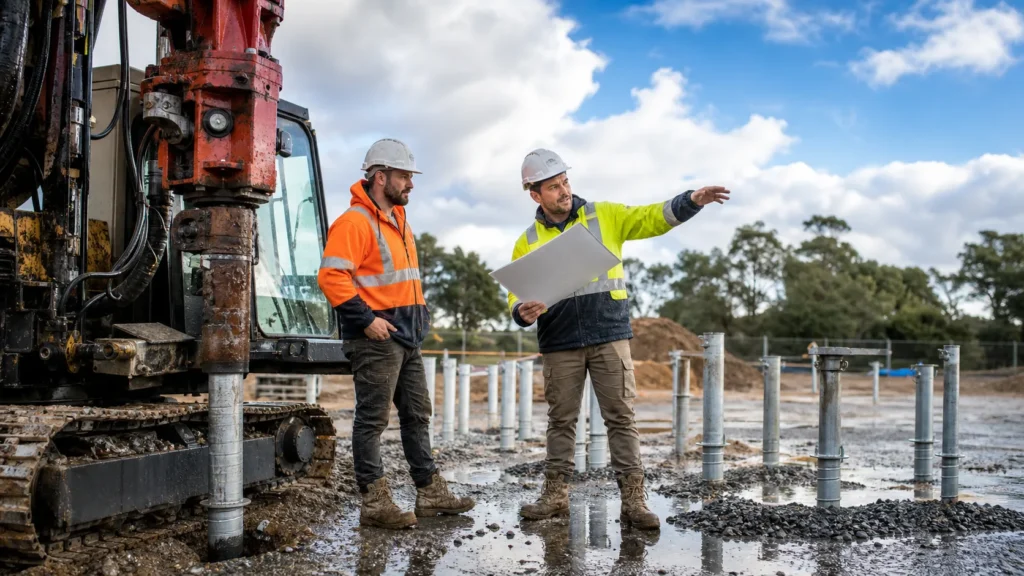
Screw piles are installed by winding steel piles into the ground with hydraulic torque. For tight sites, the big advantage is the compact installation gear and clean process.
On difficult-access blocks, screw piles can help because:
- The machines are smaller and can fit down side paths and laneways
- There is minimal set-up, no big crane pads or formwork runs
- Work can often be done from the rear lane, or even reaching over fences in some cases
Instead of open trenches, you install piles to a set depth and torque. The engineering is based on the soil profile and the loads from the structure. Torque is monitored during installation, which gives the engineer clear data about how each pile is performing. That makes the load capacity more predictable, even on tricky ground.
From a program point of view, screw piles cut out a lot of steps:
- Less excavation and carting spoil off-site
- No waiting around for concrete trucks or pump slots
- No stripping formwork or dealing with collapsed trenches
All of this reduces the stop-start pattern that often happens on tight sites. While screw piles still need proper engineering and planning, they can keep difficult-access foundations closer to schedule and help limit surprise variations once you are on the tools.
Real NSW Scenarios You Will Recognise
Across Sydney and wider NSW, the same patterns show up on access-only builds.
For example, with a rear-lane townhouse extension in the inner west, there might be no practical front access for a concrete truck. The lane is narrow, parking is tight and residents need to get in and out. Screw piles can be brought in on a small truck, installed with a compact excavator straight from the lane, and the work finished in a day without closing the street.
On a battle-axe block in western Sydney with reactive clay and a long, narrow driveway, traditional footings often need deep over-excavation and lots of spoil removal. In wet winter conditions that turns into a mud bath. Screw piles allow you to:
- Bypass deep over-excavation
- Keep excavation local to small pile caps
- Avoid long delays while clay dries out
Along the Central Coast or Illawarra, where blocks can be steep or sloping, cut-and-fill for conventional footings can mean big retaining walls, extra drainage and a lot of disturbed soil. With screw piles, you can step the structure down the slope, keeping disturbance smaller and working with the natural fall of the site instead of fighting it.
These types of situations are exactly where screw piles earn their keep: tricky terrain, tight access, frustrated neighbours and a program that cannot afford long blowouts.
Design and Build Tips for Tight Access Screw Piles
Good results on difficult-access foundations start at the drawing board. For architects and engineers, some simple moves help a lot:
- Allow for screw piles as an option in your DA and construction documents
- Detail pile caps, bracing and connection points clearly
- Coordinate with structural steel, timber bearers or slab edges early
This gives builders clear information from the start and avoids last-minute redesigns when someone realises a 5-tonne excavator cannot actually reach the back fence.
For builders and tradies on the ground:
- Plan the access path carefully, including gate widths and turns
- Confirm machine sizes and weights against driveways and slabs
- Check for overhead power lines and low services before scheduling piling
- Book piling ahead of framing so the site is clear and easy to work on
Seasonal timing also matters. Screw piles are handy when the soil is wet or soft, because you are not relying on open trenches staying dry and stable. You can often keep foundation works moving through wetter periods when concrete and excavation would normally stall.
When Screw Piling Is the Smart Move for Your Site
Screw piling is not the answer for every job, but there are clear triggers where it is worth serious thought. It tends to suit:
- Sites with limited or rear-only access
- Builds where neighbours are sensitive to noise, mess and blocked streets
- Areas with reactive clays, fill, or sites close to waterways
- Projects with tight timeframes where delays will hurt the whole program
The main thing is to consider difficult-access foundations early. If screw piles are looked at during design or tender stage, the structure, site set-up and program can all be planned around them. That is far easier than trying to retrofit a piling solution once the excavator has already hit problems.
Planning the right foundation method from day one, especially on tight or access-only sites, can save a lot of stress for everyone on-site and help keep Sydney and NSW projects moving on schedule, even when conditions are less than ideal.
Get Started With Your Project Today
If your build site is tight, sloping or otherwise tricky, we can help you design and install reliable difficult-access foundations that keep your project moving. At Screw Piling, we work closely with builders, engineers and owners to find practical solutions that suit local ground conditions and timelines. Talk to our team about your plans and we will advise the most efficient piling approach for your site. Reach out to us today so we can help you get solid foundations in place sooner.