Why Screw Piles Are Changing Sydney Retaining Walls
Retaining walls around Sydney are getting harder, not easier. There are more cut and fill sites, steeper blocks, and tight-access backyards. Builders and designers are being pushed to find smarter ways to support walls without blowing out programs or dealing with constant footing headaches.
That is where screw piles for retaining walls are getting serious attention. Instead of digging big open holes for concrete piers, screw piles are installed like a giant steel screw into the ground and used to support basement walls, yard retaining walls, and tiered landscaping. Builders like them because they are fast, they give more predictable outcomes in tricky soils, and they keep work moving even when sites are wet. In this article, we walk through when they make sense, the ground problems they solve, and how they fit into normal NSW building workflows.
Common Ground Problems on Sydney Sites
Across Sydney and wider NSW, we see a mix of soil conditions that make traditional bored piers or strip footings painful.
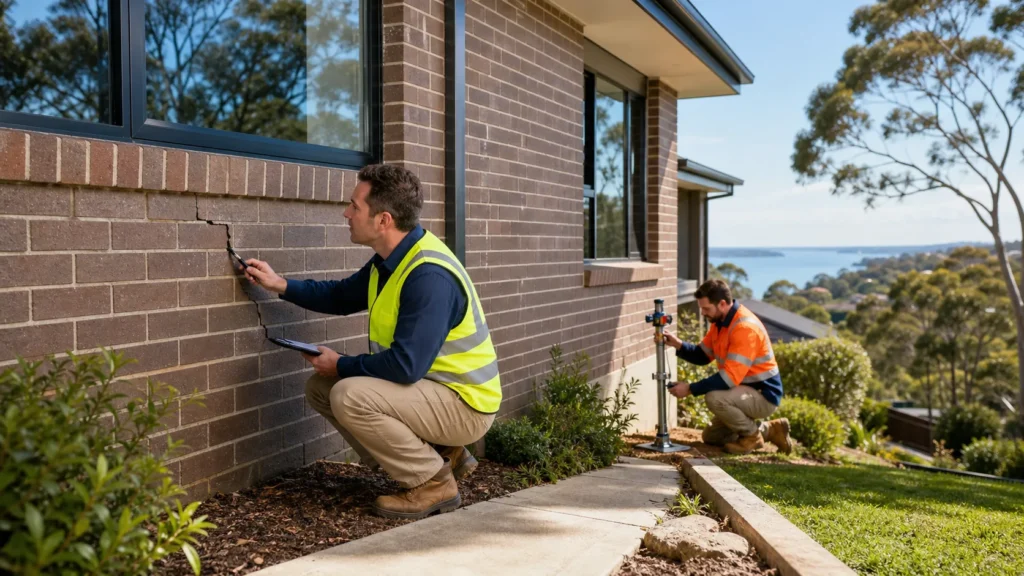
On many new estates there is deep uncontrolled fill. In western suburbs there are reactive clays that swell and shrink. Near the coast there are sandy profiles with groundwater not far below. Around the harbour and North Shore there can be layers of weathered rock and shale over softer material.
With old-style bored piers and strip footings, that often leads to:
- Hole sides slumping while you wait for inspection
- Groundwater seeping in and softening the base
- Overbreak, where the hole ends up wider than planned
- Extra concrete and reinforcement to fix unexpected conditions
- Delays while collapsed holes are cleaned out and re-bored
Think about a backyard pool dig in Ryde where the soil wants to cave in as soon as you get below the top layer. Or a basement excavation in the Inner West with groundwater and tight access for rigs. Or a duplex on a sloping block in the Hills where the bottom side of the site is wet and soft after rain. In all these cases, bored piers can turn into a messy, stop-start process.
Through winter, June to August, wetter weather makes it worse. Sites get boggy, machines chew up access, and open holes collapse or fill with water. Inspections are harder to book around the weather, so retaining wall programs and budgets can slip pretty quickly.
How Screw Piles Support Retaining Walls Differently
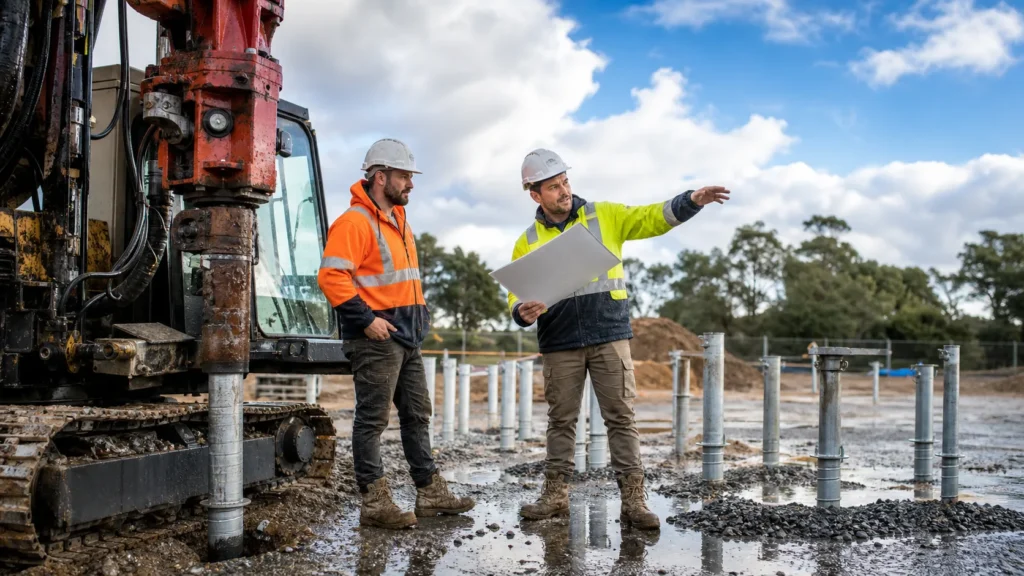
Screw piles work in a different way. They are steel piles with helical plates that are torqued into the ground to a designed depth. Instead of relying on the top layer of soil, they transfer the load of the retaining wall down into deeper, more suitable bearing layers.
Compared with bored piers, installation usually means:
- Minimal excavation around each pile location
- No need to leave open holes waiting for inspection
- Much less spoil to cart off site
- Often reduced formwork, depending on the wall design
For retaining walls, screw piles do more than just hold up vertical loads. They help deal with lateral pressure from the retained soil, extra surcharge from driveways, vehicles, or nearby structures, and the movement you see in reactive clays. The pile layout and connection details are engineered so the wall and piles work together as a system.
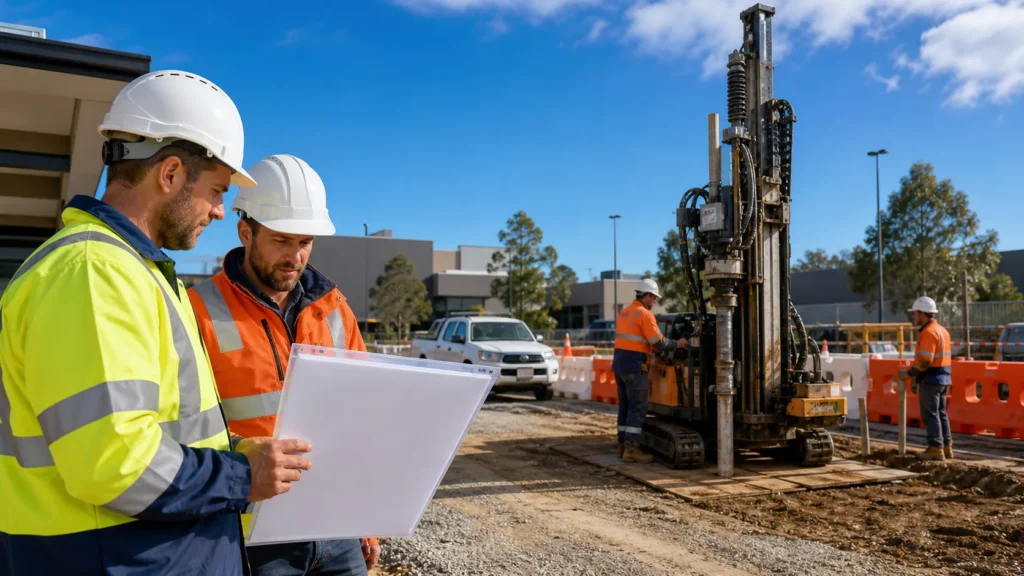
Engineering oversight is a key part of the process. Pile layouts and sizes are designed by an engineer, torque is monitored during installation to confirm each pile is achieving the required capacity, and test piles can be used on trickier jobs. That gives builders, designers, and certifiers confidence that the foundations are doing what they are meant to do below the surface.
On-Site Advantages Builders Actually Notice
The theory is nice, but what builders usually care about is what changes on site. With screw piles for retaining walls, a few things stand out.
Speed and sequencing are big ones. Screw piles can often be installed in hours instead of days. As soon as the piles are in and checked, work on the wall can continue because you are not waiting for concrete to cure in bored piers. That can keep programs on track, especially where retaining walls are on the critical path.
Wet weather resilience is another plus. Screw pile rigs can usually operate in damp or boggy conditions where traditional boring rigs struggle, or where sides of holes would simply collapse. That means less downtime, fewer reworks of failed holes, and less stress when the forecast is full of rain.
Access is also a major benefit for Sydney builders. Compact hydraulic rigs can fit down narrow side paths, into tight inner-city lanes, and onto sloping blocks where large plant is not practical. This helps on sites where there is no way to get a big machine in to dig or drill safely.
Cost control is helped by the predictability of the process. Because you are not digging large open holes, there is usually:
- Less spoil to remove and tip
- Less risk of needing extra concrete or reinforcement
- Reduced need for dewatering in wet ground
- Fewer variations triggered by surprise ground conditions
That does not make every job cheaper, but it does make outcomes more predictable, which most builders and developers appreciate.
When Screw Piles for Retaining Walls Make Sense
Screw piles are not the right answer for every single wall, but there are clear triggers where they are worth considering.
Good flags include:
- Deep fill or unknown fill on subdivisions and knockdown-rebuilds
- Soft or saturated ground around the bottom of a site
- Steeply sloping blocks where one side cuts deep into the hill
- Retained heights above about 1.5 to 2 metres
- Walls built close to boundaries or existing houses, garages, or pools
They can be used across a wide range of project types, such as basement retention for townhouses, basement car parks, tiered landscaping on new estates, pool surrounds, and driveway retaining walls that carry regular traffic.
From a compliance point of view, screw pile systems sit neatly within normal NSW building processes. An engineer designs and certifies the piles and wall, geotechnical input is brought in where needed, and documentation is provided for the certifier to confirm structural and performance requirements are met. For homeowners and developers, that can mean less risk of wall movement, cracking, or serviceability issues down the track, which reduces warranty headaches for everyone involved.
Real Project Scenarios From Sydney and NSW
To make it more concrete, it helps to think about the types of projects where screw piles for retaining walls have already proven their worth around Sydney and across NSW.
On a tight Inner West basement excavation, access along a boundary can be extremely limited, and neighbouring properties are often very close. Screw piles can be installed along the boundary line without over-excavation that might undermine fences, trees, or structures next door. The builder’s main worry is usually ground stability and settlement, and screw piles give a controlled, engineered solution that keeps the excavation safe while the basement walls go up.
In a Western Sydney subdivision with deep fill and reactive clay, traditional piers can quickly run into trouble as hole depths blow out and soil at the base pumps or softens. By switching to screw piles, the design can target more competent layers below the fill and reactive zone. Installation becomes more straightforward, programs are easier to hold, and the site team spends less time reworking failed holes or arguing about variations.
On a coastal or Northern Beaches backyard with sandy soils and high groundwater, open pier holes often collapse or fill with water as soon as they are drilled. Dewatering pumps might be needed, and inspections can be delayed. Screw piles can be installed through the sand with less disturbance, and because there are no open holes, there is far less impact from groundwater and winter rain. The builder’s concern here is usually time and mess, and screw piles help reduce both.
Across all of these scenarios, the key lessons are similar. Early planning with piling in mind, clear engineering, and choosing the right gear for the access and soil conditions make a big difference to how smoothly retaining walls get out of the ground.
Planning Your Next Retaining Wall with Screw Piles
If you are looking at upcoming projects and can see tricky retaining walls on the drawings, it is worth thinking about screw piles early rather than as a last resort fix.
Useful information to have ready when talking to a screw piling engineer includes:
- Architectural and structural plans
- Any geotechnical or soil reports
- Approximate wall heights and locations
- Photos or notes on site access and surrounding structures
Screw piling can then be slotted into the build program with early pricing, design sign-off, and clear coordination with concreters, blocklayers, and landscapers so everyone understands how the piles connect into the wall system.
For builders, designers, developers, and homeowners around Sydney and NSW, reviewing any walls in soft ground, on steep slopes, or with higher retained heights is a smart move. In many of these cases, screw piles for retaining walls can reduce risk, help keep work moving through wetter periods, and deliver better long-term performance for the structure.
Get Started With Your Project Today
If you are planning a new retaining wall or upgrading an existing one, we can help you choose and install the right screw piles for retaining walls for your site conditions. At Screw Piling, our experienced team works closely with you and your engineer to deliver stable, compliant and long-lasting results. Reach out to our friendly team today so we can review your project requirements and provide a clear, practical solution.