Faster, Cleaner Extensions on Tricky NSW Sites
Extensions across Sydney and NSW are getting more complex. Blocks are smaller, slopes are steeper, and many homes sit on reactive clays or old fill. Instead of a simple slab, the footing design can quickly turn into a major headache.
Traditional concrete footings often mean big holes, wet concrete, and waiting around for curing. When the soil is unknown or variable, you can also end up chasing depth and dealing with surprise variations. That is where screw piles for house extensions can give builders and owners a simpler, more predictable path.
In this article, we will run through when screw piling makes sense, when it probably does not, and the main points to think about before you lock in a footing system for your next extension in NSW.
When Screw Piles Beat Traditional Footings
There are plenty of sites across NSW where screw piles really come into their own. Typical examples include:
- Steep blocks in the Northern Beaches or Blue Mountains
- Tight inner-west terraces with narrow side access
- Sites near rivers or creeks with soft alluvial soils
- Yards full of fill after previous works or knockdown rebuilds
On these jobs, bored piers or strip footings can mean:
- Larger excavators or hand digging in tough spots
- Spoil stockpiles and the cost of carting soil away
- Booking concrete and hoping the weather holds
- Delays while concrete cures before you can frame
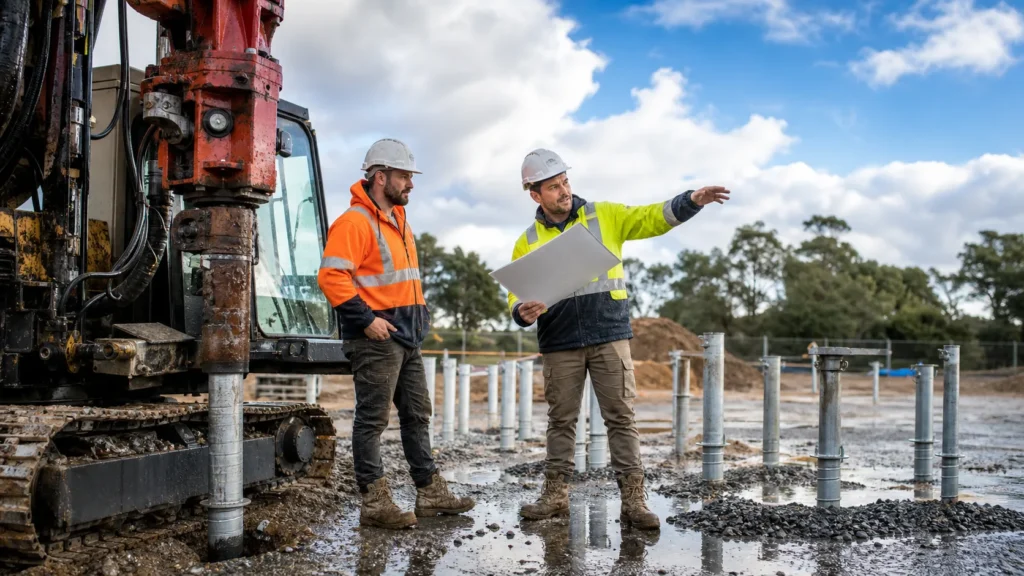
With screw piling, the approach is different. Piles are screwed into the ground with compact machinery, there is very little spoil, and the piles can generally take load straight away once installed and certified. For builders trying to keep an extension on program, that time saving can be a big advantage.
Structurally, screw piles give engineers predictable capacities based on testing and design. That helps when you are dealing with:
- Two-storey extensions
- Heavy cladding or masonry
- Long spans with steel or timber beams
On reactive clays, screw piles can also help manage differential movement between the existing house and the new work. By founding the extension on piles that reach more stable material, you reduce the risk that one part of the building moves more than the other.
Reading the Ground Conditions on Your Site
The decision between concrete footings and screw piles for house extensions really starts with the ground. Across Sydney and NSW, you will typically see:
- Reactive clays in western suburbs and regional areas
- Sands along the coast and near the beach
- Mixed fill and old rubble on older inner suburbs
- Rock shelves on parts of the North Shore and Sutherland Shire
A few simple red flags should prompt an early look at screw piling:
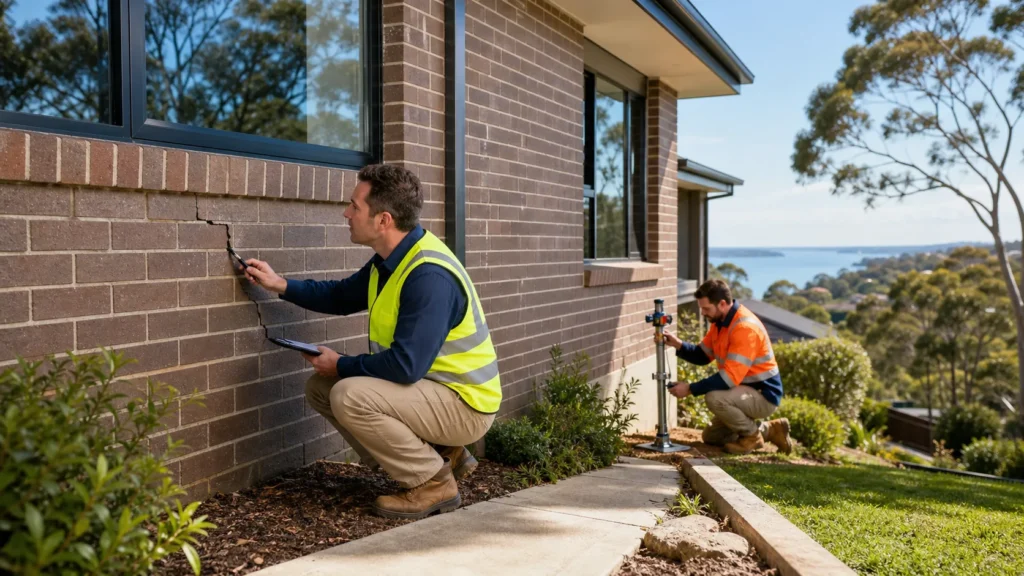
- Existing cracks in walls, slabs, or tiles
- Doors or windows that have stuck or gone out of square
- Known fill on site or evidence of old dumping
- Very limited information about previous works on older homes
A soil test or geotechnical report can tell you:
- Soil type and expected reactivity
- Depth to firm natural ground or rock
- Presence of fill or soft layers
- Recommended founding depths and bearing capacities
Those findings guide your engineer when weighing up concrete footings versus screw piling. On certain sites, conventional pads or piers are still perfectly fine. On others, once you factor in deep excavation and variations, screw piles start to look simpler.
The key is to involve your engineer and a piling contractor early in the design. That way, you can avoid scrambling to change the footing design halfway through digging when the ground is not what everyone expected.
Practical Benefits Builders See on Extensions
For builders, the practical side often matters more than the theory. On extensions, screw piles can help keep the job moving, especially once the weather turns and rain becomes more regular.
Program and logistics benefits include:
- Less reliance on dry conditions for excavation
- No need to wait for concrete trucks or curing
- Easier to hold start dates and milestones
- Less risk of delays rolling into colder, wetter months
Because screw piles need only small excavations at each pile head, there is also far less mess. That really helps on infill and terrace sites with neighbours hard up against the boundary. You are usually dealing with:
- Minimal spoil and cleanup
- Smaller plant that fits down narrow side paths
- Less damage to lawns and landscaping
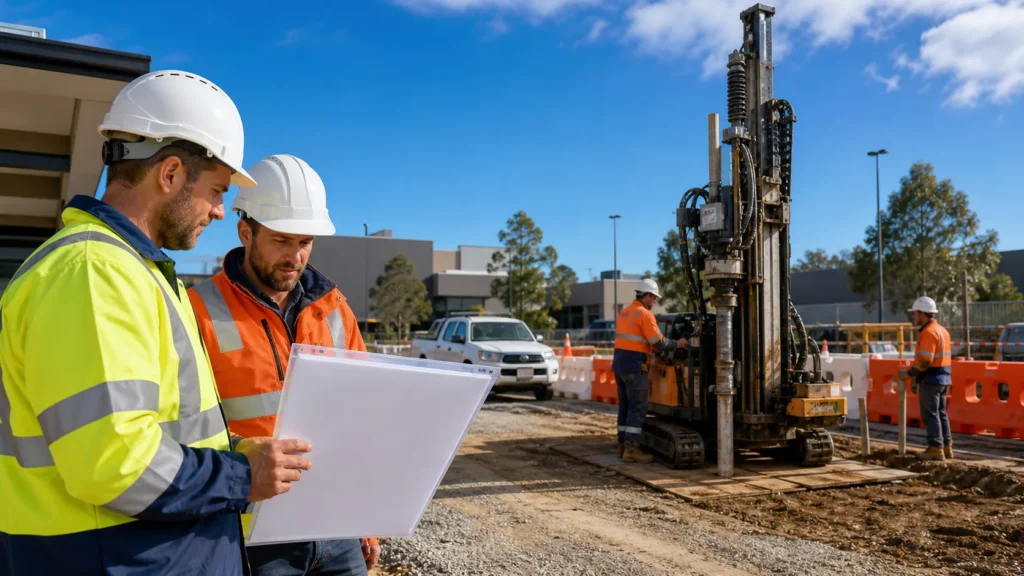
When the home is occupied, a quicker, quieter install is another plus. Piling rigs for residential work are generally compact and in and out faster than a full excavation and concrete operation. That makes it easier to stage works around:
- Residents still living in the house
- Plumbers running new services
- Concreters preparing slabs, pads, or ground beams
Common examples where screw piles can work well are rear deck extensions in tight suburbs, building in under raised homes in western Sydney, or supporting a new upper level on piles that transfer load to better ground.
Design, Cost and Compliance Considerations
When you look at cost, it is not just the pile price that matters. The main factors for screw piling are:
- Pile size and wall thickness
- Expected pile length to reach design capacity
- Access for machinery and setup time
- Engineering design and inspection
On the concrete side, you also need to look at excavation, shoring if required, spoil removal, concrete supply, and any extra depth if you hit soft or poor ground. Screw piles can sometimes help avoid those better-than-expected footings that blow out the footing budget.
From a detailing point of view, screw piles integrate well with typical residential framing. Piles are fitted with caps or brackets that connect to steel or timber bearers. This means:
- Standard joist layouts can still be used
- Beams and posts can line up with pile heads
- Underfloor services can be threaded through as usual
Engineered screw piling solutions are designed to meet relevant Australian Standards and can be documented clearly in structural drawings for certifiers and councils. That helps keep approvals straightforward as long as everyone is clear on the system being used.
For long-term performance, design needs to consider corrosion protection and durability, especially in coastal or aggressive soils. Proper specification of pile material, coatings, and embedment depth helps protect the extension for many decades.
When Screw Piling May Not Be the Right Fit
Screw piles are not the answer for every job. There are plenty of extensions where traditional footings are still the simple choice. For example:
- Small additions on stable, shallow rock
- Flat blocks with well-known, firm natural clays or sands
- Sites with wide, easy access for machines and trucks
Practical limits can also get in the way. Very low headroom under an existing house might stop piling rigs getting into position. Tiny rear yards with no access at all might still mean hand digging and conventional footings.
It is also possible to over engineer an extension. Not every small deck or lightweight room needs piles. The trick is to match the footing system to the actual risk and the site conditions, not just default to one option.
When comparing quotes, it helps to make sure each footing option includes the full scope, such as:
- Excavation depth and width
- Removal and tipping of spoil
- Concrete supply and pumping if needed
- Any shoring or temporary works
With a clear picture of the full footing cost, owners and builders can make an informed call on whether screw piles for house extensions make sense on their particular NSW site.
Strengthen Your Extension With Reliable Foundations Today
If you are planning to expand your home, we can help you get solid, compliant foundations in place from the start. At Screw Piling, we work closely with homeowners and builders to design and install screw piles for house extensions that suit your soil conditions and project timeline. Talk to our team about your plans and we will provide practical advice, clear pricing and a straightforward installation process. Reach out today so your extension can rest on dependable support for the long term.