Getting Screw Piles Onto Tricky Sites Across NSW
Access can make or break a foundation job in Sydney and across NSW. Tight blocks, steep driveways, tiny laneways, and shared accessways all affect what gear can get in and how the work runs. If the rig cannot reach the pile locations safely, the best design on paper is not much help.
This is where screw piling often comes into its own. Screw piles are fast to install, they suit difficult ground, and they need far less excavation than bored piers. On awkward or constrained sites, that can be a major advantage, but only if access is properly thought through at the start, not on the morning the rig turns up.
In this article we’ll walk through what access constraints really mean on site, the checks to do early, and how to figure out if screw piling in NSW is the right fit for your next house, townhouse, or commercial build.
What Access Constraints Really Mean on Site
When we talk about “access constraints”, we are not just talking about a narrow gate. It is the whole path from the street to the pile locations, above and below, and how the rig can move and operate safely.
Common access constraints seen across Sydney and NSW include:
- Tight street access and no-stopping zones on busy roads
- Limited side setbacks, often less than a metre between houses
- Steep or soft ground that makes tracking machinery risky
- Overhead powerlines and low eaves that restrict mast height
- Shared driveways where neighbours still need car access
Different screw piling rigs have different needs. For example:
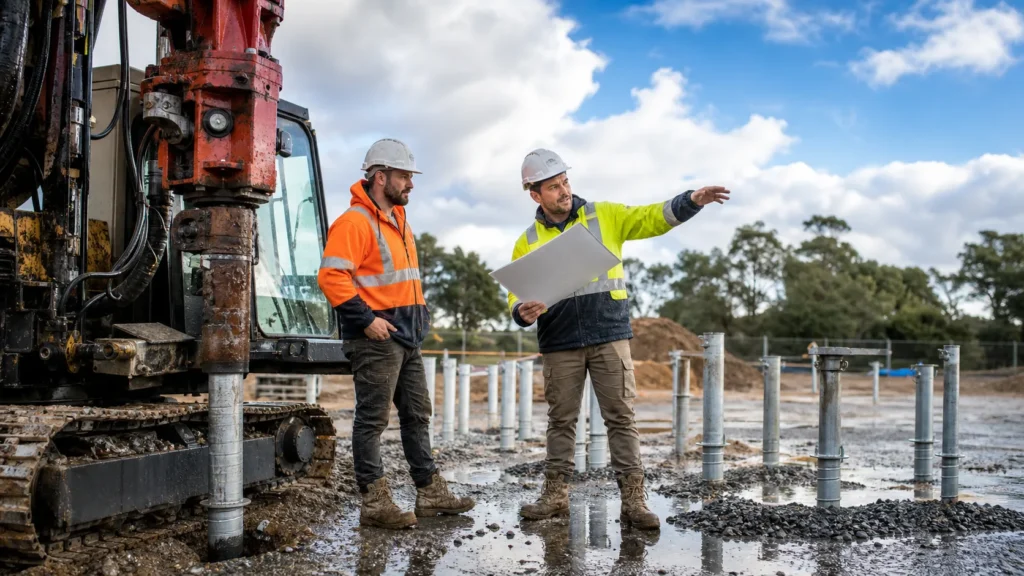
- Track-mounted rigs usually need more width and turning room but can handle heavier torque and deeper piles
- Mini or compact rigs suit side paths and tight backyards but may need more setup locations to reach everything
- Handheld or very small units can work in extremely tight spots, like under decks or in undercrofts, but are better for smaller loads and shorter piles
In the Inner West, a narrow terrace block with only a rear lane might only allow in a small track-mounted or mini rig. The lane width, corner turns, and any low services all matter. Up in the Blue Mountains, a sloping block with soft ground might limit heavier plant, so rig weight, ground mats, and how to achieve consistent torque without bogging in all need to be considered.
The key is reading all of this early, so the right combination of rig, tooling, and pile design is chosen from the start.
Site Checks to Do Before You Book Screw Piles
You do not need to be a piling expert to spot most access issues. A few simple checks before you lock in screw piling in NSW can avoid many problems later.
Useful Early Checks Include:
- Measure gate and side path widths, including any taps, gas meters or AC units that stick out
- Check driveway slopes, tight bends and any spots where a low trailer or rig might bottom out
- Measure overhead clearances near eaves, balconies, carports and low powerlines
- Note tree locations, big roots, and any existing retaining walls or fences in the way
It Is Also Worth Pulling Together
- Soil report or geotech info, even a basic one, as this affects the torque required and pile type
- Locations of underground services from Dial Before You Dig, so pile positions and rig paths can be planned
- Details of existing or planned structures like pools, basements and deep retaining walls
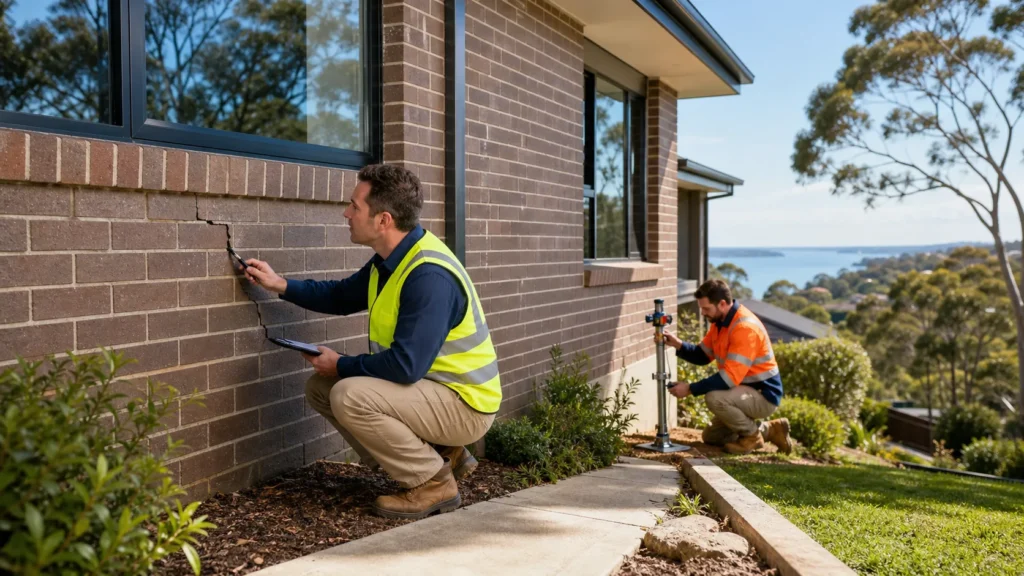
Retaining walls, old basements and pools can restrict where the rig can stand and how it is braced, which can change the installation sequence. On small sites, a quick walk around with a tape and your phone, then sending clear photos and dimensions to the piling contractor, can prevent nasty surprises, especially in wetter months when ground conditions are more slippery.
Matching the Right Equipment to Tight Access Sites
Once access constraints are clear, the piling crew can match the right equipment to the site instead of trying to force a big rig into a small space.
Some common approaches on constrained sites are:
- Mini rigs for tight side paths or between existing structures
- Low-headroom rigs for undercrofts, under existing floors or under low awnings
- Longer extensions for piles under suspended slabs, decks or raised floors where the rig stands off to the side
One of the biggest advantages of screw piling on access-challenged sites is the reduced excavation. Compared to bored piers, you are not digging out large holes, waiting on inspections, and then dealing with truckloads of spoil and extra movements. On busy suburban streets and shared driveways, fewer trucks and less mess makes life much easier for builders and neighbours.
Typical Scenarios Where This Really Helps Include:
- Townhouse developments in Western Sydney with shared driveways and no room for spoil stockpiles
- Knockdown-rebuilds on narrow blocks where the new footprint almost fills the site
- Coastal jobs where sand, high water tables and corrosion need careful planning and clean, quick installs
In each case, the right rig choice and pile design mean the crew can work efficiently inside the real-world constraints of the site, not just the ideal plan on paper.
Planning For Speed, Safety, And Neighbour Impacts
Good access planning is not only about getting the rig in the gate, it also sets up the speed, safety and overall feel of the job.
If Access Limits Are Known Early, the Program Team Can:
- Sequence installation so piles go in before scaffolds or big deliveries block the way
- Allow for wet-weather access, ground mats and alternative entry points if things get muddy
- Keep the install window tight so other trades can follow on quickly
Screw piling in NSW can also be kinder to neighbours than some traditional systems. With no large-scale excavation and no driven piles, there is usually less vibration and less continuous noise. That matters on dense Sydney sites where houses back onto each other and many people work from home.
Safety is another big factor. Good planning includes:
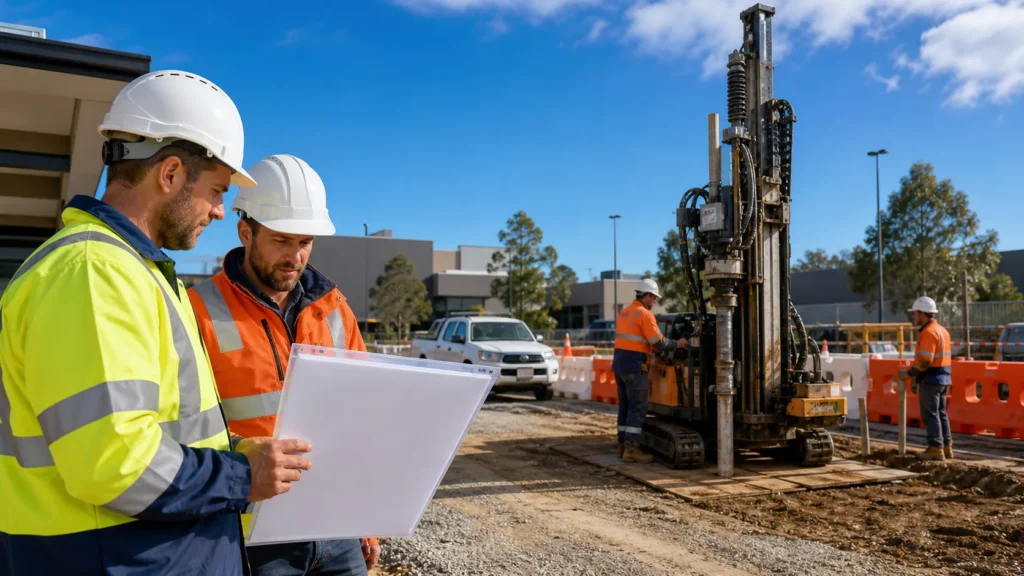
- Clear exclusion zones around the rig and installation area
- Traffic management where rigs or trucks need to set up on or near roads
- Thoughtful material staging on small sites, so steel does not clutter escape paths or block access for other trades
- Coordination with scaffold, crane lifts and demolition so nobody is working directly over or under the rig
When everyone understands the access limits upfront, it is easier to keep the site safe, orderly and on schedule.
Getting Screw Piling Right On Your Next NSW Project
The key shift is to treat access as part of the design, not an afterthought. If access is tight, sloping, shared or awkward, that does not rule out screw piling. It just means access needs to be checked early and built into the planning.
When you are lining up screw piling in NSW, it helps to send through:
- Site plan with boundaries, proposed building footprint and levels if available
- Photos from the street, driveway, side paths and where the piles are likely to go
- Simple access measurements like widths, heights and slopes
- Soil report or any previous geotech information
- Rough program dates so the crew can allow for seasonal weather and other trades
With that information, an experienced screw piling contractor can advise on realistic options, choose suitable gear and set up an efficient installation. Good access planning means your foundations go in quickly, cleanly and with fewer headaches for you, your neighbours and everyone on site.
Get Started With Your Project Today
If you are planning a new build or renovation, we can help you get solid foundations in place quickly and efficiently. At Screw Piling, our experienced team delivers reliable screw piling in NSW tailored to your site conditions and project timeline. Reach out to us today so we can review your plans, recommend the right solution and provide a clear, competitive quote.