Build Strong Foundations on the Toughest Sites
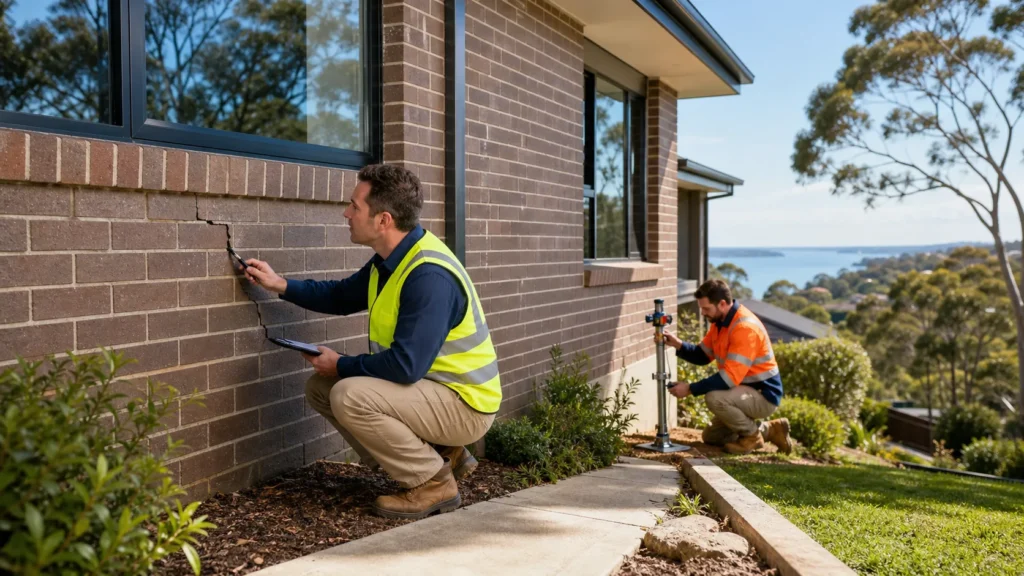
Sloping and difficult blocks are now common right across NSW. As flatter land runs out, more projects are pushed onto steep hillsides, deep fill, flood-prone ground and reactive clays. If we treat these sites like a flat suburban lot, problems show up fast.
Builders and owners can face movement in slabs and frames, poor drainage, cracked retaining walls, delays from weather and big variations once digging starts. Budgets and timelines can blow out, and everyone on site feels the pressure.
A screw pile foundation system gives another option. By screwing piles into suitable ground, we can deal with slope, tricky access and poor soils while keeping work moving. This suits tight townhouse sites in Sydney, new homes in the Hunter, or regional civil and boardwalk projects. In this article we will walk through how screw piles work on slopes, where they make sense compared with traditional footings, key design points, and what we have learned from real NSW jobs.
Why Sloping and “Problem” Blocks Need a Different Approach
Sloping and fill sites are not just awkward, they change how the whole structure behaves. Common issues include:
- Large cut and fill to try to create a flat pad
- Exposed rock in some areas and soft ground in others
- Deep or uncontrolled fill that will settle over time
- Natural drainage paths running through the block
- Retaining walls needed to hold cuts or neighbours’ land
- Limited access for excavators, trucks and materials
Across NSW, these conditions show up in a few predictable ways. You may be dealing with reactive clays (especially in Western Sydney and many inland areas) or loose sands along the coast and near waterways. It is also common to encounter fill in newer subdivisions with unknown depth and quality, and in older suburbs where past works were never recorded. On steep escarpment and headland blocks, the ground can be especially variable, with a mix of rock and soft pockets across the same footprint.
Traditional concrete footings struggle on this type of ground because they often require you to force the site into a flat, uniform condition before you can even start building. That usually means:
- Extensive excavation to reach bearing soil
- Extra spoil removal and cartage off-site
- Formwork on awkward slopes
- Concrete pours that are delayed by rain and mud
- Extra depth or width when you hit unexpected soft spots
A better approach is to design to the site, not against it. Instead of trying to flatten the whole block, we can work with the natural slope and soil profile, and choose a footing system that suits what is really there.
How Screw Pile Foundation Systems Work on Slopes
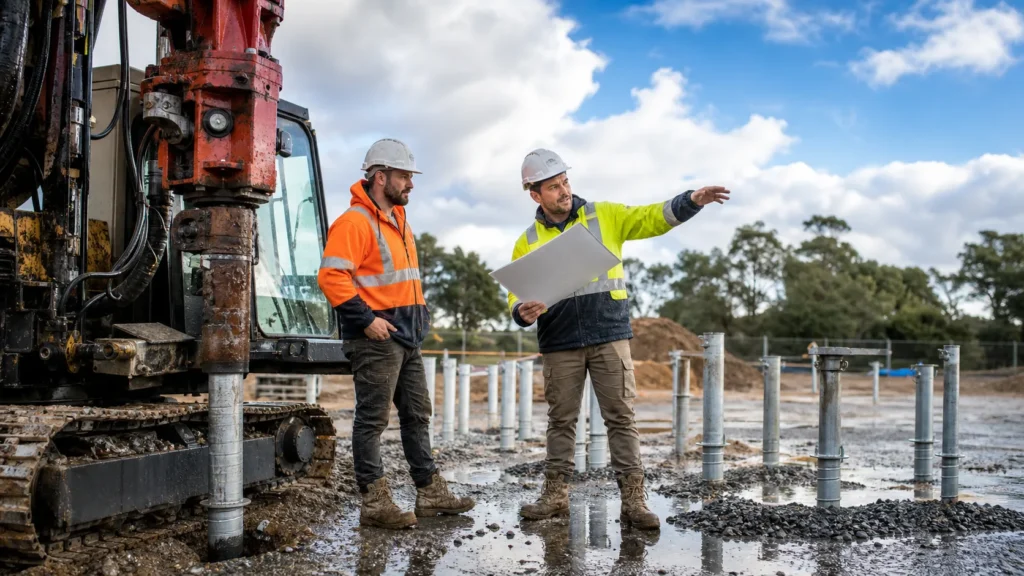
A screw pile is a steel shaft with one or more helical plates welded near the tip. It is literally screwed into the ground with hydraulic equipment. As the helix cuts into the soil, the pile builds capacity. Once it reaches the required torque and depth, it is locked off and used as a footing.
On sloping and difficult sites, this brings some clear benefits:
- Minimal excavation compared with big pads or trenches
- Small to medium machines can install piles in tight access
- Pile lengths can vary to suit different soil levels across the slope
- Less disturbance to existing ground, trees and neighbouring structures
From an engineering point of view, the design needs to account for how loads act on a structure sitting on a slope, not just straight down into the ground. That includes:
- Vertical loads from the structure into each pile
- Uplift from wind and, in some cases, retaining or flood forces
- Lateral loads across the slope and the risk of soil movement
- Battering or raking piles where needed to resist sideways forces
Screw piles can connect to a wide range of structural systems, which makes them versatile across residential, commercial and civil work. Common connections include:
- Steel subframes for pole homes and decks
- Bearer and joist floors on sloping blocks
- Slab systems with pile caps or integrated beams
- Structural steel for commercial and civil work
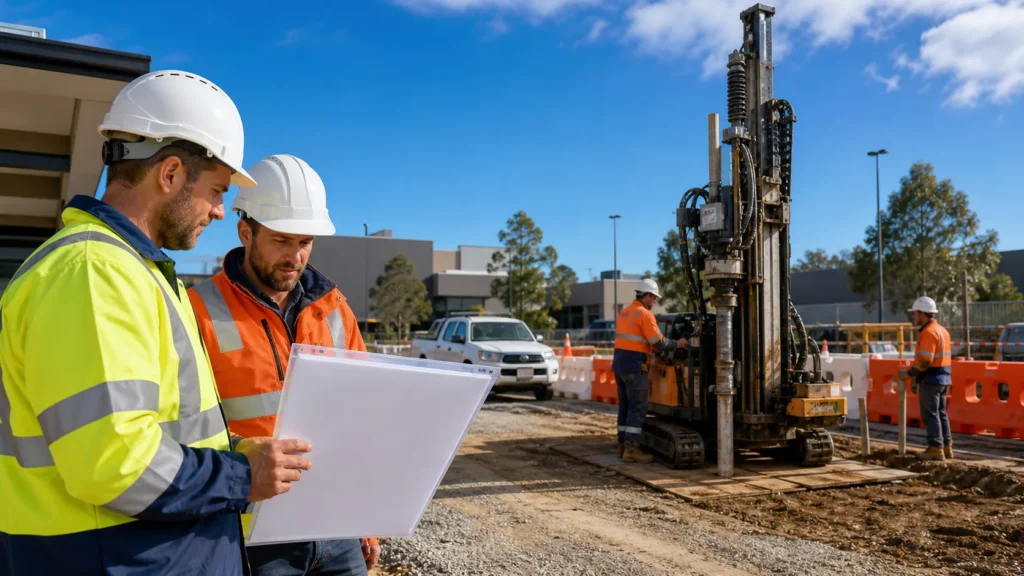
Install crews can also work close to boundaries, under partial existing structures and around trees. On tight infill sites where a concrete truck or large excavator is hard to get in, screw piles keep the footing work achievable.
Screw Piles vs Traditional Footings on Difficult Ground
On paper, a single bored pier or pad footing might look simple. On a real sloping site with mixed soils, the picture changes.
With traditional footings on tough ground you often face:
- Deeper, wider excavation to find suitable bearing
- Extra time for formwork, steel fixing and inspections
- Concrete pours that rely on dry weather
- The risk of hitting fill or soft spots and needing redesign mid-build
With a screw pile foundation system, you typically see:
- Faster install, with no curing time before starting frames in many cases
- Less downtime from wet weather because there is little open excavation
- Cleaner sites, as most soil stays in place instead of going to the tip
- More predictable performance once piles are tested and locked off
Think of a steep split-level home in the Blue Mountains or Illawarra. One option is heavy cut and fill, big retaining walls and complex drainage. With screw piles, you can often step the structure down the slope, use lighter retaining where needed and keep more of the natural land form. Set out is simpler, there is less bulk earthworks, and the site stays tidier for longer.
Design Tips for Builders, Designers and Homeowners
The sooner footings are considered in the design, the better the result, especially on tricky sites.
Start with early investigation:
- A geotechnical report that covers depth to rock, fill and groundwater
- A contour survey to show how the slope runs across the lot
- Service locations so piles and trenches do not clash
When working with your engineer, it helps to share:
- Site photos from the street and from the slope itself
- Notes on access and overhead restrictions
- The proposed house or building position, including levels
- Planned retaining walls, pools and driveways
To integrate screw piles into the build, think through:
- Set out points and how piles relate to bearer lines or slab edges
- Temporary bracing and working platforms on the slope
- Pile caps, brackets and connections that suit your framing system
- Future use of under-house space, like storage or extra rooms
Common traps to avoid include:
- Underestimating lateral loads on steep ground
- Forgetting that water will always find the lowest path
- Ignoring tree root zones and future growth
- Assuming fill will perform like natural, undisturbed soil
Good planning here makes construction smoother and reduces changes once you are on-site.
Real Project Lessons From NSW Sloping Sites
Across NSW, we see similar themes play out on sloping and difficult jobs.
On steep coastal and escarpment blocks, screw piles often support pole-home style frames. The structure sits lightly on the slope, with minimal cut, and trees and views are protected. Existing neighbouring retaining walls are left largely untouched, which keeps everyone happier.
On medium density projects like townhouses or duplexes in Western Sydney or Newcastle, screw piles can deal with reactive-clay and tight access. Install can continue in light wet conditions, so programs stay closer to the original schedule even when the weather turns.
Civil and commercial works like boardwalks, pedestrian bridges and stair access to beaches or riverbanks also benefit. Screw piles allow supports to be installed with limited disturbance to vegetation and soil. This suits environmentally sensitive areas and reduces the time workers spend on unstable or steep ground.
Across these types of projects, the practical lessons are consistent:
- Better cost certainty once the pile design is set and tested
- Less disruption to neighbours and existing structures
- Safer movement for crews and trades on sloping sites
- Less stress for everyone involved as the footing risk is reduced
Plan Your Next Sloping Site with Confidence
Sloping and difficult blocks do not have to mean huge earthworks, heavy retaining walls and drawn-out builds. When a screw pile foundation system is considered early, it can turn a challenging site into a manageable one.
For builders, designers and homeowners, the key is to treat the ground conditions as a starting point, not an afterthought. With good site information, thoughtful structural design and the right piling approach, it is possible to achieve stable, code-compliant foundations on some of the toughest ground across NSW, while keeping projects cleaner, faster and more predictable.
Get Started With Your Project Today
If you are planning a new build or upgrading existing foundations, we can help you choose the right screw pile foundation system for your site and soil conditions. Our team at Screw Piling works closely with you to deliver practical, engineered solutions that suit your budget and timeline. Talk to us about your project requirements so we can provide clear advice, upfront pricing and a straightforward installation plan. Reach out today and let us support your project from design through to completion.