Why Screw Piles Matter More in NSW Than Ever
Across NSW, builders are dealing with tighter programs, more difficult sites, and higher approval scrutiny than ever before.
High fill, sloping blocks, wet conditions, coastal soils, access constraints, and renovation-heavy suburbs mean traditional footing assumptions often break down.
This is why screw piles have moved from a niche solution to a mainstream foundation system across residential and light commercial construction.
This guide brings everything together in one place — how screw piles work, when they’re the right choice, how approvals actually happen, and what builders should plan for.
What Are Screw Piles? (Plain-English Explanation)
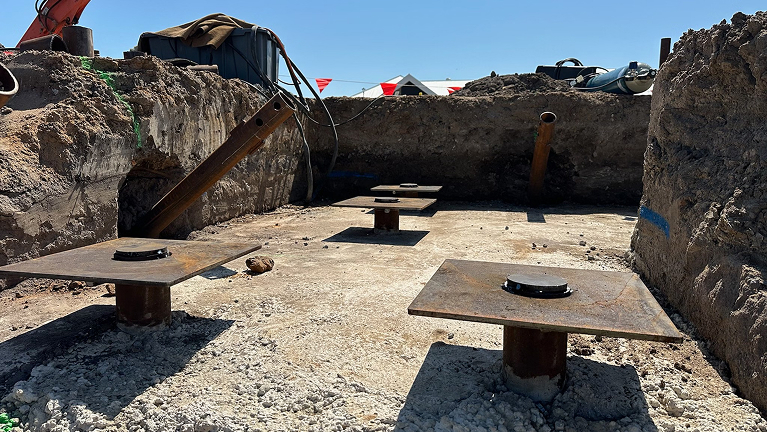
Screw piles — also known as helical piles or screw piers — are steel shafts with one or more helical plates that are rotated into the ground.
They transfer structural loads to competent bearing strata at depth, rather than relying on near-surface soils.
Key characteristics:
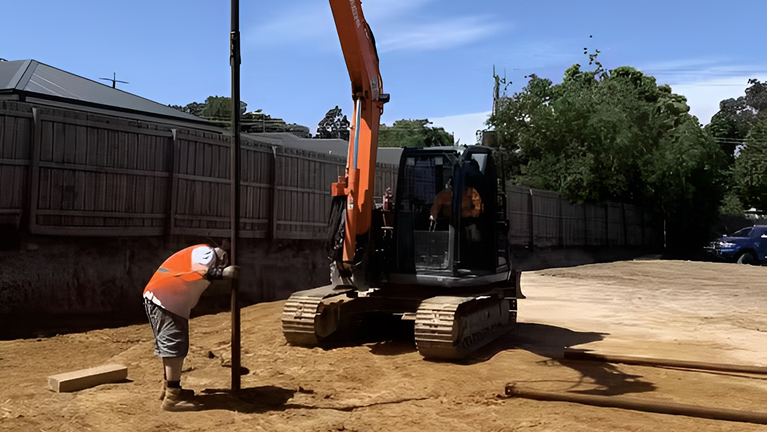
- Installed by rotation, not excavation
- Minimal spoil generation
- Can be loaded quickly (subject to engineering)
- Depth and configuration vary by site
They are a deep foundation system, governed by the same engineering principles as other piling solutions.
When Are Screw Piles Used Instead of Bored Piers?
Screw piles are commonly specified when:
- Ground conditions are variable or uncertain
- High or uncontrolled fill is present
- Wet weather frequently delays excavation
- Site access is restricted
- Program certainty is critical
They are not automatically “better” — but on many NSW sites, they are lower risk.
Common NSW Ground Conditions That Drive Screw Piling
High Fill and Uncontrolled Fill
Fill sites introduce uncertainty around bearing capacity and settlement.
Screw piles bypass weak fill layers and transfer load to deeper strata, making them a frequent engineering response.
Wet Conditions and High Water Tables
Because they don’t rely on open excavations, screw piles are far less sensitive to groundwater and rain delays than bored piers.
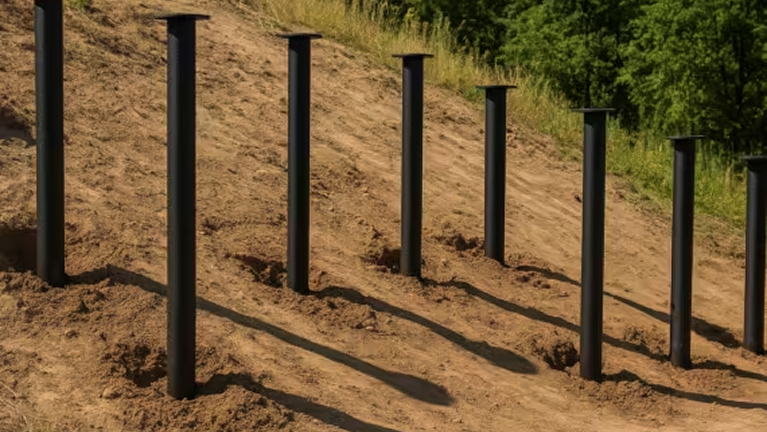
Sloping Blocks
On slopes, screw piles allow variable depths and reduce bulk excavation, retaining, and stepped footing complexity.
Coastal and Aggressive Soils
Coastal NSW sites often require corrosion allowances, coatings, or increased steel thickness — all of which are addressed at design stage.
How Screw Piles Are Designed (What Engineers Care About)
Engineers design screw piles based on:
- Structural loads
- Soil profile and bearing strata
- Settlement performance
- Uplift and lateral forces (where relevant)
There is no standard depth — depth is an outcome of design, not an assumption.
How Deep Do Screw Piles Need to Go?
Depth depends on:
- Geotechnical findings
- Required load capacity
- Depth to competent strata
- Variability across the site
It is common for pile depths to vary within the same project, especially on sloping or filled sites.
What Happens If Screw Piles Hit Rock or Refusal?
Rock or refusal is a known scenario — not a failure.
Engineers assess:
- Whether load capacity has been achieved
- Whether depth adjustments are acceptable
- Whether design modifications are required
Early planning prevents panic and delays.
Compliance and Standards in NSW
Screw piles are governed by AS 2159 – Piling: Design and Installation.
Compliance involves: – Geotechnical assessment – Engineering design – Installation to design – Clear documentation – Certification
Screw piles are not an alternative system — they are fully compliant when engineered correctly.
What Documentation Builders Should Expect
Typical documentation includes:
- Installation records (locations and depths
- Pile specifications and materials
- As-built information
- Site photos
Clear documentation is critical for certifier sign-off.
Screw Piles for Extensions and Renovations
Extensions often involve tight access, existing footings, and occupied homes.
Screw piles are commonly used because they:
- Reduce excavation
- Limit disruption
- Can be installed close to existing structures (subject to engineering)
Cost Considerations: What Actually Drives Price
Screw pile pricing is influenced by:
- Pile size and configuration
- Depth required
- Quantity of piles
- Access constraints
- Corrosion protection
The cheapest footing option is not always the lowest-risk option.
Common Builder Mistakes to Avoid
- Assuming screw piles are always faster or cheaper
- Locking in footing systems before geotechnical review
- Treating depth as a fixed number
- Underestimating documentation requirements
Most issues arise from assumptions, not the system itself
Key Takeaways for Builders (Featured Snippet Ready)
- Screw piles are a compliant deep foundation system in NSW
- They are well suited to difficult ground and access conditions
- Engineering and geotechnical input drive design
- Documentation quality affects approval
Early planning reduces risk and delays
Frequently Asked Questions
Are screw piles compliant for residential builds in NSW?
Yes, when engineered and documented correctly.
Do screw piles work in wet conditions?
Often yes, with fewer delays than excavation-based footings.
Are screw piles suitable for sloping blocks?
Commonly, subject to engineering design.
Do screw piles cost more than bored piers?
Cost depends on site conditions, not the system alone.