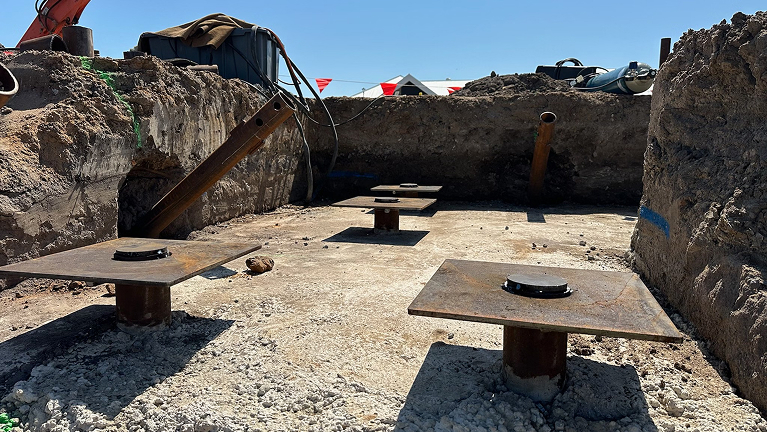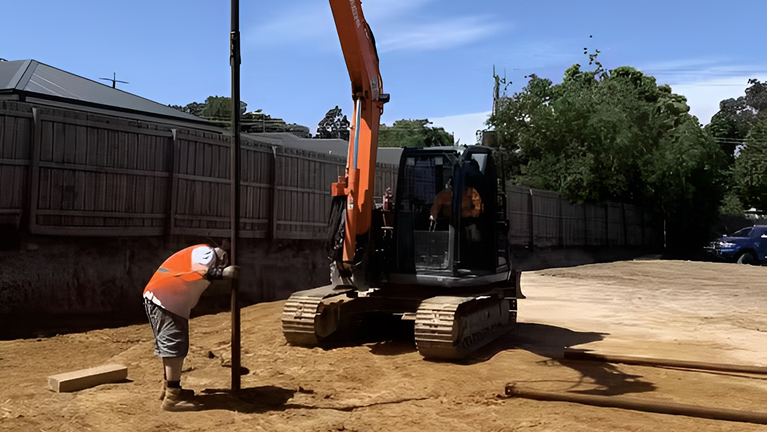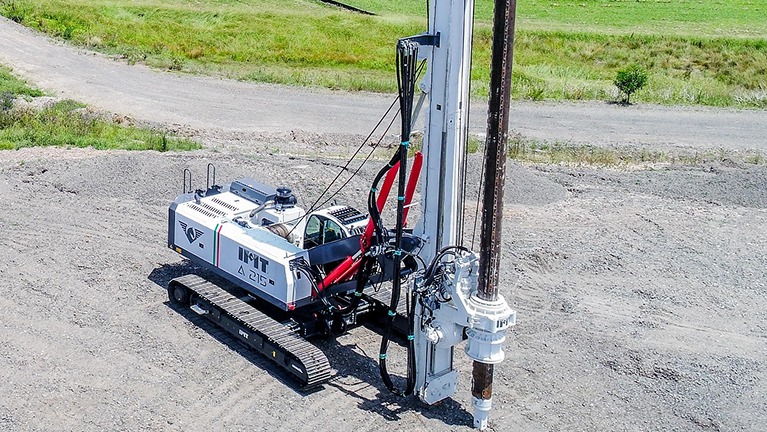
Sloping Blocks Multiply Foundation Risk
Sloping sites look straightforward on plans—but on site, they often introduce:
- Variable excavation depths
- Retaining and shoring complexity
- Uneven bearing conditions
- Increased risk of delays and redesigns
For this reason, sloping blocks are one of the most common triggers for screw piling in NSW.
This article explains when screw piles are suitable for sloping blocks, how engineers approach design on slopes, and what builders should plan for to avoid footing-stage surprises.
Why Sloping Blocks Are Challenging for Traditional Footings
On sloping sites, shallow footings and bored piers often require:
- Stepped excavations
- Temporary retaining
- Complex set-out
- Additional spoil management
These factors increase:
- Time on site
- Wet-weather exposure
- Program risk
The steeper the slope, the more these risks compound.
How Screw Piles Address Sloping Ground Conditions
Screw piles are often specified on sloping blocks because they:
- Transfer loads vertically to deeper, competent strata
- Reduce the need for bulk excavation
- Allow pile depths to vary across the site
Rather than forcing the ground to suit the footing system, the footing system adapts to the ground.
How Engineers Design Screw Piles on Slopes
On sloping blocks, engineers typically consider:
- Changes in ground level across the footprint
- Differential loading between high and low sides
- Potential for lateral movement
- Interaction with retaining walls or shoring
Pile depth and size may vary significantly across the site to manage these factors.
Set-Out and Access: What Builders Must Plan For
Even when screw piles are engineered, installation success depends on planning.
Builders should allow for:
- Clear access paths for piling rigs
- Accurate set-out on sloping ground
- Coordination with excavation and retaining works
Poor access planning is one of the most common causes of delay on sloping sites.
Interaction with Retaining Walls and Shoring
Screw piles: Do not replace retaining walls- But can reduce excavation depth behind them
Early coordination between footing design and retaining design often simplifies construction sequencing.
Cost and Program Implications on Sloping Blocks
On sloping sites, screw piles often:
- Reduce excavation and spoil costs
- Shorten the footing program
- Lower wet-weather risk
While pile depth may increase on the low side of the site, overall project risk is often reduced.
When Screw Piles May Not Be Necessary
Screw piles may be unnecessary where:
- Slopes are minor
- Ground conditions are uniform
- Shallow footings are engineered as suitable
As always, suitability is site-specific.
Key Takeaways for Builders (Featured Snippet Ready)
- Sloping blocks increase footing complexity
- Screw piles adapt well to variable ground levels
- Engineering design accounts for differential loads
- Access and set-out planning are critical
- Early coordination reduces delays