High Fill Is Where Footing Assumptions Break Down
High fill and uncontrolled fill sites are one of the most common causes of footing redesigns, approval delays, and construction risk across NSW.
Builders often only discover the problem after excavation begins—when shallow footings or bored piers no longer stack up against the geotechnical data.
Screw piles are frequently specified on these sites, but not automatically.
This guide explains when screw piles are suitable on high fill or uncontrolled fill sites, what engineers are actually designing for, and how builders can avoid costly late-stage changes.
What Is Considered High Fill or Uncontrolled Fill?
High fill refers to soil placed above natural ground level, often as part of past site works.
Uncontrolled fill typically means:
- Unknown compaction history
- Mixed material (clay, sand, construction debris)
- Limited or no verification testing
From an engineering perspective, these conditions create uncertainty, not just depth.
Why High Fill Creates Risk for Traditional Footings
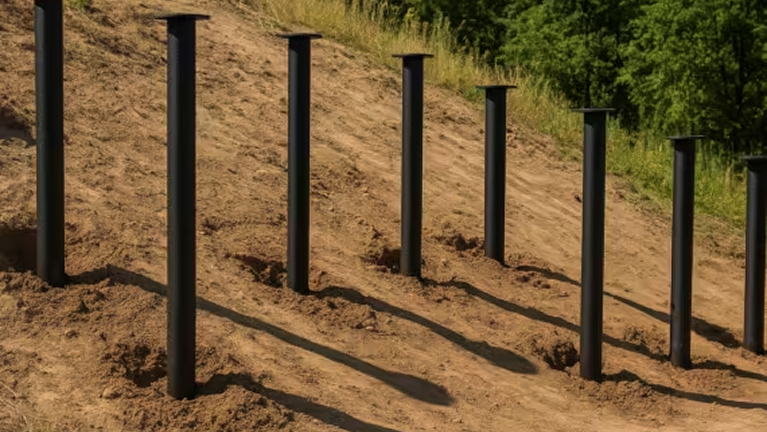
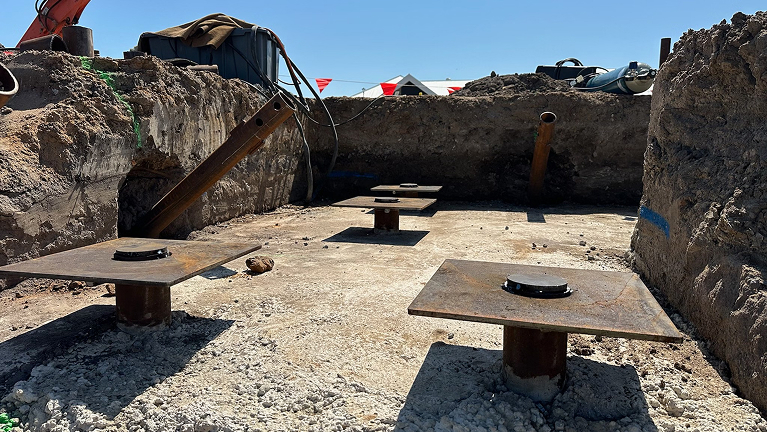
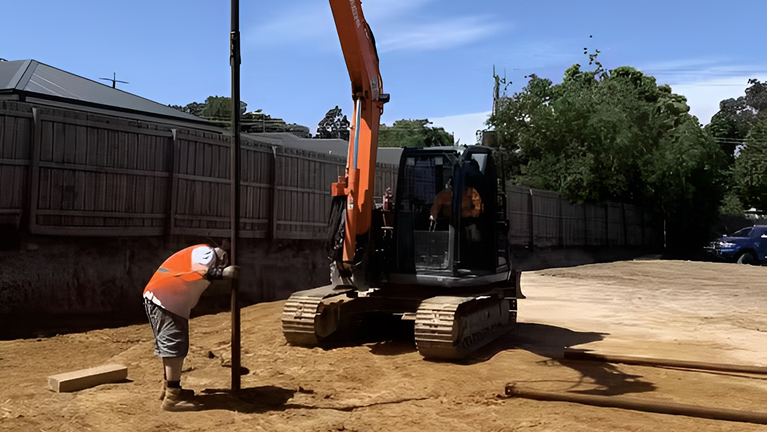
Screw piles are designed to bypass weak or uncontrolled fill and transfer load to deeper, competent strata.
Key advantages on fill sites include:
- Reduced reliance on near-surface soils
- Minimal excavation through unstable material
- Ability to vary pile depth across the site
This makes them a practical engineering response where fill depth or quality is uncertain.
How Screw Piles Address High Fill Conditions
Screw piles are designed to bypass weak or uncontrolled fill and transfer load to deeper, competent strata.
Key advantages on fill sites include:
- Reduced reliance on near-surface soils
- Minimal excavation through unstable material
- Ability to vary pile depth across the site
This makes them a practical engineering response where fill depth or quality is uncertain.
What Engineers Are Actually Designing For
When specifying screw piles on high fill sites, engineers consider:
- Depth to competent bearing strata
- Structural loads (including uplift where relevant)
- Variability across the site footprint
- Long-term settlement risk
There is no standard depth—each pile is designed to achieve performance, not a number.
Why Geotechnical Reports Are Critical on Fill Sites
On high fill sites, the geotechnical report typically identifies:
- Fill thickness
- Natural ground level
- Underlying soil profile
- Any groundwater considerations
Without this information, footing design becomes guesswork—and approvals become slower.
Common Builder Mistakes That Cause Delays
High fill projects are often delayed due to:
- Assuming fill depth is uniform
- Locking in footing systems before engineering
- Engaging installers before designs are finalised
- Underestimating access or corrosion requirements
Most of these issues can be avoided with early coordination.
Cost Considerations on High Fill Sites
High fill often increases:
- Required pile depth
- Installation time
- Material allowances
While this can increase upfront cost, it significantly reduces the risk of long-term settlement and remedial work.
Builders should assess risk-adjusted cost, not just initial price.
When Screw Piles May Not Be the Right Choice
Screw piles may be unnecessary when:
- Fill is shallow and well-controlled
- Bearing strata is close to surface
- Engineering confirms shallow footings are suitable
Good outcomes come from matching the system to the site—not defaulting to one solution.
Key Takeaways for Builders (Featured Snippet Ready)
- High fill and uncontrolled fill introduce footing risk
- Screw piles are commonly used to bypass weak fill
- Engineering and geotechnical data drive suitability
- Early planning avoids redesigns and approval delays
- Depth and cost vary by site—there is no standard solution
Frequently Asked Questions
Do screw piles rely on the fill for support?
Is a geotechnical report mandatory on fill sites?
In most cases, yes—especially for structural work.
Are high fill sites more expensive to pile?
They can be, but they reduce long-term risk.
Can fill depth vary across the same site?
Yes, and designs often account for this.