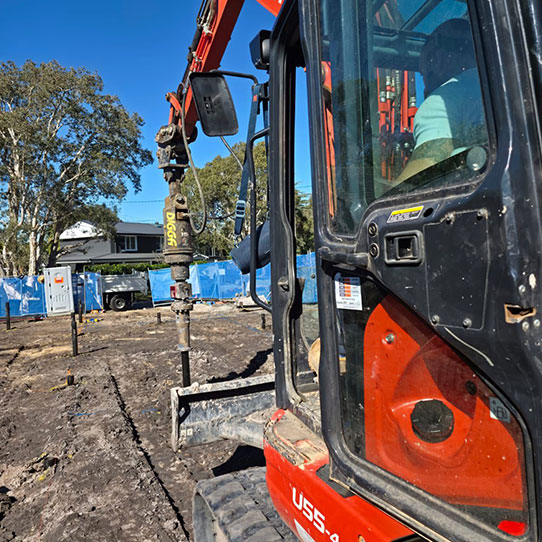
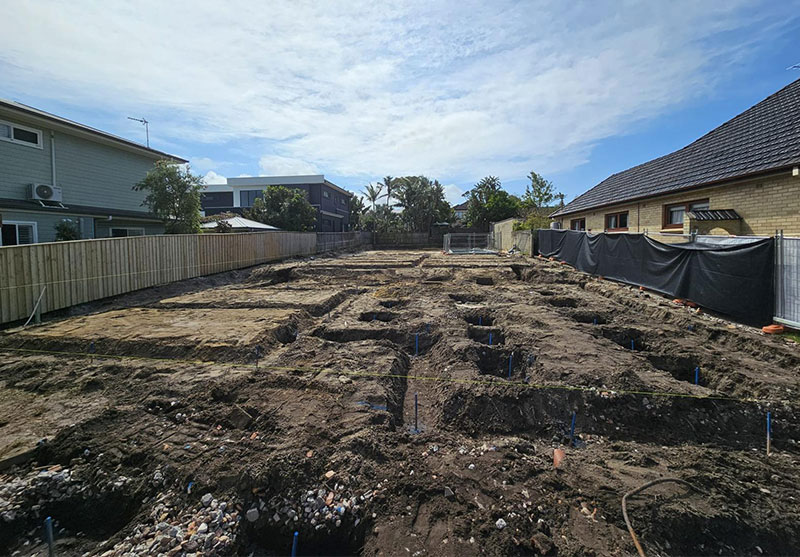
Screw Piling Newcastle & Hunter

Foundations for Variable Ground and Redevelopment Sites

Why Newcastle & Hunter Sites Demand Smarter Footing Choices

The Newcastle and Hunter region presents a unique mix of residential, industrial, and redevelopment construction, each with its own foundation challenges.

Builders across the region regularly encounter:

These factors mean footing assumptions that work elsewhere in NSW often don’t translate cleanly to the Hunter.

This is why screw piling is widely specified across Newcastle and the Hunter region — particularly where ground uncertainty and program risk need to be managed early.

Why Screw Piling Is Common in Newcastle & the Hunter

Screw piles are frequently used in this region because they:
For many Hunter projects, screw piling is selected to reduce geotechnical risk, not simply to speed up construction.

Common Newcastle & Hunter Use Cases

Builders across the region commonly use screw piles for:
The flexibility of screw piling makes it suitable across both residential and commercial scopes.

Ground Conditions in the Newcastle & Hunter Region

Reactive and Variable Clays

Large parts of the Hunter feature clay soils that can shrink and swell with moisture changes.
Screw piles transfer load to deeper, more stable strata, reducing reliance on near-surface clay behaviour.
Historic and Industrial Fill

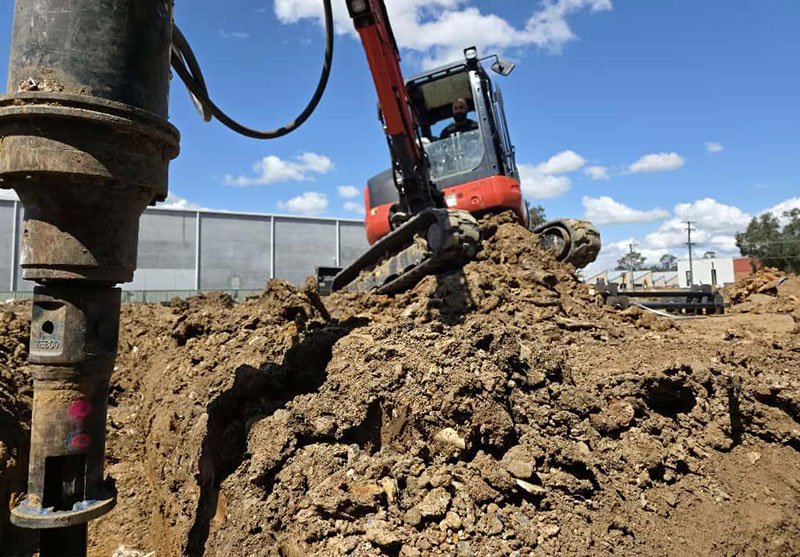
Redevelopment sites often include fill of unknown quality or depth.
Deep foundation systems are commonly required to manage settlement and bearing risk.
Mixed Soil
Profiles

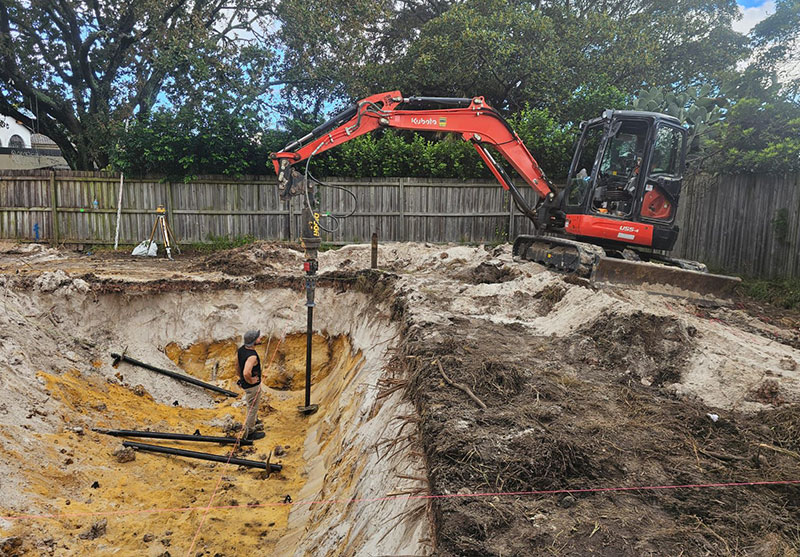
It’s common for soil conditions to vary significantly across a single site, especially on larger parcels.
Engineering designs often account for pile depth variation across the footprint.
Engineering, Compliance & Approvals

Screw piling in Newcastle and the Hunter follows the same compliance framework as elsewhere in NSW:
On industrial and redevelopment sites, certifiers often place increased emphasis on documentation and traceability.

Documentation and Certification Expectations

Builders should expect to receive:
Clear documentation supports approvals on complex or higher-load projects.

How Screw Piling Typically Works on Hunter Projects

1
Builder provides plans and site details
2
Geotechnical report identifies soil and fill conditions
3
Engineer designs screw pile system to suit loads and strata
4
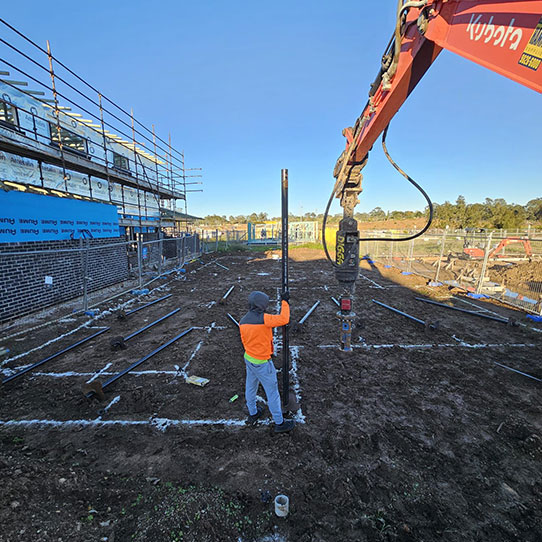
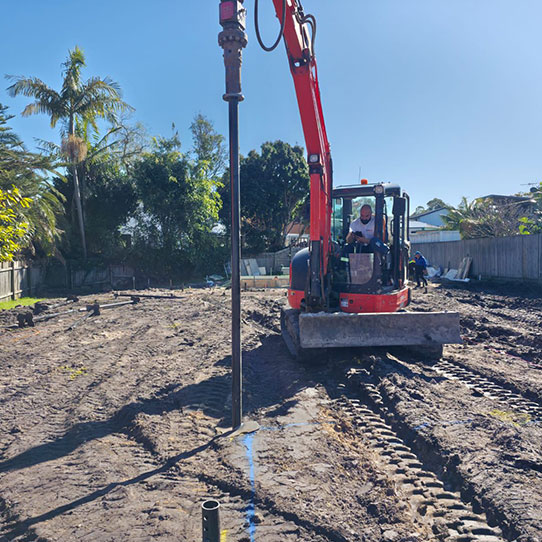
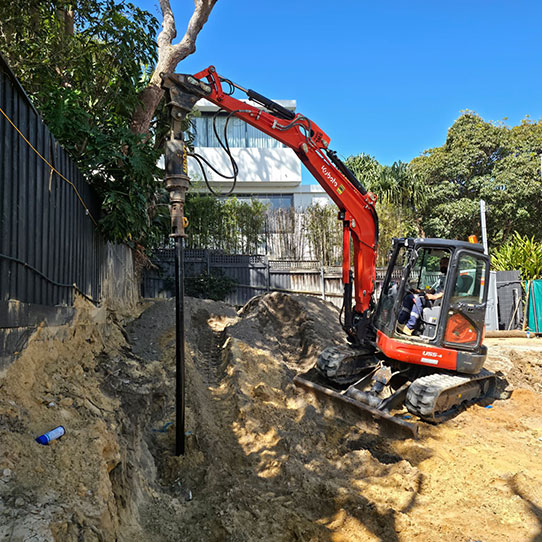
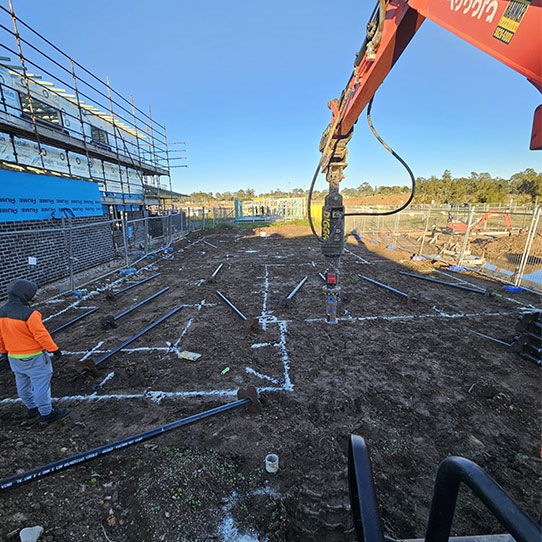
Installation proceeds with minimal excavation
5
Documentation is issued for certification and handover
This approach helps manage both technical risk and construction sequencing.

When Screw Piling May Not Be Required

Screw piles may be unnecessary where:
As with all foundation systems, suitability depends on site-specific factors.

Key Takeaways for Newcastle & Hunter Builders

Frequently Asked Questions

Are screw piles suitable for reactive clay sites?

Yes. They are commonly used to transfer load beyond reactive layers.
Yes, particularly for light commercial and industrial structures.
Often yes, due to higher scrutiny.
Yes, when engineered appropriately.

Manage Ground Risk Early

On Newcastle and Hunter projects, early footing decisions are critical to controlling risk, cost, and program.

A short feasibility discussion during design often prevents major issues during construction.

Submit your details and plans using the enquiry form below

Request A Quote