Screw Piling Central Coast
Foundations for Coastal, Sandy & Sloping Sites
Why Central Coast Sites Behave Differently
The Central Coast presents a very different construction environment to metropolitan Sydney.
- Sandy and loose soil profiles
- Coastal exposure and corrosion considerations
- Sloping blocks near bushland and escarpments
- High water tables in low-lying areas
- Tight programs on residential and lifestyle-driven builds
These factors mean footing decisions on the Central Coast carry higher ground risk, particularly when shallow foundations are assumed too early.
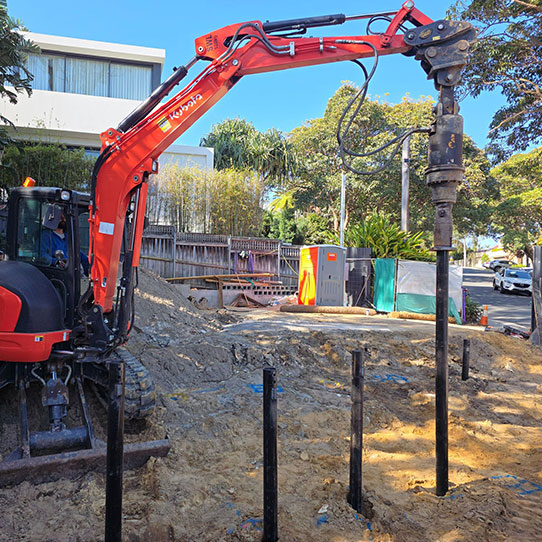
This is why screw piling is frequently specified across the Central Coast for residential and light commercial projects where reliability matters.
Why Screw Piling Is Common on the Central Coast
- Perform well in sandy and variable soils
- Reduce reliance on near-surface bearing
- Minimise excavation and spoil on constrained sites
- Adapt to sloping ground without extensive cut-and-fill
Typical Central Coast Use Cases
- New homes on sandy or coastal sites
- Sloping residential blocks near bushland
- Extensions and renovations in established suburbs
- Decks, alfresco areas, and elevated structures
- Sites with high or fluctuating water tables
Ground Conditions Builders Face on the Central Coast

Sandy and Low-Cohesion Soils
Much of the Central Coast features sand-dominant soils that provide limited bearing capacity for shallow footings.
Screw piles transfer load to deeper, more reliable strata, bypassing weak surface layers.
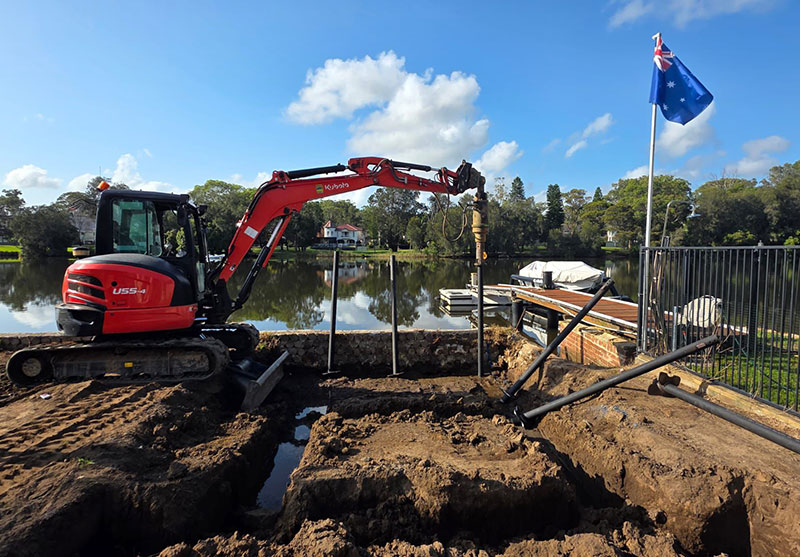
High Water
Tables
Low-lying coastal areas often experience groundwater close to the surface, making excavation-based footings slow and unpredictable.
Screw piles avoid open excavations, reducing wet-weather delays.
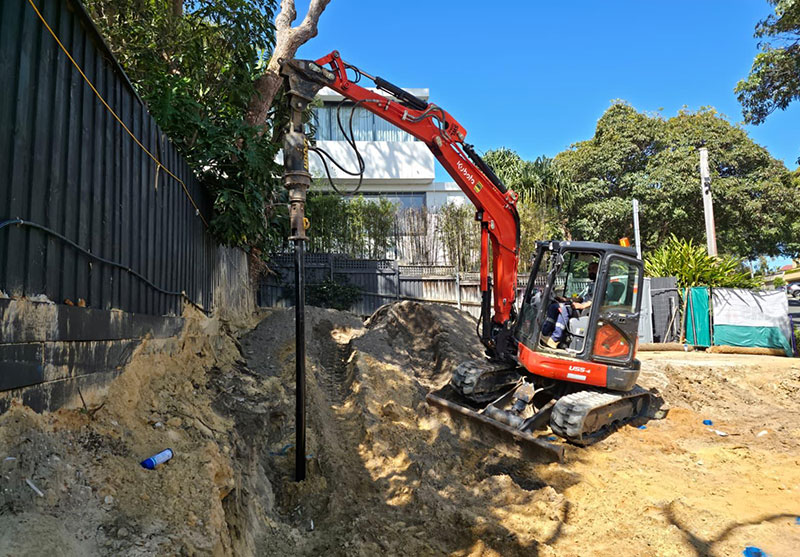
Sloping and Bushland Blocks
Elevated sites often involve variable ground levels and access constraints, increasing the appeal of deep foundation systems.
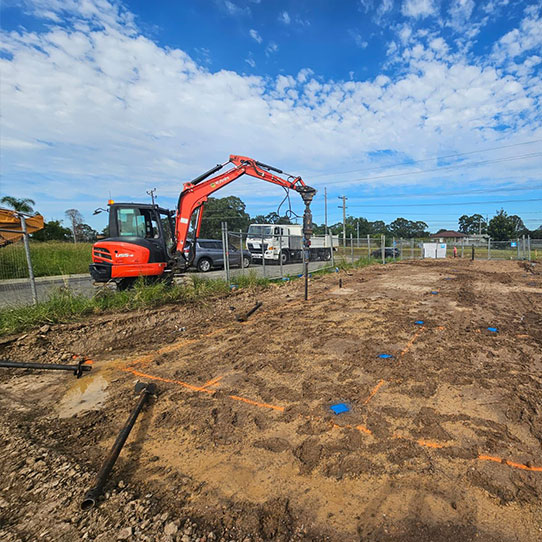
Coastal Exposure and Corrosion Considerations
On the Central Coast, corrosion is a critical design consideration.
Engineering designs may include:
- Galvanised piles
- Protective coatings
- Increased steel thickness
- Defined design life assumptions
Engineering, Compliance & Approvals
- AS 2159 – Piling: Design and Installation
- Site-specific geotechnical reports
- Structural engineering design
Documentation and Sign-Off Expectations
- Installation records (depths and locations)
- Pile specifications and corrosion protection details
- As-built information
- Site photos
How Screw Piling Typically Works on Central Coast Projects
1
When Screw Piling May Not Be Required
- Ground conditions are uniform and well-tested
- Shallow footings are engineered as suitable
- Access allows straightforward excavation
Key Takeaways for Central Coast Builders
- Sandy soils and coastal exposure increase footing risk
- Screw piles bypass weak surface layers
- Sloping blocks benefit from variable pile depths
- Corrosion must be addressed at design stage
- Early planning reduces delays and redesigns
Frequently Asked Questions
Are screw piles suitable for sandy soils?
Do coastal sites require special pile protection?
Can screw piles be installed in wet conditions?
Are screw piles common for decks and elevated structures?
Reduce Ground Risk Early
On Central Coast sites, early footing decisions have the biggest impact on long-term performance.
A short feasibility discussion during design can prevent delays and unexpected redesigns later.